Big Think
@bigthink·8.8M subscribers·10.1K videos
What will a world in which the U.S. is not the only superpower look like? | Big Think
Posted
April 24, 2012
Views
179
Likes
1
Comments
1
Engagement
April 24, 2012
179
1
1
1.12%
Every word spoken in this episode is indexed. Type any phrase to jump straight to the moment it was said.
Type any word or phrase that may have been spoken. Click a result to seek the player to that exact moment.
Try a name, a topic, or a quoted line
Episode Timeline
Every episode in order around the one you’re watching — click any card and the page flips straight to it.
 2:04Now Playing
What will a world in which the U.S. is not the only superpower look like?
New videos DAILY
Join Big Think Edge for exclusive videos
----------------------------------------------------------------------------------
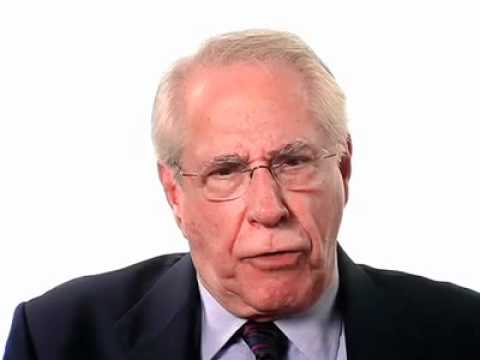
Mike Gravel forecasts mutual assured destruction.
----------------------------------------------------------------------------------
Mike Gravel:
Mike Gravel is a former Democratic United States Senator from Alaska, who served two terms from 1969 to 1981, and a former candidate in the 2008 presidential election. He is chiefly known for his efforts in ending the draft following the Vietnam War and for putting the Pentagon Papers into the public record in 1971.
Born in 1930 to immigrant parents in Massachusetts, Gravel enlisted in the Army in 1951 and served in West Germany. A self-stated dyslexic, Gravel was educated at Columbia University%u2019s School of General Studies in New York, where he drove a taxi to support himself. Gravel's first steps into politics were in the Alaska House of Representatives, before he won his party's nomination to the U.S. Senate in 1968. During the 1980s, after Gravel lost his senate seat, he worked as a real estate developer, consultant and stockbroker.
Gravel is a strong supporter of direct democracy, and specifically, the National Initiative, which refers to proposals to allow for ballot initiatives at the federal level.
----------------------------------------------------------------------------------
TRANSCRIPT:
Question: What will a world in which the U.S. is not the only superpower look like?
Mike Gravel: Well we saw it is a mad world – mutual assured destruction. But now we’re the superpower and we still have a mad world. Because we’re about the . . . Cheney-Bush want to launch a war with Iran. And so what are they doing? All kinds of subterfuges to bring it . . . Iran is not a threat to us. If we would just leave Iran alone, they’ll wind up with their own form of democracy. It’s a republic. They have elections. We Americans forget that in 1953, there were only two democracies in the world. In the Middle East rather, not in the world. In the Middle East, one was Israel the other was Iran. Who destroyed their democracy? The United States of America through the CIA. What we see, we go out of our way to make enemies. That has to end. That has to end. And so we just have to . . . The people . . . And if you can get the leadership, it will end. I’ll have a very different foreign policy than what you see now. It will be a foreign policy based upon bringing people in. We love to point to other nations. “Oh it’s their problem. It’s the Chinese that are causing us problems in this country. Oh it’s the Latinos now. We’ve got an immigration problem.” Well maybe, just maybe the American people realize that we’re failing in education. We’re failing in healthcare. We’re failing as a . . . as a leader in the world. We’re just failing. And what do we do? What do you . . . What does human nature cause us to do, which is not a very good reaction? When you fail, you want to blame somebody else. So we blame . . . So now we’ve got an immigration problem. And you look at our borders. I mean we’re . . . it’s shameful – building a fence across the southern border of the United States has got to be the embarrassment of the world.
Sentinel Indexing in Progress
Metadata and chapters are available. Claim extraction for this episode is pending.
All video content is delivered via YouTube embedded players in accordance with the YouTube Terms of Service. Sentinel provides research tools that promote discovery and accountability across political media.