Big Think
@bigthink·8.8M subscribers·10.1K videos
Why Timberland's CEO Keeps a List of Everyone He Laid Off | Jeffrey Swartz | Big Think
Posted
April 24, 2012
Views
2,264
Likes
9
Comments
1
Engagement
April 24, 2012
2,264
9
1
0.44%
Every word spoken in this episode is indexed. Type any phrase to jump straight to the moment it was said.
Type any word or phrase that may have been spoken. Click a result to seek the player to that exact moment.
Try a name, a topic, or a quoted line
Episode Timeline
Every episode in order around the one you’re watching — click any card and the page flips straight to it.
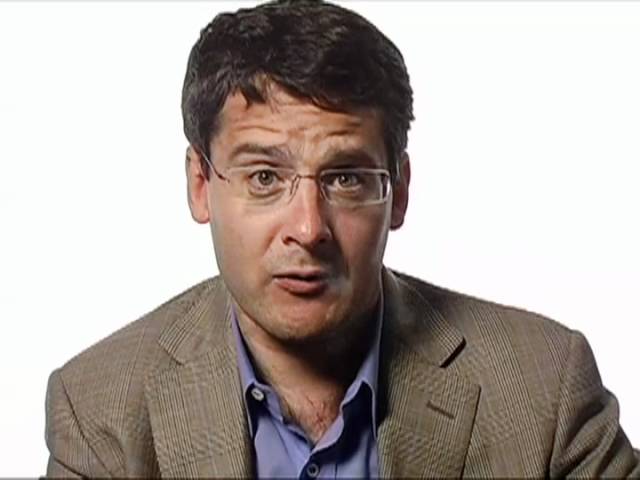 4:53Now Playing
Why Timberland's CEO Keeps a List of Everyone He Laid Off
New videos DAILY
Join Big Think Edge for exclusive videos
----------------------------------------------------------------------------------
Jeff Swartz thinks it’s important for business leaders to take responsibility for their failures.
----------------------------------------------------------------------------------
Jeffrey Swartz
Jeffrey Swartz has been Timberland's President and Chief Executive Officer since June 1998. Jeffrey Swartz is the son of Sidney Swartz. Jeffrey Swartz serves as a director of Limited Brands Inc., a publicly traded specialty retailer of women's intimate apparel, beauty and personal care products and accessories.
----------------------------------------------------------------------------------
TRANSCRIPT:
Question: Where does CEO accountability mean?
Jeff Swartz: In baseball when they bring in the relief pitcher they say the starting pitcher is responsible for the runners. I’m responsible for the runners at Timberland and you’re not a baseball fan, but by that I mean look, I’ve been working at Timberland for 20, almost five years now. That’s a lot of product in the marketplace, a lot of promises made to consumers. I own those. Now not like Captain Queeg. I don’t mean to… I said failures, not successes. If you want to come be the CEO of Timberland, which by the way would suit the stock market and me and my family, you can come right now and be the CEO of Timberland.
Every success that comes from tomorrow is yours, but every failure that trails, a boot that gets returned because it didn’t work, an employee who lost their job, I own every single one of those failures forever. They don’t go away. When XYZ lays off 10,000 people and then next week hires 10,000 people it’s not the same 10,000 people. Even if it was the same 10,000 people you can’t undo the injury you did to somebody, you can’t. What’s the accountability of the CEO? Cows in a feedlot that are chewing on grass destined to become hamburger, a derivative product from that will be leather. The methane emissions from the cow are my accountability. When somebody slips on a piece of ice in outer Afghanistan with a pair of boots they bought third hand, since Timberland… I’m not arguing legal responsibility. I’m saying to you morally I put this thing in motion. I’m a third generation of my family to do this. The accountability of the CEO, you own it baby. It’s not Sarbanes-Oxley. Sarbanes-Oxley is like a band aid after the fact. When… Accountability, I have the names in my desk in the middle left-hand drawer of everybody that has left Timberland in the last 18 months, most of whom didn’t leave voluntarily. Some people lost their jobs because I didn’t do a good enough job running the company. I keep the names on a list. By the way, that’s my problem, not theirs. There is no comfort to them that their name is on my desk. I keep the list there because I’m accountable for those failures and I don’t want to replicate those mistakes and being a CEO, you own that, period.
Question: What have been the biggest challenges to running a company?
Jeff Swartz: Well, we have all sorts of competitor challenges. Nike is a big hairy beast from the West Coast. Along the line in my career there has been incredible reinventions of the business model. The folks from Inditex that own Zara from Spain have reinvented like UNICCO in Japan reinvented a power retailing one step towards fast. Now along came Zara and made it really fast and folks like H&M are doing that. Now so far they haven’t done that to the shoe business per say, but it used to be good idea, good shoe, take your time, everything will be fine. Along came brands like Zara who said we’re going to do that so fast your head will spin off your shoulders, so competitive challenges I’ve seen reinventions of the marketplace of real consequence in 25 years and all I know is it took 38 years for 50 million people to use radio in the United States and Facebook had 100 million users or whatever it was in a year and so all I learned from those statistics is whatever we think the competitor of the moment is we better deploy some people to think about tomorrow’s threat because the pace of danger to our business model is higher now than it was when we started and we can barely cope with the one we’ve got and so I will call that broad frame, the business model itself. That’s not a particular competitor, so their shoes are better than ours. It’s their idea of how to do business, not what to do, but how do it. To me that’s an existential threat to all our businesses, surely to ours. I’ve also made tremendous mistakes with consumers. We’ve talked about that,....
Read the full transcript at
Sentinel Indexing in Progress
Metadata and chapters are available. Claim extraction for this episode is pending.
All video content is delivered via YouTube embedded players in accordance with the YouTube Terms of Service. Sentinel provides research tools that promote discovery and accountability across political media.