Big Think
@bigthink·8.8M subscribers·10.1K videos
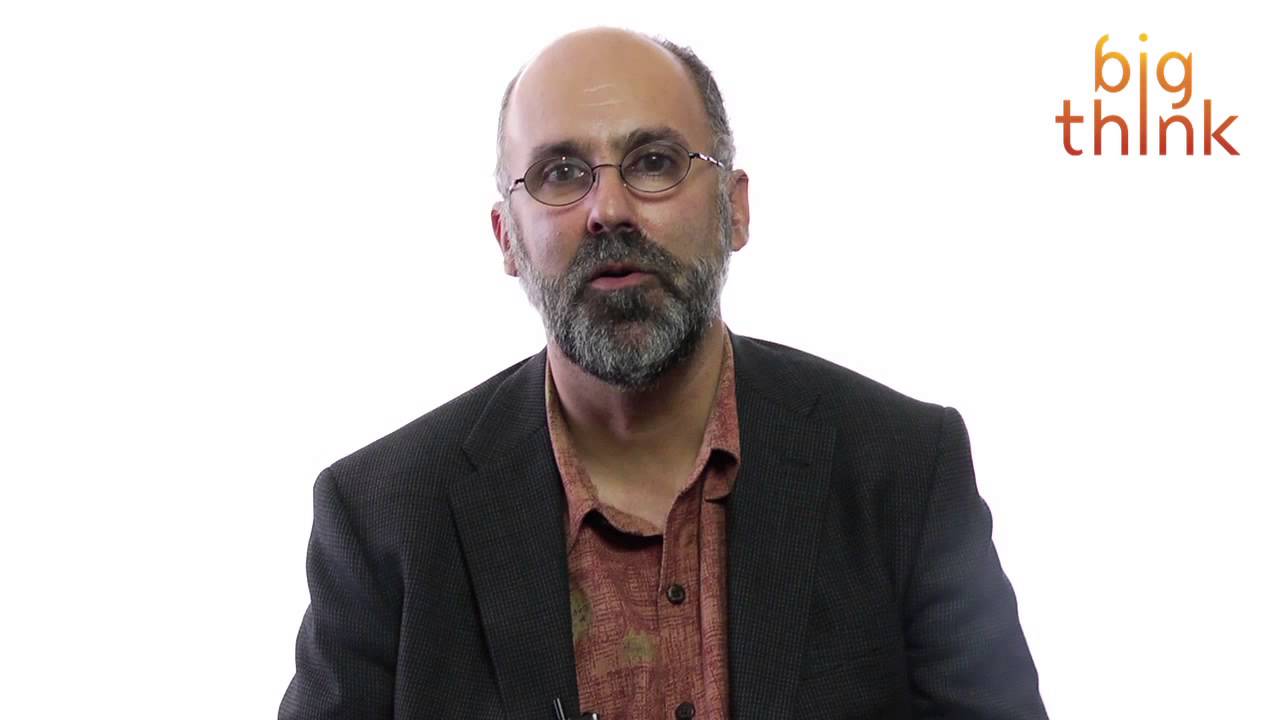
Joel Primack: Dark Matter Reveals the Structure of the Universe | Big Think
Posted
November 20, 2013
Views
52,182
Likes
1,228
Comments
180
Engagement
2.70%
November 20, 2013
52,182
1,228
180
2.70%
Every word spoken in this episode is indexed. Type any phrase to jump straight to the moment it was said.
Type any word or phrase that may have been spoken. Click a result to seek the player to that exact moment.
Try a name, a topic, or a quoted line
 3:26Now Playing
Joel Primack: Dark Matter Reveals the Structure of the Universe
Watch the newest video from Big Think
Join Big Think Edge for exclusive videos
----------------------------------------------------------------------------------
We know that the dark matter has to be pretty cold – moving so slowly that its motion hardly matters – and that allows us to predict in great detail the large scale structure of the universe.
----------------------------------------------------------------------------------
Joel R. Primack:
Joel R. Primack is a professor of physics and astrophysics at the University of California, Santa Cruz and is a member of the Santa Cruz Institute for Particle Physics.
Primack specializes in the formation and evolution of galaxies and the nature of the dark matter that makes up most of the matter in the universe. After helping to create what is now called the "Standard Model" of particle physics, Primack began working in cosmology in the late 1970s, and he became a leader in the new field of particle astrophysics. His 1982 paper with Heinz Pagels was the first to propose that a natural candidate for the dark matter is the lightest supersymmetric particle. He is one of the principal originators and developers of the theory of Cold Dark Matter, which has become the basis for the standard modern picture of structure formation in the universe. With support from the National Science Foundation, NASA, and the Department of Energy, he is currently using supercomputers to simulate and visualize the evolution of the universe and the formation of galaxies under various assumptions, and comparing the predictions of these theories to the latest observational data.
With Nancy Abrams, he is the author of The View from the Center of the Universe: Discovering Our Extraordinary Place in the Cosmos (Riverhead/Penguin, 2006) and The New Universe and the Human Future: How a Shared Cosmology Could Transform the World (Yale University Press, 2011).
----------------------------------------------------------------------------------
TRANSCRIPT:
Joel Primack: Dark matter is the vast majority of the mass of the entire universe. It’s the mass that holds all galaxies together, and in fact, led to the formation of galaxies. And it also holds clusters together and it made the most important contribution to the organization of the structure of the universe.
We already know that the dark matter is cold. I invented this terminology back in 1983, calling the dark matter hot, warm or cold depending on how rapidly it’s moving in the early stages of the Big Bang. Hot if it’s moving at nearly the speed of light, cold if it’s moving so slowly that its motion hardly matters, and warm is an intermediate case. We know that the dark matter has to be pretty cold, but it could be a little bit warm. And that would make a great difference to what we call small scale structure, the amount of satellite galaxies and things like that. We don’t yet know the real nature of the dark matter beyond that it’s pretty cold.
Being pretty cold is enough to allow us to predict in great detail the large scale structure of the universe, the organization of the galaxies and to some extent the satellites of the galaxies. But the small scale structure of the universe really depends in more detail of the nature of the dark matter. Also, the dark matter can possibly interact with itself and annihilate and two dark matter particles come together and then make a lot of other stuff. And this could have played an extremely important role in the early universe, and it could still be producing effects that are sensitive detectors in space and on the ground can find experimentally.
We haven’t yet seen clear evidence for any of these things, although there are a number of experiments that are reporting tentative detections. So, it feels very much like we’re on the verge of major breakthroughs in trying to understand the nature of the dark matter. If we finally do figure out the nature of the dark matter, we will then have a single unified picture of the origin and evolution of the entire universe. One that scientists all over the world have contributed to and that can become the basis for a shared origin story that could possibly solidify the bonds of humankind. We’ve never had a single picture, thoroughly supported by scientific evidence, and we’re coming close to it now.
So I think we scientists are feeling very hopeful that we’re about to cross this threshold and have a complete understanding of the origin and the evolution of the universe. And of course, we’re also coming to a much better understanding of the evolution of life. So these last decades of the 20th century and the first decades of the 21st century are a real turning point, I think, in our understanding of how we got here.
Sentinel Indexing in Progress
Metadata and chapters are available. Claim extraction for this episode is pending.
All video content is delivered via YouTube embedded players in accordance with the YouTube Terms of Service. Sentinel provides research tools that promote discovery and accountability across political media.