Big Think
@bigthink·8.8M subscribers·10.1K videos
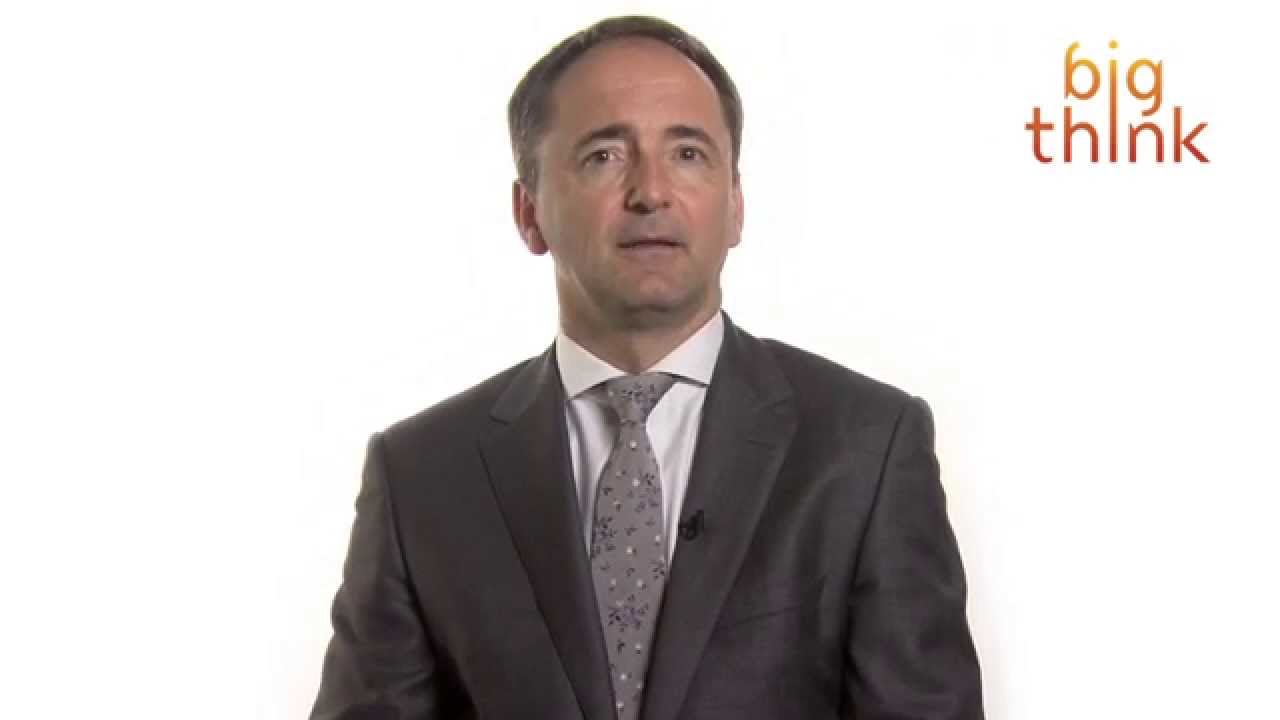
Intel's John Davies on Global Access to Technology | Big Think
Posted
March 25, 2014
Views
15,542
Likes
222
Comments
5
Engagement
1.46%
March 25, 2014
15,542
222
5
1.46%
Every word spoken in this episode is indexed. Type any phrase to jump straight to the moment it was said.
Type any word or phrase that may have been spoken. Click a result to seek the player to that exact moment.
Try a name, a topic, or a quoted line
 5:12Now Playing
Intel's John Davies on Global Access to Technology
Watch the newest video from Big Think
Join Big Think Edge for exclusive videos
----------------------------------------------------------------------------------
John Davies of the Intel World Ahead Program on increasing access to technology.
----------------------------------------------------------------------------------
John E. Davies:
John E. Davies is vice president of the Sales and Marketing Group and general manager of the Intel World Ahead Program at Intel Corporation. The program enables access to modern technology, connecting millions of people to improve education and healthcare, stimulate economies, and enrich lives.
During his 34 years with Intel, Davies has worked in senior engineering, marketing, sales, and has held numerous management positions. He was director of Marketing for the Mobile Computing Group and Consumer Desktop Products Group. He was also general manager of Intel Asia Pacific Region, based in Hong Kong.
Intel has awarded Davies two prestigious Individual Achievement Awards: for establishing Intel in the European automotive market in 1986, and for driving Intel's mobile computing architecture into the Japanese market in 1992. More recently, he won Latin Trade's Bravo Award for 2010 Technology Leader of the Year.
----------------------------------------------------------------------------------
TRANSCRIPT:
John Davies: Well, Intel wants to bring technology to everyone on the planet. And you need to do that in an affordable way, in a secure way and you need it to be in a way that enriches and improve their lives, otherwise they won't pay for technology. And do it in a way that can reach lower income people as well, even if they share technology. In my specific area I focus on digital divide, lower income and spent a lot of time in the education world, primarily through government leaders, ministers of telecom, ministers of education, ministers of finance to help them implement these programs in their countries.
What we do is we work with the telecoms, we work with the regulators, the regulator authorities and we've worked on business models there where broadband has become more and more wireless these days. Rather then wired it's 3G, it's 4G, that's what reaches the people. And in that we've worked with telecoms on lower-cost computers, tablets, so they'll take their business models and adjusted them so you can have lower tiers of pricing in the prepaid model, just like what has happened on the voice phone. That way you reach far, far more people.
Now, if you're reaching far, far more people, people can take their computers home from schools, they can use them in the schools, the university students can afford laptops and capabilities in there, so it's really about affordability and reach. And at Intel we just build the coms communications capabilities into every platform.
Well, obviously over time the price of computers has been coming down. You can get a fantastic computer capability today for maybe $300 or $400. You can get entry-level computers for maybe $200, but then there's $100 tablets around and there's lower cost then that smart phones and there's a spectrum of capabilities. Obviously the higher priced ones do a bit more, but you can do some great basic computing capabilities on an entry-level computer, a tablet, and a lower cost smart phone. Now with that we found over the years that the cost of the broadband can actually be much higher than the cost of the device. As we've worked with the telecom people on that pre-paid model to drive that down. For example, in Africa three years ago the average price of broadband was $30 a month. Well maybe two percent of Africans could afford that. Today you can buy it in one-dollar increments when you have money. So if you're not banks or you want fractions of a dollar increment and you're a university student who uses the LAN in the day and wants their 3G dongle just for a small amount of work in the evening you can do that. And pay one or two dollars a month and get everything you need there. So that makes it much, much more affordable rather than two or three percent affording it maybe 30 or 40 percent can afford it and that brings the technology to much, much more people.
Well, reach for Intel – Intel is not in every country in the world. We have 100,000 employees so we're a large company, but what we do is we work with partners, local partners to integrate and implement. Around the world we may have 200,000 or more channel partners that exist in every country on the planet, and those are the people that can take that technology to the end customer. So if you look at Nigeria there'll be many small Nigerian companies that will take the platforms there.
Read the full transcript at
Sentinel Indexing in Progress
Metadata and chapters are available. Claim extraction for this episode is pending.
All video content is delivered via YouTube embedded players in accordance with the YouTube Terms of Service. Sentinel provides research tools that promote discovery and accountability across political media.