Big Think
@bigthink·8.8M subscribers·10.1K videos
Arianna Huffington: Why Elite Performers Practice Mindfulness | Big Think.
Posted
March 2, 2015
Views
22,053
Likes
421
Comments
72
Engagement
2.24%
March 2, 2015
22,053
421
72
2.24%
Every word spoken in this episode is indexed. Type any phrase to jump straight to the moment it was said.
Type any word or phrase that may have been spoken. Click a result to seek the player to that exact moment.
Try a name, a topic, or a quoted line
 4:49Now Playing
Why Elite Performers Practice Mindfulness
Watch the newest video from Big Think
Join Big Think Edge for exclusive videos
----------------------------------------------------------------------------------
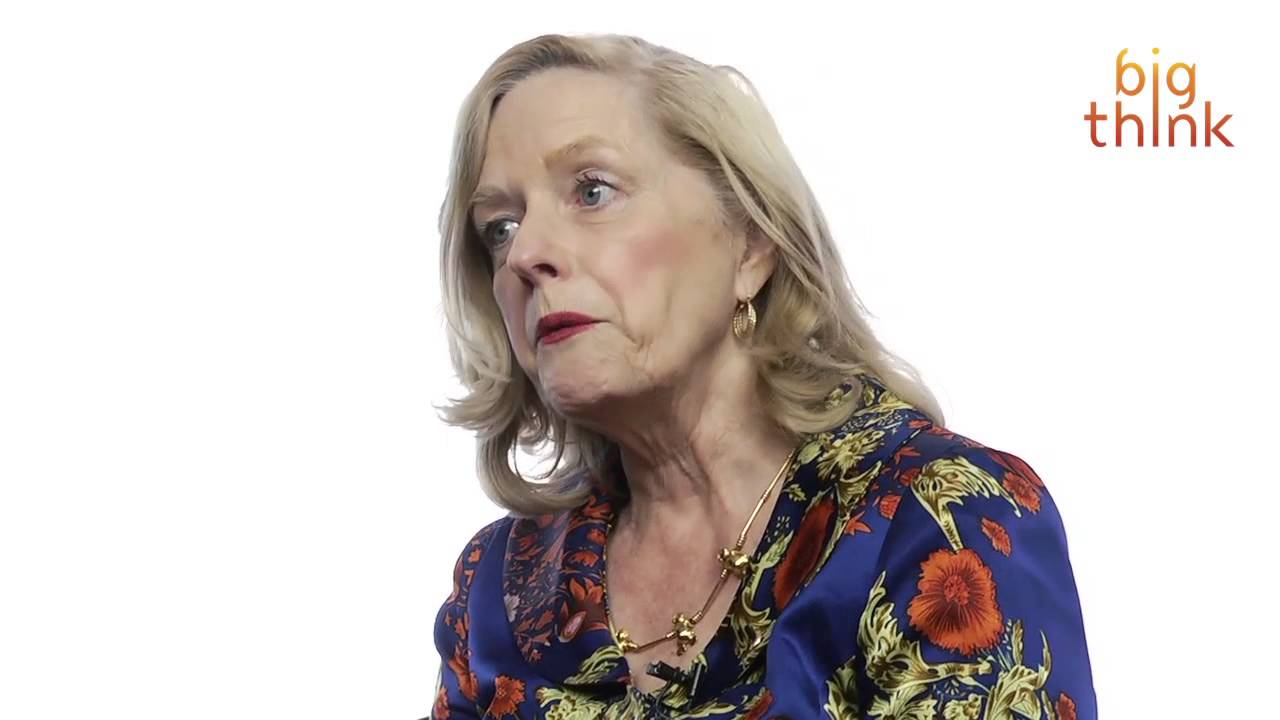
In conversation with How to Think Like Sherlock Holmes author Maria Konnikova, Arianna Huffington argues that mindfulness meditation is a necessary antidote to the US' unhealthy work culture, one that rewards long hours and the appearance of hard work over real focus and connectedness
This is the second video in an exclusive video series of today’s brightest minds exploring the theory of genius. Exclusive videos will be posted daily on youtube.com/bigthink throughout 92nd Street Y’s second annual 7 Days of Genius Festival: Venture into the Extraordinary, running March 1 to March 8, 2015.
----------------------------------------------------------------------------------
ARIANNA HUFFINGTON:
Arianna Huffington is the co-founder and editor-in-chief of The Huffington Post, a nationally syndicated columnist, and author of fourteen books. Her newest book, Thrive: The Third Metric to Redefining Success and Creating a Life of Well-Being, Wisdom, and Wonder was published by Crown in March 2014 and debuted at #1 on the New York Times Bestseller list.
Since launching in 2005, The Huffington Post has become one of the most widely-read, linked to, and frequently-cited media brands on the Internet. In 2012, the site won a Pulitzer Prize for national reporting.
Huffington has been named to Time Magazine's list of the world's 100 most influential people and the Forbes Most Powerful Women list. Originally from Greece, she moved to England when she was 16 and graduated from Cambridge University with an M.A. in economics. At 21, she became president of the famed debating society, the Cambridge Union.She serves on several boards, including HuffPost's partners in Spain, the newspaper EL PAÍS and its parent company PRISA; Onex; The Center for Public Integrity; and The Committee to Protect Journalists.
----------------------------------------------------------------------------------
TRANSCRIPT:
Maria Konnikova: You obviously accomplished a lot before you made mindfulness a part of your life more than most people accomplish in their lives. So do you think that your clarity of thinking has changed in the last eight years and is mindfulness necessary for clearer thought or could you have it without it as you did for so many years before?
Arianna Huffington: Unquestionably mindfulness enhances as you’ve said in your book our clarity of thought. Unquestionably. And both anecdotally and scientifically we can prove that point. One of the main reasons is because by allowing us to be in the moment, it means we don’t stay with what just happened. And that’s one of the reasons that Phil Jackson, now the coach of the Knicks has given for making mindfulness mandatory as part of the Knicks training which I love. I love having elite athletes incorporating mindfulness into their training. And the reason Phil Jackson gives is that he said you’re always going to make mistakes, you know, on the field or in the court. The question is can you then move on and be fully present. Otherwise you’re going to carry the mistake with you and your actions and your decisions are going to be impaired because of that.
Well the same applies to life. If I’m still smarting over something that happened that I’m not happy with, when the moment comes for me to make another decision already on to something new, it’s going to affect that particular moment’s decision.
Maria Konnikova: It’s interesting that you mention professional athletes. One of the things that strikes me about the mindfulness research — and you mention a lot of this in your book is just how broadly it’s been adapted. I mean it’s not just athletes. We have the military doing studies with mindfulness. You have hedge fund managers like Ray Dalio saying that that’s part of their success. All of these people clearly have used it after they reach a certain elite point in their career and then they use mindfulness to almost transcend, you know, to get a step further, to be the athlete who’s not just a great athlete, but who can overcome the problems in the moment. Do you feel like there needs to be some work that has to happen beforehand?
Arianna Huffington: Not at all. And I think with athletes definitely we see them integrating mindfulness, meditation, training into their coaching right away. I think the reason why we have so many successful people who’ve accomplished a lot, who’ve burned out along the way, and have not exactly lived very mindfully is because our whole culture is drenched in the delusion that the only way to really succeed is to burn out....
To read the transcript, please go to
Sentinel Indexing in Progress
Metadata and chapters are available. Claim extraction for this episode is pending.
All video content is delivered via YouTube embedded players in accordance with the YouTube Terms of Service. Sentinel provides research tools that promote discovery and accountability across political media.