Big Think
@bigthink·8.8M subscribers·10.1K videos
There *is* crying in science. And that's a good thing, says Neuroscientist Wendy Sukuki | Big Think
Posted
June 13, 2015
Views
14,943
Likes
350
Comments
157
Engagement
June 13, 2015
14,943
350
157
3.39%
Every word spoken in this episode is indexed. Type any phrase to jump straight to the moment it was said.
Type any word or phrase that may have been spoken. Click a result to seek the player to that exact moment.
Try a name, a topic, or a quoted line
 3:09Now Playing
There *is* crying in science. And that's a good thing,
Watch the newest video from Big Think
Join Big Think Edge for exclusive videos
----------------------------------------------------------------------------------
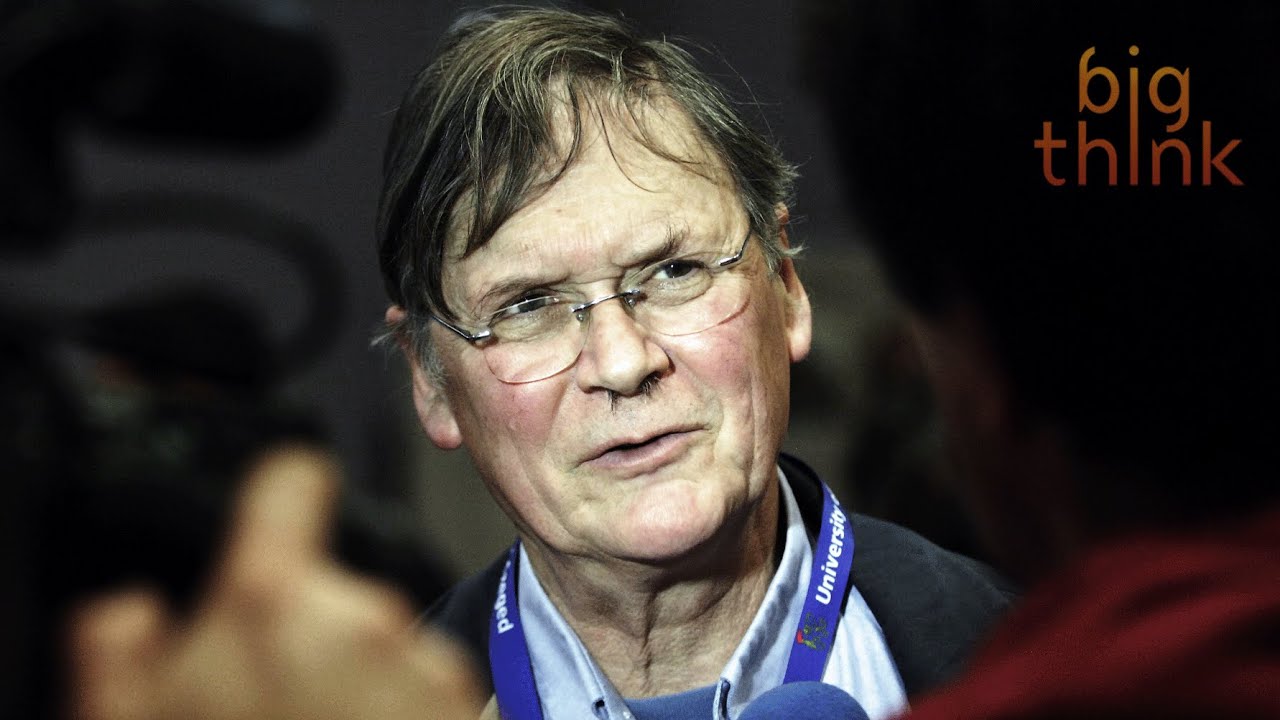
Neuroscientist Dr. Wendy Suzuki took offense to recent comments by Nobel Laureate Tim Hunt about women scientists who become emotional and cry. Not only did she find Hunt's words to be inappropriate, but also Suzuki believes they represent an outdated culture that expects scientists to carry themselves without authentic emotion. Science is like any other beloved livelihood; it's built upon the passion of the men and women involved in it. There's no reason, says Suzuki, that emotion should be subdued. It's okay to cry when you're happy. It's okay to show your frustration when things go wrong. Suzuki's new book is titled Healthy Brain, Happy Life: A Personal Program to Activate Your Brain and Do Everything Better.
----------------------------------------------------------------------------------
WENDY SUZUKI:
Dr. Wendy A. Suzuki is a Professor of Neural Science and Psychology in the Center for Neural Science at New York University. She received her undergraduate degree in Physiology and Human Anatomy at the University of California, Berkeley in 1987, studying with Prof. Marion C. Diamond, a leader in the field of brain plasticity. She went on to earn her Ph.D. in Neuroscience from U.C. San Diego in 1993 and completed a post-doctoral fellowship at the National Institutes of Health before accepting her faculty position at New York University in 1998. Dr. Suzuki is author of the book Healthy Brain, Happy Life: A Personal Program to Activate Your Brain and Do Everything Better.
----------------------------------------------------------------------------------
TRANSCRIPT:
Wendy Suzuki: So there’s a very recent event where a senior male scientist resigned because of very controversial remarks he made about women scientists being crybabies. There are situations that become very, very emotional in a lab. You have worked so long on something and something happens and it’s destroyed. In my opinion, you’re allowed to cry. I don’t care if you’re a man or a woman. That is a reason to cry. People are passionate in science. That’s the ironic thing. People are so passionate about their work. They spend all of their waking hours working on this yet, they’re not allowed to cry if something goes wrong or something bad happens or even if something good happens. I cried when I learned my paper got into Science magazine. I can still remember that. And I think that women, not all women, but some women are more open to that. It’s a movement that has not really started yet, but needs to start about bringing more positive emotion. By positive emotion I mean real emotion, authentic emotion into the practice of science. Because, as you know, the stereotype is closed, you know, unemotional. It’s just data. It doesn’t matter. But the truth is that all scientists are passionate about their ideas and what they’re doing and that leads to passionate emotions that could include crying or laughing or celebrating.
And I know lots of scientists that do show those emotions, but the stereotype is and perhaps the old guard is that shutdown kind of thing and the squelching of any show of emotion. So I certainly have had emotional situations in my lab where I had to say difficult things to people and there have been tears shed. And I have to say that I’ve had a journey myself in learning how to deal with that. At first it’s like, "I don’t want you to cry because if you cry I will cry," and that’s terrible so I tried not to have them cry. But my approach now is, "Look, that’s natural. If you need to cry, you cry." It’s just part — it doesn’t show anything weak or strong. It’s just part of the emotion that’s coming out. And I understand that because I’m saying something that may be difficult for you to hear. And I can see that. And, you know, my tagline is: Scientists are people too and we have emotions. And I think we need to acknowledge that. So I think it’s appropriate that that scientist step down. I think that represents something that we need to move away from in science and embrace the fact that scientists are people and they have emotions and that we’re very passionate people. And so crying can happen. I don’t care if you’re a man or a woman....
To read the transcript, please go to.
Sentinel Indexing in Progress
Metadata and chapters are available. Claim extraction for this episode is pending.
All video content is delivered via YouTube embedded players in accordance with the YouTube Terms of Service. Sentinel provides research tools that promote discovery and accountability across political media.