Big Think
@bigthink·8.8M subscribers·10.1K videos
What Drug Dealers Can Learn From Walgreens, with Stephen J. Dubner | Big Think.
Posted
July 15, 2015
Views
76,028
Likes
1,025
Comments
98
Engagement
1.48%
July 15, 2015
76,028
1,025
98
1.48%
Every word spoken in this episode is indexed. Type any phrase to jump straight to the moment it was said.
Type any word or phrase that may have been spoken. Click a result to seek the player to that exact moment.
Try a name, a topic, or a quoted line
See what was published immediately before and after this episode.
 4:07Now Playing
What Drug Dealers Can Learn From Walgreens,
Watch the newest video from Big Think
Join Big Think Edge for exclusive videos
----------------------------------------------------------------------------------
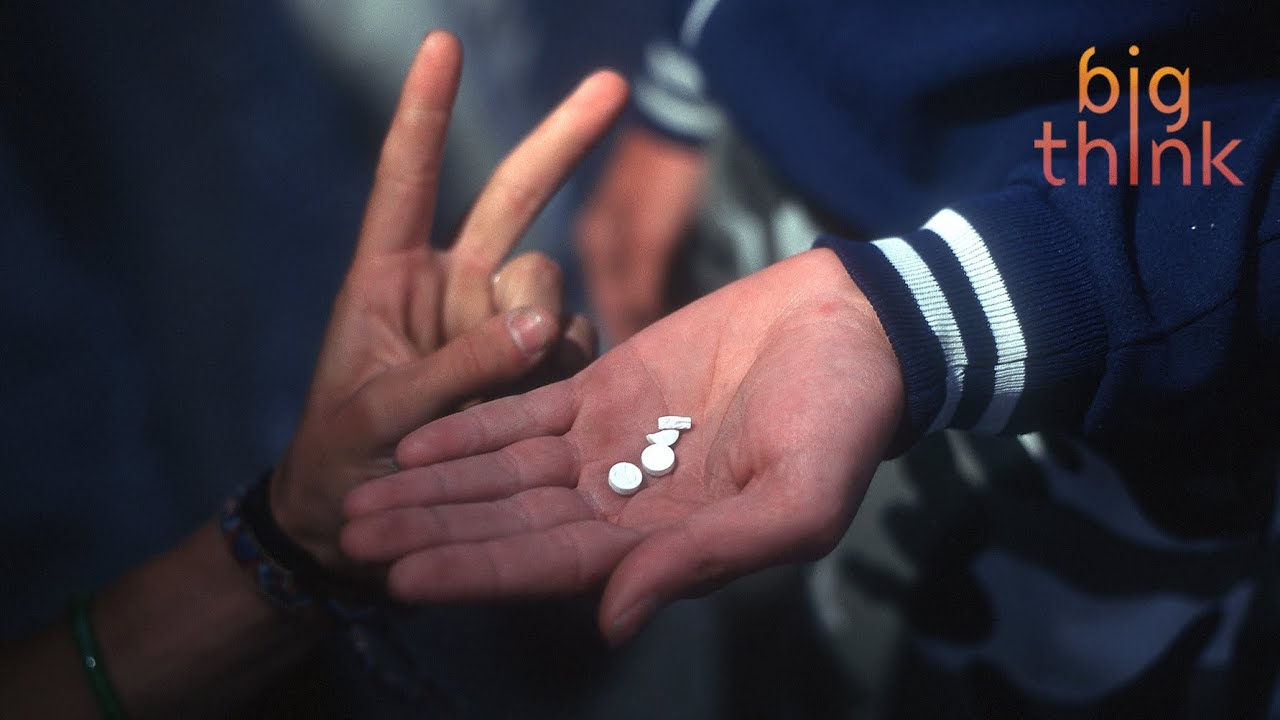
Author Stephen J. Dubner analyzes the economics of drug dealing in the most Freakonomics way possible, comparing the capitalist tendencies of Walgreens with your friendly neighborhood gang of crack dealers. He also explains how drug stores like Walgreens are able to get away with marking up their generic drugs as much as 1,000 percent, exploiting informational asymmetry to rip off those who don't know any better. Dubner's latest book, co-authored by Steven D. Levitt, is called When to Rob a Bank.
----------------------------------------------------------------------------------
STEPHEN J. DUBNER:
Stephen J. Dubner is an award-winning author, journalist, and radio and TV personality. He is best-known for writing, along with the economist Steven D. Levitt, Freakonomics (2005) and SuperFreakonomics (2009), which have sold more than 5 million copies in 35 languages. Their latest books are When to Rob a Bank... and Think Like a Freak (2014).
Dubner is also the author of Turbulent Souls/Choosing My Religion (1998), Confessions of a Hero-Worshiper (2003), and the children's book The Boy With Two Belly Buttons (2007). His journalism has appeared in The New York Times, The New Yorker, Time, and elsewhere, and has been anthologized in The Best American Sports Writing, The Best American Crime Writing, and others.
Freakonomics, published in April 2005, was an instant international best-seller and cultural phenomenon. It made numerous "books of the year" lists, a few "books of the decade" lists, and won a variety of awards, including the inaugural Quill Award, a BookSense Book of the Year Award, and a Visionary Award from the National Council on Economic Education. It was also named a Notable Book by the New York Times. SuperFreakonomics, published in 2009, was published to similar acclaim, and also became an international best-seller.
The Freakonomics enterprise also includes an award-winning blog, a high-profile documentary film, and a public-radio project called Freakonomics Radio, which Dubner hosts. He has also appeared widely on television, including a three-year stint on ABC News as a Freakonomics contributor. He also appeared on the reality show Beauty and the Geek. Alas, he played neither beauty nor geek.
Dubner's first book, Turbulent Souls, was also named a Notable Book, and was a finalist for the Koret National Jewish Book Award. It was republished in 2006 under a new title, Choosing My Religion, and is currently being developed as a film.
The eighth and last child of an upstate New York newspaperman, Dubner has been writing since he was a child. (His first published work appeared in Highlights magazine.) As an undergraduate at Appalachian State University, he started a rock band that was signed to Arista Records, which landed him in New York City. He ultimately quit playing music to earn an M.F.A. in writing at Columbia University, where he also taught in the English Department. He was an editor and writer at New York magazine and The New York Times before quitting to write books. He is happy he did so.
He lives in New York with his wife, the documentary photographer Ellen Binder, and their two delicious children.
----------------------------------------------------------------------------------
TRANSCRIPT:
Stephen J. Dubner: In our first book Freakonomics we wrote about the economics of a crack-selling gang in Chicago. And it was really fun and interesting because we have these assumptions that if you sell drugs, you become a millionaire. And it turns out that the average criminal, drug-selling gang is set up kind of like a franchise, kind of like a McDonald’s really. And that if you own 10 McDonald’s, you do pretty well; you make good money. And if you’re a manager at one you do okay. But if you’re an employee at one, you know, you make very little money. And it turns out that’s the way a drug gang works. That the vast majority of the profits are concentrated at the top. And so we made the argument that, you know, the average crack dealer isn’t, you know, they’re not very well off and the average crack dealer lives at home with mom and often has a second job at a place like McDonald’s. Well if crack dealers could take lessons from their legitimate drug-selling counterparts, they could do a lot better. So here’s what I mean by that.
Generic drugs, we think — most people seem to think because they’re generic, they’re priced the same. That seems to be kind of the way we think it should work. But as it turns out if you look at the pricing data on generic drugs across different companies, retailers, that sell it,....
To read the transcript, please go to.
Sentinel Indexing in Progress
Metadata and chapters are available. Claim extraction for this episode is pending.
All video content is delivered via YouTube embedded players in accordance with the YouTube Terms of Service. Sentinel provides research tools that promote discovery and accountability across political media.