Big Think
@bigthink·8.8M subscribers·10.1K videos
China Relies on ‘Shadow Banks’ for Economic Growth. That’s Not a Recipe for Stability. | Big Think
Posted
August 27, 2015
Views
19,189
Likes
263
Comments
46
Engagement
August 27, 2015
19,189
263
46
1.61%
Every word spoken in this episode is indexed. Type any phrase to jump straight to the moment it was said.
Type any word or phrase that may have been spoken. Click a result to seek the player to that exact moment.
Try a name, a topic, or a quoted line
See what was published immediately before and after this episode.
 4:01
4:01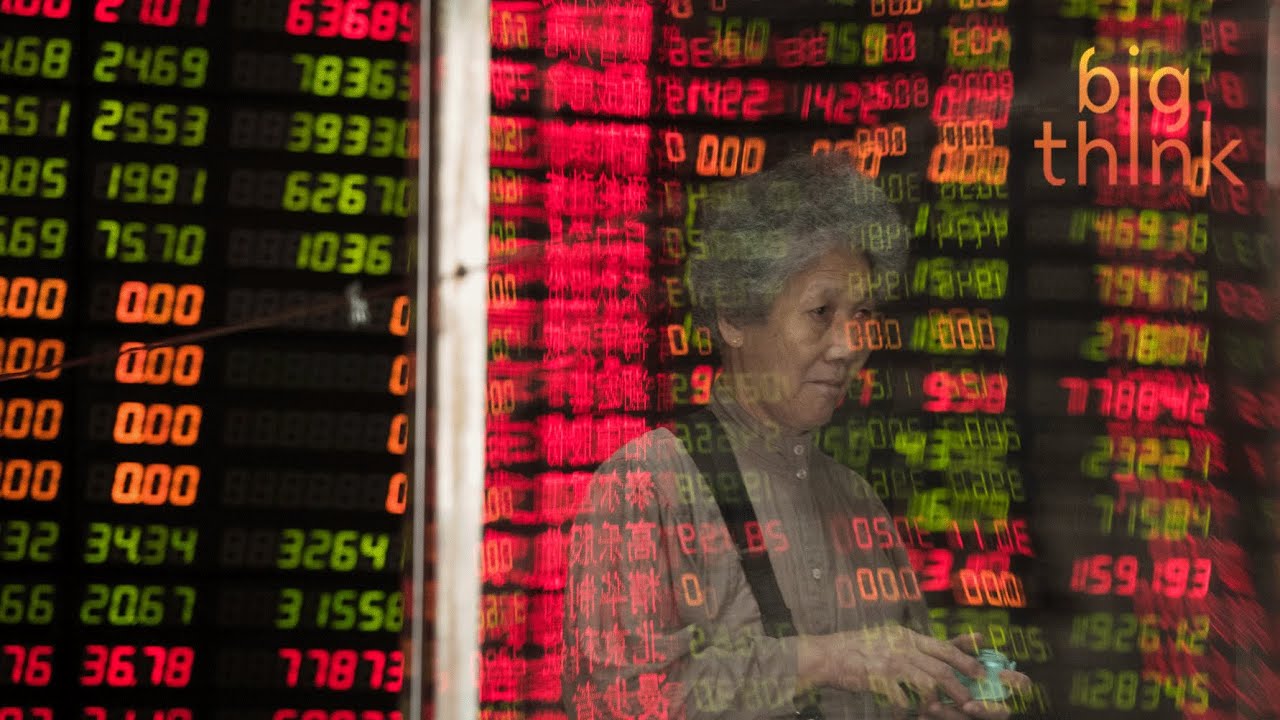 1:14Now Playing
China Relies on ‘Shadow Banks’ for Economic Growth. That’s Not a Recipe for Stability.
Watch the newest video from Big Think
Join Big Think Edge for exclusive videos
----------------------------------------------------------------------------------
Big Think's chief economist discusses the fledgling Chinese shadow banking system that national leaders want to regularize.
----------------------------------------------------------------------------------
DANIEL ALTMAN:
Daniel Altman is Big Think's Chief Economist and an adjunct faculty member at New York University's Stern School of Business. Daniel wrote economic commentary for The Economist, The New York Times, and The International Herald Tribune before founding North Yard Economics, a non-profit consulting firm serving developing countries, in 2008. In between, he served as an economic advisor in the British government and wrote four books, most recently Outrageous Fortunes: The Twelve Surprising Trends That Will Reshape the Global Economy.
----------------------------------------------------------------------------------
TRANSCRIPT:
Daniel Altman: For many years financial markets have been regulated in terms of the amount of interest that can be charged on loans and the types of securities that can be offered by different entities whether loans have collateral or not. All of those things are heavily regulated in China. And this has led to what’s called a shadow banking system where there are billions and billions of dollars being lent out through non-bank institutions to make business possible where the supply of regulated credit is insufficient. China wants to regularize this shadow banking industry. It wants to bring it into the formal sector, but to do that they’re gonna have to slowly start to liberalize these other regulations that have been constraining that sector. And this could be quite a disruptive process because every time they liberalize one of the asset classes, a certain type of loan or security, all of the returns on that asset class will change and there will be shifts in where credit is available in the market. This is part of their overall economic reform plan; it’s part of what they’re seeking to do to open up their capital markets further to make their currency a convertible currency that can be used freely in international markets and move across its borders freely. But it’s going to take time and it will have disruptions along the way.
Big Think's chief economist discusses the fledgling Chinese shadow banking system that national leaders want to regularize.
Sentinel Indexing in Progress
Metadata and chapters are available. Claim extraction for this episode is pending.
All video content is delivered via YouTube embedded players in accordance with the YouTube Terms of Service. Sentinel provides research tools that promote discovery and accountability across political media.