Big Think
@bigthink·8.8M subscribers·10.1K videos
Forget Counting Steps. Quantifying Health Will Save Your Life. | Big Think
Posted
September 19, 2015
Views
18,010
Likes
497
Comments
32
Engagement
2.94%
September 19, 2015
18,010
497
32
2.94%
Every word spoken in this episode is indexed. Type any phrase to jump straight to the moment it was said.
Type any word or phrase that may have been spoken. Click a result to seek the player to that exact moment.
Try a name, a topic, or a quoted line
See what was published immediately before and after this episode.
 5:14Now Playing
Forget Counting Steps. Quantifying Health Will Save Your Life.
Watch the newest video from Big Think
Join Big Think Edge for exclusive videos
----------------------------------------------------------------------------------
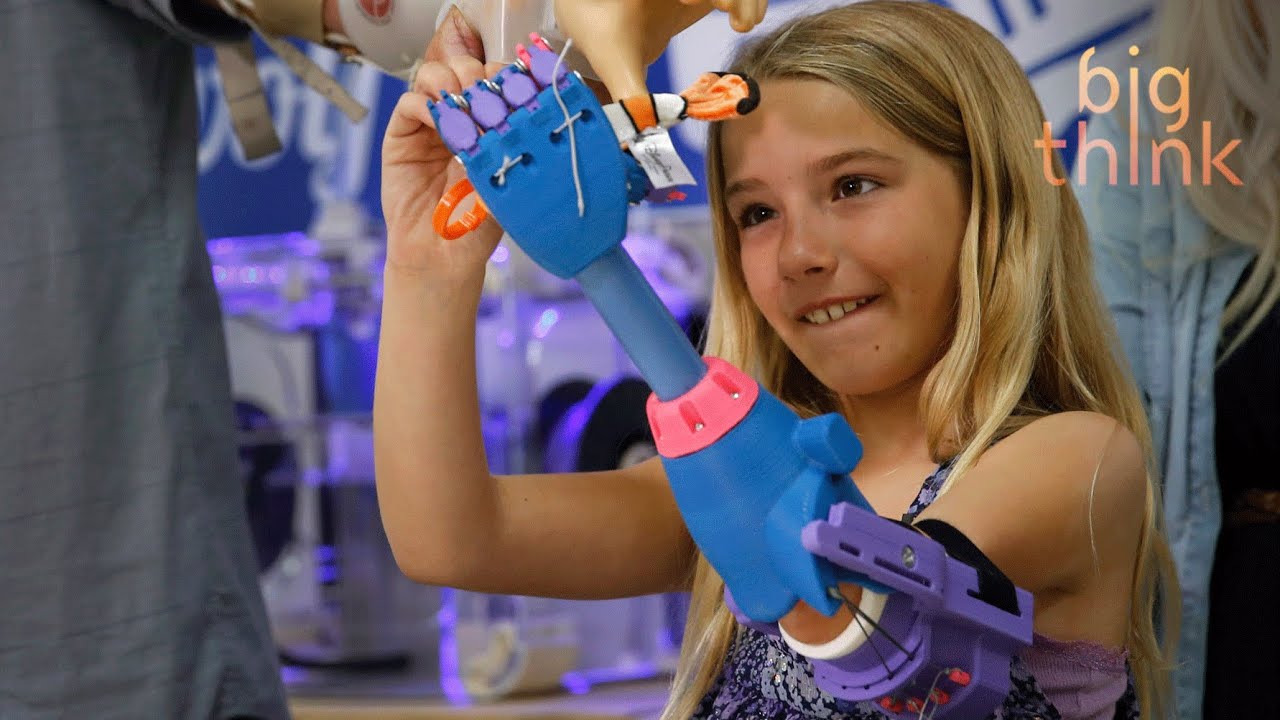
The future of health care could hinge on what Daniel Kraft calls "smart disease management," the operative word being "smart" and referring to innovative diagnostic technology. In this video, Kraft displays several examples of how 3D printing, EKG, and video games can be used to boost your health. The key goal is to pursue lots of good data to help keep track of a person's condition. "There's an immense amount of power in data," says Kraft, and it's power that can be harnessed to help keep people alive.
----------------------------------------------------------------------------------
DANIEL KRAFT:
Daniel Kraft is a Stanford and Harvard trained physician-scientist, inventor, entrepreneur, and innovator. With over 20 years of experience in clinical practice, biomedical research and healthcare innovation, Daniel chairs Medicine for Singularity University and founded and chairs Exponential Medicine, a program which explores the future of healthcare. Daniel’s academic research has focused on: stem cell biology and regenerative medicine, stem cell derived immunotherapies for cancer, bioengineering human T-cell differentiation, and humanized animal models. Dr. Kraft recently founded IntelliMedicine, focused on enabling connected, data driven, and integrated personalized medicine.
----------------------------------------------------------------------------------
TRANSCRIPT:
Daniel Kraft: One of the interesting things about healthcare today is the data is becoming unsiloed and increasingly accessible. So for example, I'm wearing right now a little patch from a company called Vital Connect underneath my shirt. It's talking to my smartphone live. And I can look at a dashboard of my data from my full-on EKG, which will show up right here and it can track the trends and hopefully my EKG looks like it's okay, if there are any cardiologist out there. I can also see data about my steps, my stress level, my position.
If I fall down and I don't get back up, the system can tell that. And this is really an intensive-care-unit-like-type-level data in what will be less than five-dollar-a -ay disposable patch, which can be useful if you're training for a marathon; if you're in a hospital and you're not on a monitored bed; if your home with a disease like heart failure. That's a lot of data. We need to learn to sift through it and pull out the signals because no physician or nurse is going to want to be liable for watching your livestreaming EKG. But is an immense amount of power and data. And we're in this era now of creating digital health exhaust, whether it's my smartwatch, this patch, my phone — it can tell a lot about me, my behaviors.
If, for example, you have a patient who's got bipolar disorder, you can tell from their phone whether they're depressed or they're manic. That can play a role in smart disease, disease management. We can take technologies like 3D printing and tune home-based prosthetics. We can print prosthetic hands for folks and legs in the developing world. Here's mini me in my pocket. It's a 3D-printed version of me. That might be interesting if I need to make a prosthetic for someone who has lost part of her face. Or I was at MIT Media Lab last week and met a young grad student who diagnosed his own brain cancer, written up in The New York Times, and used 3D printing to print a version of his tumor. He said, "Hey, you want a print of my brain tumor?" This helped his surgeons do a better job of finding it and removing it. And he was proactive. He noticed some neurologic symptoms and pushed for his own repeat MRI that helped him get diagnosed earlier.
I have in my pocket a new commercialized version of a brain computer interface from a company called InteraXon. This is the Muse. You can wear this headset and kind of use this for appified mindfulness and meditation. And I might use this to prescribe to a patient who has anxiety instead of giving them a drug, I’d give them a headset. Of course they could do meditation the old-fashioned way but this enables you to quantify it, have a bit of a feedback loop. So the ability to sort of quantify our own minds with brain-computer interface like this can be used to treat everything from PTSD to ADHD. We’re going to see use of video games to improve cognition or to treat disease. We’re seeing fancy brain-computer interfaces from my alma mater Brown University to enable someone who’s quadriplegic just by thinking to move a robotic limb.......
To read the transcript, please go to
Sentinel Indexing in Progress
Metadata and chapters are available. Claim extraction for this episode is pending.
All video content is delivered via YouTube embedded players in accordance with the YouTube Terms of Service. Sentinel provides research tools that promote discovery and accountability across political media.