Big Think
@bigthink·8.8M subscribers·10.1K videos
How Voter Disenfranchisement Strategically Shrinks the Electorate | Big Think.
Posted
February 20, 2016
Views
26,440
Likes
651
Comments
143
Engagement
3.00%
February 20, 2016
26,440
651
143
3.00%
Every word spoken in this episode is indexed. Type any phrase to jump straight to the moment it was said.
Type any word or phrase that may have been spoken. Click a result to seek the player to that exact moment.
Try a name, a topic, or a quoted line
 4:15Now Playing
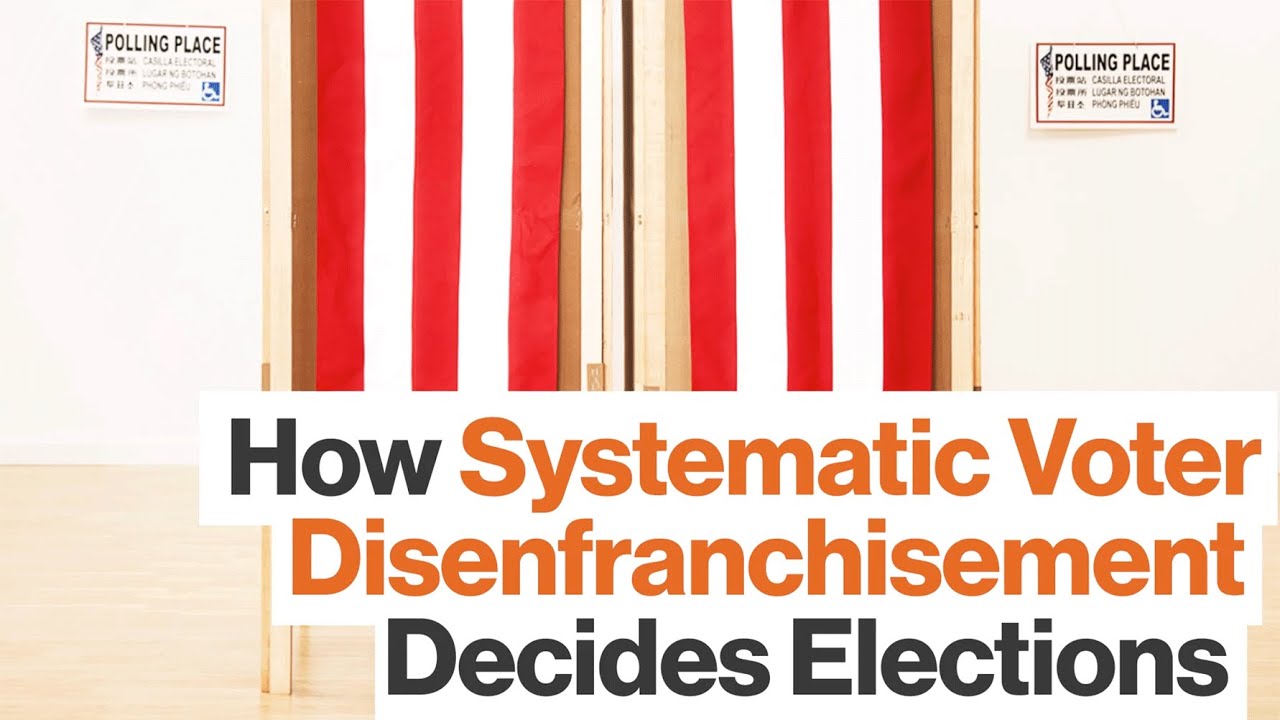
How Voter Disenfranchisement Strategically Shrinks the Electorate
Watch the newest video from Big Think
Join Big Think Edge for exclusive videos
----------------------------------------------------------------------------------
The massive disenfranchisement of convicted felons — totaling 6 million uncounted potential votes in the 2012 presidential election — has decided governors races, key senate races, and even presidential elections, says political science professor Marie Gottschalk. Sadly, this is only one way the American electorate has been undemocratically shrunk. Voter identification laws, poll taxes, literacy tests, and disenfranchisement laws that historically targeted poor individuals are a lasting stain on our democratic principles. "This is a vestige from the Civil War years," says Gottschalk, "when whites were more likely to have committed homicide and African-Americans were going to be picked up for many of these more petty crimes and therefore be disenfranchised." Some states, like Rhode Island, are working to re-enfranchise a number of people, but there is much more to be done.
----------------------------------------------------------------------------------
MARIE GOTTSCHALK:
Marie Gottschalk is a professor of political science at the University of Pennsylvania. She specializes in American politics, with a focus on criminal justice, health policy, race, the development of the welfare state, and business-labor relations.
Her latest book is Caught: The Prison State and the Lockdown of American Politics (Princeton University Press, 2014). She is also the author of The Prison and the Gallows: The Politics of Mass Incarceration in America (Cambridge University Press, 2006), which won the 2007 Ellis W. Hawley Prize from the Organization of American Historians, and The Shadow Welfare State: Labor, Business, and the Politics of Health Care in the United States (Cornell University Press, 2000).
Professor Gottschalk is a former editor and journalist and was a university lecturer for two years in the People’s Republic of China. She was a visiting scholar at the Russell Sage Foundation in New York and was named a Distinguished Lecturer in Japan by the Fulbright Program. She served on the American Academy of Arts and Sciences National Task Force on Mass Incarceration and was a member of the National Academy of Sciences Committee on the Causes and Consequences of High Rates of Incarceration. She is a contributor to the Academy's final report, The Growth of Incarceration in the United States: Exploring Causes and Consequences (National Academies Press, 2014).
She has a B.A. in history from Cornell University, an M.P.A. from Princeton University’s Woodrow Wilson School, and an M.A. and Ph.D. in political science from Yale University.
----------------------------------------------------------------------------------
TRANSCRIPT:
Marie Gottschalk: About 6 million people of the latest data, I think, coming from going into the 2012 election were unable to vote because of a previous criminal conviction and it varies from state to state. Florida is at the very high end of that. Studies have been done and said that this actually impacts elections. If you think about how many, what portion of those people would have voted? How many of them would likely have voted for a Democrat? And you correct for socioeconomic data, that these are people coming from low socioeconomic status who are less likely to vote. You run all that saying all things being equal then in fact had you not had such massive felon disenfranchisement in Florida, the Democrats, Al Gore would have easily won the state and therefore easily would have won the 2000 election and none of us would have known what hanging chads are.
We also had data that’s done on the 1990s and said that a number of governors races would have gone in a different way had there not been this massive felon disenfranchisement. And also key senate races as well. So it affects — it’s so huge and it’s so concentrated in certain states because some, certain states don’t have felon disenfranchisement at all and that certain states like Florida have massive felon, and Virginia, massive felon disenfranchisement that it affects outcome of some elections. After the Civil War, there was an effort to disenfranchise African-Americans and also poor whites because there were fears about the populous movements and blacks and whites joining together. So in the late 19th century, early 20th century we had a massive disenfranchisement in this country. Some states like Louisiana, the turn of the century, only about 15 percent of the “eligible” adult male population was actually voting because of these massive disenfranchisements. So poll taxes, literacy taxes,........
To read the transcript, please go to.
Sentinel Indexing in Progress
Metadata and chapters are available. Claim extraction for this episode is pending.
All video content is delivered via YouTube embedded players in accordance with the YouTube Terms of Service. Sentinel provides research tools that promote discovery and accountability across political media.