Big Think
@bigthink·8.8M subscribers·10.1K videos
Hey Bill Nye, 'Is the Expansion of the Universe Gaining Speed?' #TuesdaysWithBill | Big Think
Posted
March 29, 2016
Views
76,460
Likes
2,172
Comments
290
Engagement
March 29, 2016
76,460
2,172
290
3.22%
Every word spoken in this episode is indexed. Type any phrase to jump straight to the moment it was said.
Type any word or phrase that may have been spoken. Click a result to seek the player to that exact moment.
Try a name, a topic, or a quoted line
 4:56Now Playing
'Is the Expansion of the Universe Gaining Speed?' #TuesdaysWithBill
Watch the newest video from Big Think
Join Big Think Edge for exclusive videos
----------------------------------------------------------------------------------
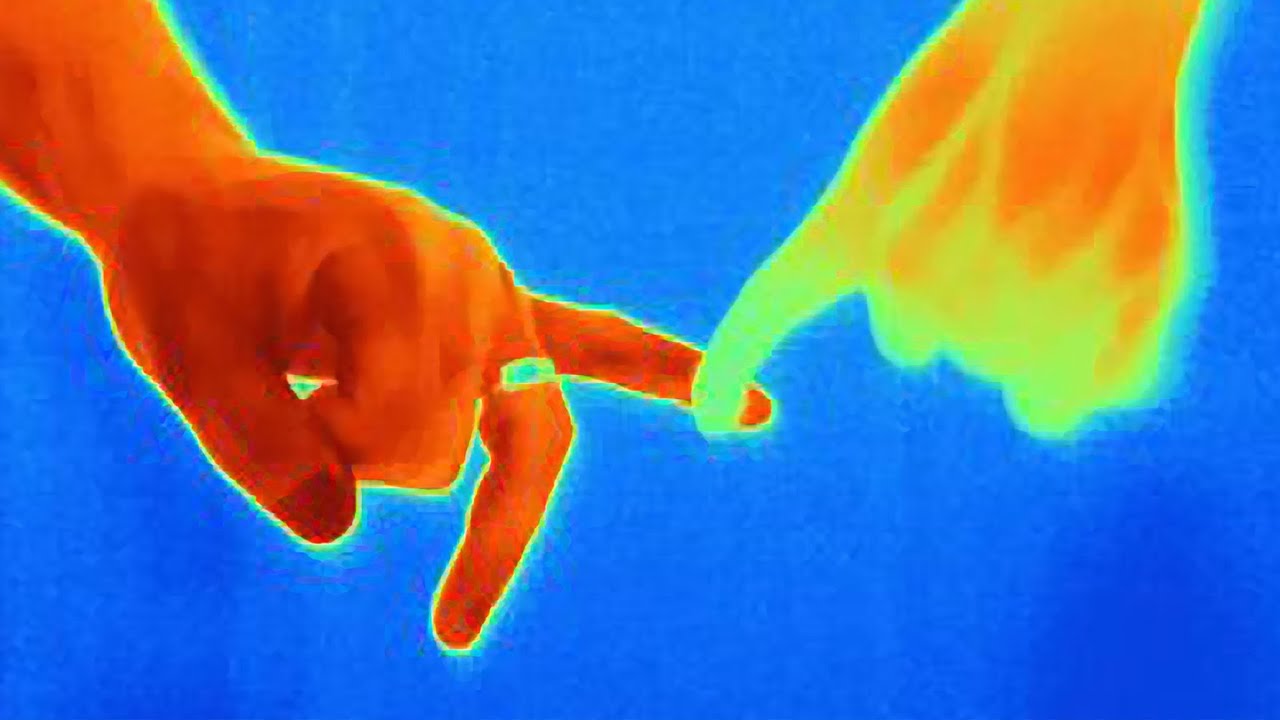
Edwin Hubble's discovery that the universe is expanding changed not only the way we think of the universe, but also how we understand the passage of time. Bill Nye the Science Guy explains how Hubble's finding created the foundation for other 20th century discoveries, e.g. that the universe is not only expanding, but expanding at an accelerating rate. The implication is that stars are moving apart from each other faster and faster, and that space itself is expanding. Where is it expanding into if there is no space already there? That's one of the mysteries of modern physics, says Nye.
----------------------------------------------------------------------------------
BILL NYE, THE SCIENCE GUY:
Bill Nye, scientist, engineer, comedian, author, and inventor, is a man with a mission: to help foster a scientifically literate society, to help people everywhere understand and appreciate the science that makes our world work. Making science entertaining and accessible is something Bill has been doing most of his life. In Seattle Nye began to combine his love of science with his flair for comedy, when he won the Steve Martin look-alike contest and developed dual careers as an engineer by day and a stand-up comic by night. Nye then quit his day engineering day job and made the transition to a night job as a comedy writer and performer on Seattle's home-grown ensemble comedy show “Almost Live." This is where “Bill Nye the Science Guy®" was born. The show appeared before Saturday Night Live and later on Comedy Central, originating at KING-TV, Seattle's NBC affiliate. While working on the Science Guy show, Nye won seven national Emmy Awards for writing, performing, and producing. The show won 18 Emmys in five years. In between creating the shows, he wrote five children's books about science, including his latest title, “Bill Nye's Great Big Book of Tiny Germs." Nye is the host of three currently-running television series. “The 100 Greatest Discoveries" airs on the Science Channel. “The Eyes of Nye" airs on PBS stations across the country. Bill's latest project is hosting a show on Planet Green called “Stuff Happens." It's about environmentally responsible choices that consumers can make as they go about their day and their shopping. Also, you'll see Nye in his good-natured rivalry with his neighbor Ed Begley. They compete to see who can save the most energy and produce the smallest carbon footprint. Nye has 4,000 watts of solar power and a solar-boosted hot water system. There's also the low water use garden and underground watering system. It's fun for him; he's an engineer with an energy conservation hobby. Nye is currently the Executive Director of The Planetary Society, the world's largest space interest organization.
---------------------------------------------------------------------------------
TRANSCRIPT:
Marty Behsman: Bill. How are you doing? My name is Marty Behsman. I'm from Boston Massachusetts, New England. My question for you is do you believe that as space expands it starts moving at a faster and less controlled rate? I've always wondered this given our ancestors had such a closer view of time and space than we have now and it seems to have been moving pretty much faster away from us than as they had says a huge view of galaxies and what they originally mapped out. Thank you very much.
Bill Nye: Marty. Marty. Marty. So you're asking a great question. Keep in mind that in my grandfather's time it was believed by a great many people that the universe was static, that it just is the way it's always been. It's big, some extraordinarily huge size and it had always been that way. Then in my father's time relativity was discovered and furthermore the expanding universe was discovered. It was discovered nominally or largely credited to Edwin Hubble and that's what we named the space telescope after Hubble because he was looking at the stars, he was an astronomer studying various types of stars and he could identify different types of stars and then realized that all of them of a certain type were moving farther away at a very high speed. And you determine this through this famous expiration the red shift. He noticed that the stars were slightly redder than he would have expected. And this he attributed to their speed stretching the wavelength of light out. It's amazing. And this was around 1927, 1928/29. Hubble realized the universe was expanding and this was consistent with certain aspects of relativity of Einstein's postulations or theories........
To read the transcript, please go to
Sentinel Indexing in Progress
Metadata and chapters are available. Claim extraction for this episode is pending.
All video content is delivered via YouTube embedded players in accordance with the YouTube Terms of Service. Sentinel provides research tools that promote discovery and accountability across political media.