Big Think
@bigthink·8.8M subscribers·10.1K videos
Immortality: When We Digitally Copy Our Minds, What Happens to Humanity? | Big Think
Posted
April 11, 2016
Views
49,277
Likes
1,502
Comments
550
Engagement
April 11, 2016
49,277
1,502
550
4.16%
Every word spoken in this episode is indexed. Type any phrase to jump straight to the moment it was said.
Type any word or phrase that may have been spoken. Click a result to seek the player to that exact moment.
Try a name, a topic, or a quoted line
 3:13Now Playing
Immortality: When We Digitally Copy Our Minds, What Happens to Humanity?
Watch the newest video from Big Think
Join Big Think Edge for exclusive videos
----------------------------------------------------------------------------------
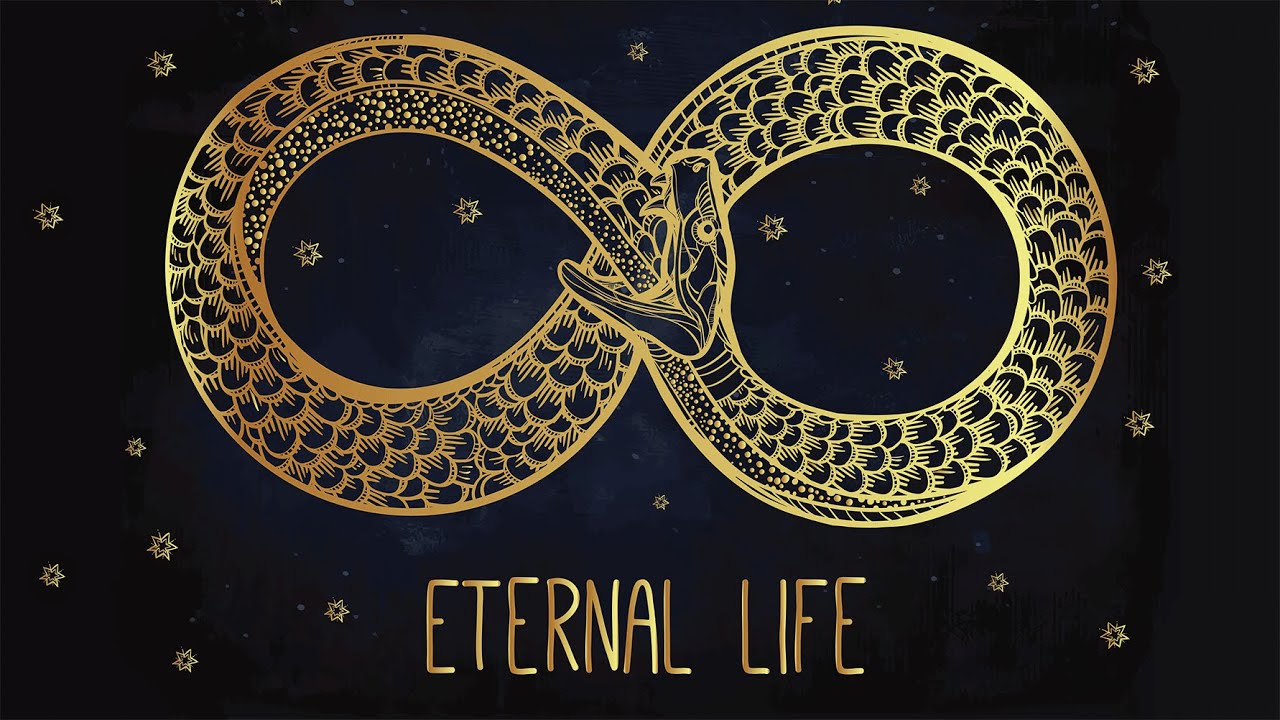
At some point this century, we will confront the prospect of immortality, says award-winning journalist Steven Kotler. After our bodies die, it will be possible to upload our minds into a computer, and then download them into another body. The implications for humanity are difficult to fathom.
As Kotler says, the basic engine of evolution is death — by physically adapting to our environment, our genes are preserved long enough to pass to the next generation. But human culture would also be thrown into uncharted territory.
Religious systems claims to guide the morality of human action, and they posit what exists after our natural death, so it's unclear what claim these dogmas would have to human behavior in a world where we live forever.
Kotler's latest book is, Bold: How to Go Big, Create Wealth and Impact the World.
----------------------------------------------------------------------------------
STEVEN KOTLER:
Steven Kotler is an award-winning journalist, a New York Times bestselling author, and executive director of Flow Research Collective. His books include the non-fiction works The Rise of Superman, Abundance, A Small Furry Prayer, West of Jesus, and the novel The Angle Quickest for Flight. His works have been translated into over 30 languages. His articles have appeared in over 60 publications, including The Atlantic Monthly, Wired, GQ, Popular Science, and Discover.
His latest book, co-authored with tech CEO Peter Diamandis, is Bold: How to Go Big, Create Wealth and Impact the World.
--------------------------------------------------------------------------------
TRANSCRIPT:
Steven Kotler: In the face of immortality, morality is going to radically change, right. We’ve evolved to die. Like for the entire history of life on this planet life has come to an end. There is nothing, you know, consciously there’s nothing period out there that says this is how you behave if you live forever. This is how you start to structure a society if I can store my personality on a computer. This is what I do. I can store that personality onto a computer and download it into another body. These are huge, far flung really strange questions, right. And they seem totally science fiction at this point but everything we’ve seen over the past 25 years, right, is most of the science fiction cannon from the twentith century has turned into science fact in the twenty-first century already. So this twenty-first century sci-fi idea of mind uploading is probably going to be here by the twenty-second century. So we’ve got 50 years, 70 years to start figuring out these really complicated hard questions.
The idea in mind uploading is that we can store ourselves on silicon. We can upload our personalities, our brains, some part of our consciousness onto computers and they can stay around forever. It is a far out there technology for sure even though British Telecom is working on it, even though people are working on it. It’s very early days. Ray Kurzweil has famously kind of pegged the date when we’re going to have to deal with this problem as 2045. That may be really, really enthusiastic. I think it’s a conservative prediction. But the point is that at some point in the century this is probably going to get real. And you’ve got to stop and you’ve got to go for all five of the world’s major religions just to start there. Use the threat of the hereafter, right. What’s going to happen after this life to steer morality and shape behavior. So what happens to theological morality in the face of technological immortality is the big kind of metaphysical question.
If you look at the science fiction work of Richard K. Morgan whose fantastic, he talks about what happens when consciousness becomes downloadable and bodies become expendable and what that means for soldiers and armies and mercenaries and things along those lines. So there’s a really like a gritty cyberpunk underbelly in the mind uploading technology even though it’s being developed for educational purposes so we can preserve the brains of the Einstein’s and the Beethoven’s and the Richard Feynman’s of the world and really kind of get inside them. But it’s sort of like I think of it like television, right. When they created television they thought it was going to be used for educational purposes and that was the only – ask the creator of TV what do you think this would be good for. .......
To read the transcript, please go to
Sentinel Indexing in Progress
Metadata and chapters are available. Claim extraction for this episode is pending.
All video content is delivered via YouTube embedded players in accordance with the YouTube Terms of Service. Sentinel provides research tools that promote discovery and accountability across political media.