Big Think
@bigthink·8.8M subscribers·10.1K videos
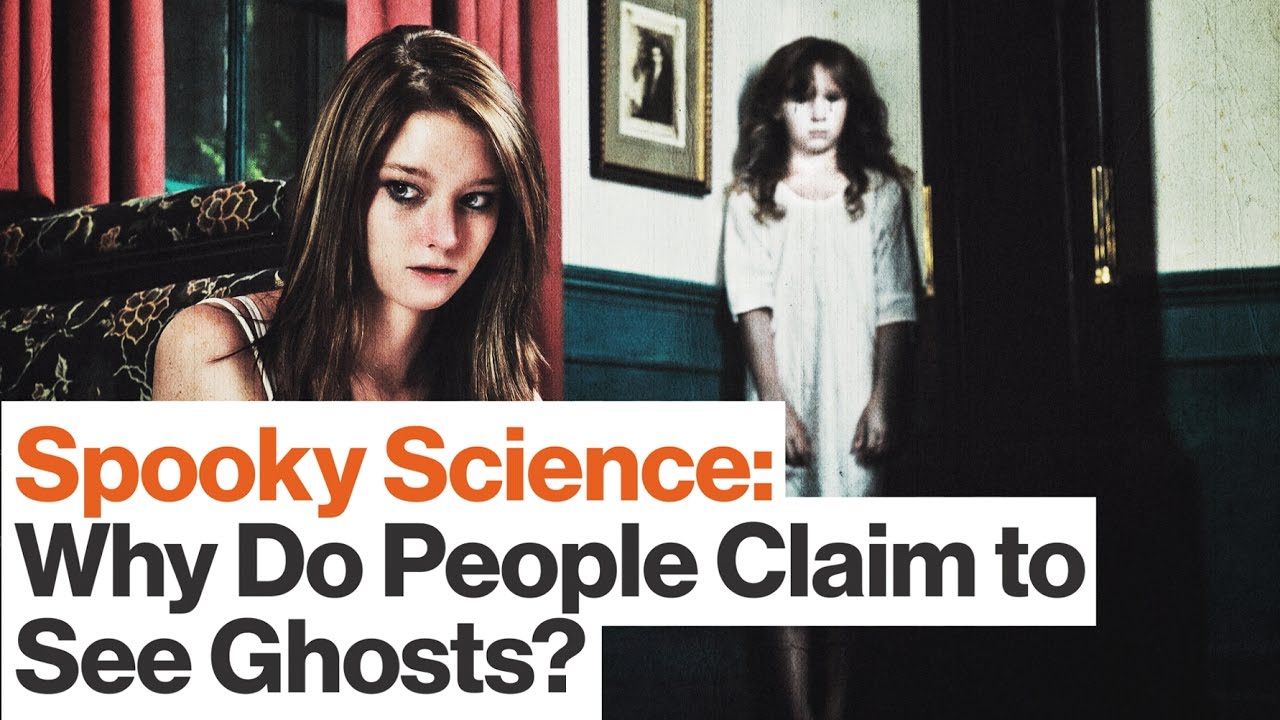
Spooky Science: Why Do People Claim to See Ghosts? | Alison Gopnik| Big Think
Posted
October 27, 2016
Views
62,191
Likes
1,094
Comments
401
Engagement
2.40%
October 27, 2016
62,191
1,094
401
2.40%
Every word spoken in this episode is indexed. Type any phrase to jump straight to the moment it was said.
Type any word or phrase that may have been spoken. Click a result to seek the player to that exact moment.
Try a name, a topic, or a quoted line
 3:24Now Playing
Spooky Science: Why Do People Claim to See Ghosts?
Watch the newest video from Big Think
Join Big Think Edge for exclusive videos
----------------------------------------------------------------------------------
Whatever you do, don't look behind you – because the answer isn't there, says psychologist Alison Gopnik. The real ghosts are glitches in your brain, and in a way, that's even scarier.According to a 2009 Pew Research survey, 18% of adults in the U.S. say they’ve seen a ghost or at least felt its presence. An even greater number (29%) say they have felt in touch with someone who has died.
Humans have felt presences for at least as long as we have recorded history and, naturally, where there is mystery there are scientists poking and prodding to get to the bottom of it.
So how does this supernatural phenomenon hold up under scientific scrutiny? Developmental psychologist Alison Gopnik tells us a spine-chilling story this Halloween, where a bunch of scientists from University Hospital of Geneva ran a neurological study to examine the popular claim of spirit-world sensations. Through a very interesting method, what they found was that patients with a particular kind of damage to their frontoparietal cortex where especially likely to have this ghost sensation, and that our brain can dupe us into feeling things that really aren’t there – we may literally feel a touch on our back due to a brain glitch.
That’s not so scary, right? That’s kind of comforting. Well, Gopnik’s ‘boo!’ moment in this tale comes in the form of a pensive and introspective twist: the frontoparietal cortex is the same brain region that lets us sense our own bodies, and be aware of our own kinesthetic motions. If it can be duped, how do we know that it’s always reliable? How sure are you that your hand is holding a mobile phone, that your thumb is scrolling on the screen, and that you’re tucking it away in your pocket? It feels real, your frontoparietal cortex tells you that’s very real, but this experiment suggests it could very well be an illusion. How confident are you that your sense of your own body is real? It’s something we haven’t got to the bottom of yet.
Alison Gopnik's most recent book is The Gardener and the Carpenter: What the New Science of Child Development Tells Us about the Relationship Between Parents and Children.
----------------------------------------------------------------------------------
ALISON GOPNIK :
Alison Gopnik is a professor of psychology and affiliate professor of philosophy at the University of California at Berkeley. She received her BA from McGill University and her PhD. from Oxford University. She is an internationally recognized leader in the study of children’s learning and development and was the first to argue that children’s minds could help us understand deep philosophical questions. She is a columnist (every other week) for The Wall Street Journal. She is the author of over 100 journal articles and several books including “Words, thoughts and theories” (coauthored with Andrew Meltzoff), MIT Press, 1997, and the bestselling and critically acclaimed popular books The Scientist in the Crib (coauthored with Andrew Meltzoff and Patricia Kuhl) William Morrow, 1999, and The Philosophical Baby: What children’s minds tell us about love, truth and the meaning of life, Farrar, Strauss and Giroux, 2009. She has also written widely about cognitive science and psychology for Science, The Times Literary Supplement, The New York Review of Books, The New York Times, New Scientist and Slate, among others. And she has frequently appeared on TV and radio including “The Charlie Rose Show” and “The Colbert Report." She has three sons and lives in Berkeley, California with her husband Alvy Ray Smith.
----------------------------------------------------------------------------------
TRANSCRIPT :
Alison Gopnik: There is a fascinating line of research recently trying to explain why people see ghosts. And it's a phenomenon that people have talked about for a long time that someone will suddenly feel as if there's this presence of another person that's near by. And it turns out that you can actually artificially induced that sense of another presence that's nearby. And you can do it by using the sense that we have of our own presence. So as I'm sitting here now I have a fairly strong sense that I am sitting here now; that there's this person who's me who's sitting here. And part of that is because of my kinesthetic appreciation of the way that my own body works. The fact that when I try to do something my body follows.
Read the full transcript at
Sentinel Indexing in Progress
Metadata and chapters are available. Claim extraction for this episode is pending.
All video content is delivered via YouTube embedded players in accordance with the YouTube Terms of Service. Sentinel provides research tools that promote discovery and accountability across political media.