Big Think
@bigthink·8.8M subscribers·10.1K videos
The Trump-Russia Dossier: What Was BuzzFeed Thinking? | Matt Taibbi | Big Think
Posted
January 23, 2017
Views
27,430
Likes
1,096
Comments
144
Engagement
4.52%
January 23, 2017
27,430
1,096
144
4.52%
Every word spoken in this episode is indexed. Type any phrase to jump straight to the moment it was said.
Type any word or phrase that may have been spoken. Click a result to seek the player to that exact moment.
Try a name, a topic, or a quoted line
 3:28Now Playing
The Trump-Russia Dossier: What Was BuzzFeed Thinking?
Watch the newest video from Big Think
Join Big Think Edge for exclusive videos
----------------------------------------------------------------------------------
The Trump-Russia dossier reads as though the inside of the Kremlin is a high school cafeteria where you can overhear amazing state secrets all the time, says journalist Matt Taibbi – that's just not the way the Russians operate.On January 10, 2017, BuzzFeed published the ‘Trump–Russia Dossier’. The 35-page file of unverified information was collected by a former British intelligence officer and had been circulating behind-the-scenes amongst the media community for several weeks as journalists tried but failed to verify its claims. After CNN reported on the existence of the dossier, BuzzFeed published the document in full, acknowledging that its contents were unconfirmed and some parts outright erroneous, but believing that "Americans can make up their own minds about allegations about the president-elect that have circulated at the highest levels of the US government." Journalist Matt Taibbi weighs in on this ethical dilemma – should journalists participate in this kind of guessing game? Matt Taibbi's most recent book is Insane Clown President: Dispatches from the American Circus.
----------------------------------------------------------------------------------
MATT TAIBBI :
Matt Taibbi is an American journalist. He reports for Rolling Stone, authoring a "Road Rage" column for the print version, and a weekly online column, "The Low Post." Taibbi is well-known for covering the 2004 US presidential election, and for his earlier editorial contributions to newspapers the eXile, the New York Press, and the Beast. In 2008, Taibbi was a regular contributor to Real Time with Bill Maher. Much of his most recent reporting has covered scandals within the U.S. financial industry.
----------------------------------------------------------------------------------
TRANSCRIPT:
Matt Taibbi: The golden shower story it's kind of a classic journalistic ethical dilemma. On the one hand what do you do about a news story that everybody is talking about but who's factual basis is suspect? As a news organization you can't really ignore it, but if you cover it at all you're giving it attention without confirming it, which is kind of not what we're supposed to do in this business.
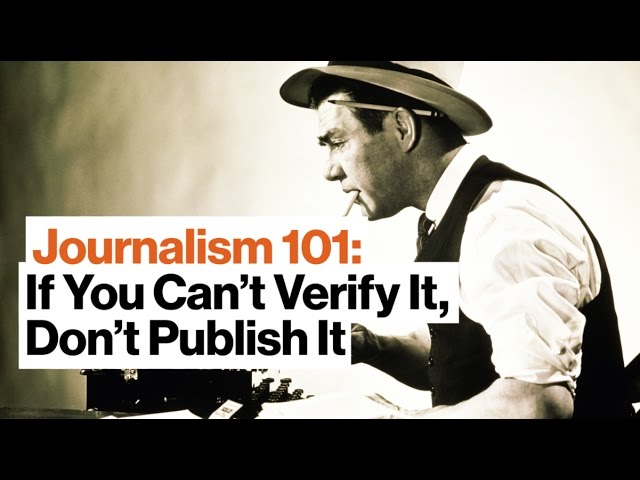
People who go to journalism school or who have been in this business for a long time we're kind of inculcated with this idea of the malice standard. We’re not supposed to put anything out there that we know to be untrue or that we don't feel solid about. If we knowingly put something out there in the news that we are unsure of that's malice, that's the grounds for liable. That's what we're not supposed to do. That's what the law tells us affirmatively that we can't do.
But that's exactly what went on with this BuzzFeed story. They actually openly said in the story: We have doubts about the veracity of this material but we're going to put it out there anyway. So now what does everybody do? You can't put the genie back in the bottle. Now it's a news story. It's a phenomenon that everybody is talking about. But if we can't confirm what's in the actual dossier then how do we talk about it?
And there's an additional problem with the story, which is that the motives of almost everybody involved are suspect. How is this material getting to reporters? Well, we know for sure that it was being shopped around to a number of different journalists in the last five or six months. It started off as opposition research first in the Republican Party and then by the Democrats.
And then there's this other problem where there are these leaks that are emanating from the intelligent services that are trying to foist, I think, on the population this idea that there are links between Russia and Donald Trump. But they're doing it in a way without showing their hand as to what the evidence is for that belief.
As somebody who lived over there for a long time, the dossier reads like the inside of the Kremlin is a high school cafeteria where you can overhear all these amazing state secrets all the time. I mean that's just not the way the Russians operate. They run a much tighter ship than that in my experience. I don't remember ever hearing anybody leaking word of these conversations between Putin and his inner circle back when I was there.
It's just really, really hard for me to imagine that we would get anything out of the Kremlin that they didn't want us to have, which makes it more confusing is this a disinformation campaign that's coming from Russia?
Read the full transcript at
Sentinel Indexing in Progress
Metadata and chapters are available. Claim extraction for this episode is pending.
All video content is delivered via YouTube embedded players in accordance with the YouTube Terms of Service. Sentinel provides research tools that promote discovery and accountability across political media.