Big Think
@bigthink·8.8M subscribers·10.1K videos
CRISPR's Gene Drive Could Revive Extinct Species–or Create New Ones | Jennifer Doudna | Big Think
Posted
June 26, 2017
Views
43,543
Likes
1,064
Comments
207
Engagement
June 26, 2017
43,543
1,064
207
2.92%
Every word spoken in this episode is indexed. Type any phrase to jump straight to the moment it was said.
Type any word or phrase that may have been spoken. Click a result to seek the player to that exact moment.
Try a name, a topic, or a quoted line
 5:39Now Playing
CRISPR's Gene Drive Could Revive Extinct Species–or Create New Ones
New videos DAILY
Join Big Think Edge for exclusive video lessons from top thinkers and doers
----------------------------------------------------------------------------------
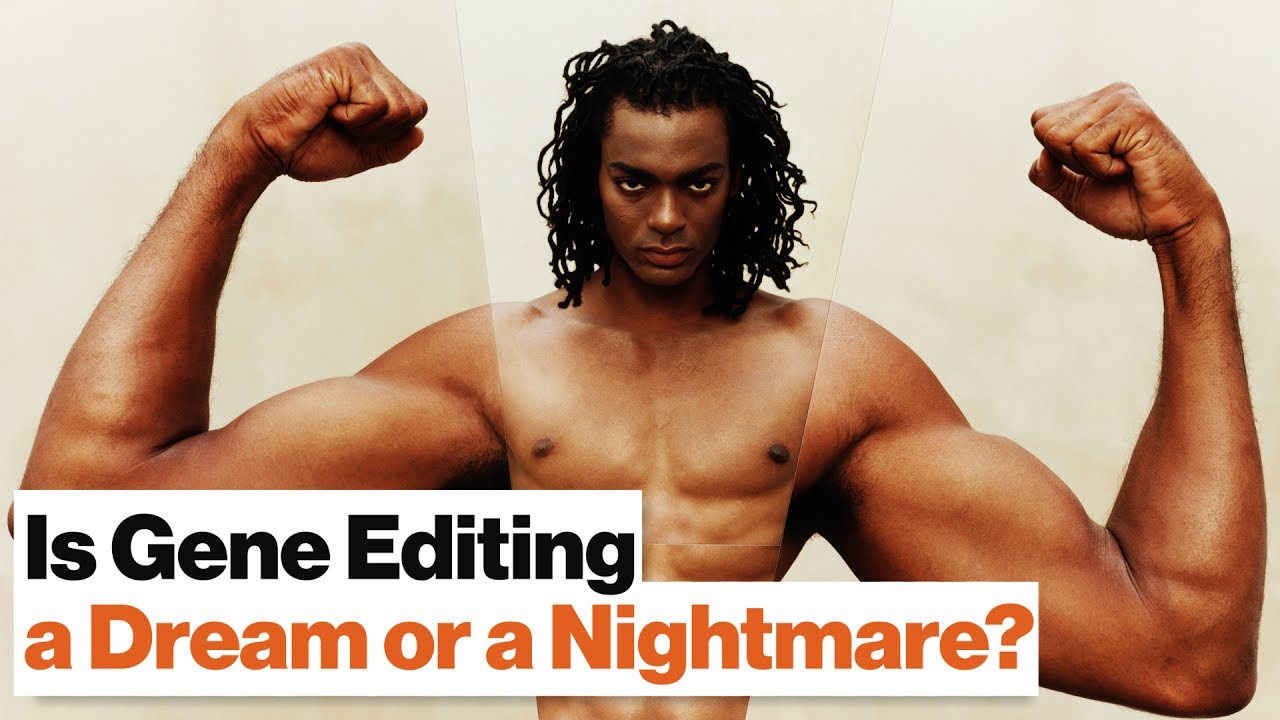
Gene-editing tool CRISPR is already poised to be one of the biggest inventions of the 21st century, and co-creator Jennifer Doudna already has big ideas for different ways to use it. There's a potential here, she explains, that scientists could possibly resurrect extinct species... and even invent new ones. The idea might sound wholly familiar to those who've seen the modern classic Jurassic Park (featuring Jeff Goldblum at his cultural zenith playing a mathematician, we might add): dinosaur DNA could be reproduced and in 20 years humanity really could have a dinosaur theme park. But Jennifer Doudna also understands how harmful this technology could be if in the wrong hands.
----------------------------------------------------------------------------------
JENNIFER DOUDNA:
Jennifer A. Doudna, Ph.D., Professor of Molecular and Cell Biology and Chemistry at the University of California, Berkeley, has devoted her scientific career to revealing the secret life of RNA. Using structural biology and biochemistry, Doudna's work deciphering the molecular structure of RNA enzymes (ribozymes) and other functional RNAs has shown how these seemingly simple molecules can carry out the complex functions of proteins.
Doudna is a pioneer of the revolutionary CRISPR/Cas9 gene-editing technology. Working with microbiologist Emmanuelle Charpentier, postdoctoral researcher Martin Jinek and graduate student Krysztof Chylinski, the team published their findings in Science in August 2012. Their paper immediately and dramatically transformed the field of molecular biology and genetics. Since then, Doudna and other scientists have shown that the CRISPR/Cas9 technique works in human cells, a finding with enormous implications for preventing and treating many intractable diseases, including viral illnesses, such as HIV, and genetic conditions, such as Down syndrome and sickle cell anemia.
Jennifer Doudna is the author of "A Crack in Creation: Gene-Editing and the Unthinkable Power to Control Evolution."
----------------------------------------------------------------------------------
TRANSCRIPT:
Jennifer Doudna: Gene drives are ways that a gene editor can be used to spread a genetic trait through a population quickly, and a research lab in California was recently able to use this kind of strategy to spread a trait through a population of fruit flies in a laboratory setting very quickly. And I think what amazed many people—many scientists—was how efficient this was at creating effectively a new strain of fruit flies that had a different genetic trait in every individual.
I think that this potential to use that kind of spreading of a genetic trait is both exciting in terms of controlling vectors that can spread disease, but it also makes a lot of people nervous because of the potential to spread a trait that might become something that would be deleterious somehow in the environment.
So for example, imagine that it were possible to spread a trait that wiped out mosquitoes or created a population of insects that were somehow damaging in the environment. I think that those are applications of this technology that are very important to discuss and to think about before we sort of forge ahead and release animals like that into the environment.
So for people that have seen Jurassic Park (or if you have kids like me you've seen it many times) it's sort of a really interesting idea, sort of this was Michael Crichton's idea in the book and in the movie, to think about being able to take bits and pieces of DNA that come from extinct animals and somehow piece them back together perhaps using sequences of DNA from existing animals to create genomes that would allow once-extinct animals to be alive again—and could that really be done?
And I think that the CRISPR technology offers scientists a tool now where, at least in principle, maybe not to the level that it was in the film Jurassic Park, but in principle could allow introduction of new genes into existing genomes that would recreate animals that have traits that have been lost by extinction.
And so a number of scientists have been thinking about this. I think George Church is one of the prominent scientists who's been discussing this in the context of de-extinction of woolly mammoths, could you actually take DNA that's been sequenced from the remains of woolly mammoths and use elephant DNA to recreate these animals somehow?
And it's sort of a fascinating idea. Now whether that would actually work—I think there's a lot of technical challenges...
For the full transcript, check out
Sentinel Indexing in Progress
Metadata and chapters are available. Claim extraction for this episode is pending.
All video content is delivered via YouTube embedded players in accordance with the YouTube Terms of Service. Sentinel provides research tools that promote discovery and accountability across political media.