Big Think
@bigthink·8.8M subscribers·10.1K videos
Don't Look for the Upside of Suffering—There Just Isn't One | Ariel Levy | Big Think
Posted
November 26, 2017
Views
22,606
Likes
831
Comments
191
Engagement
November 26, 2017
22,606
831
191
4.52%
Every word spoken in this episode is indexed. Type any phrase to jump straight to the moment it was said.
Type any word or phrase that may have been spoken. Click a result to seek the player to that exact moment.
Try a name, a topic, or a quoted line
See what was published immediately before and after this episode.
 2:53Now Playing
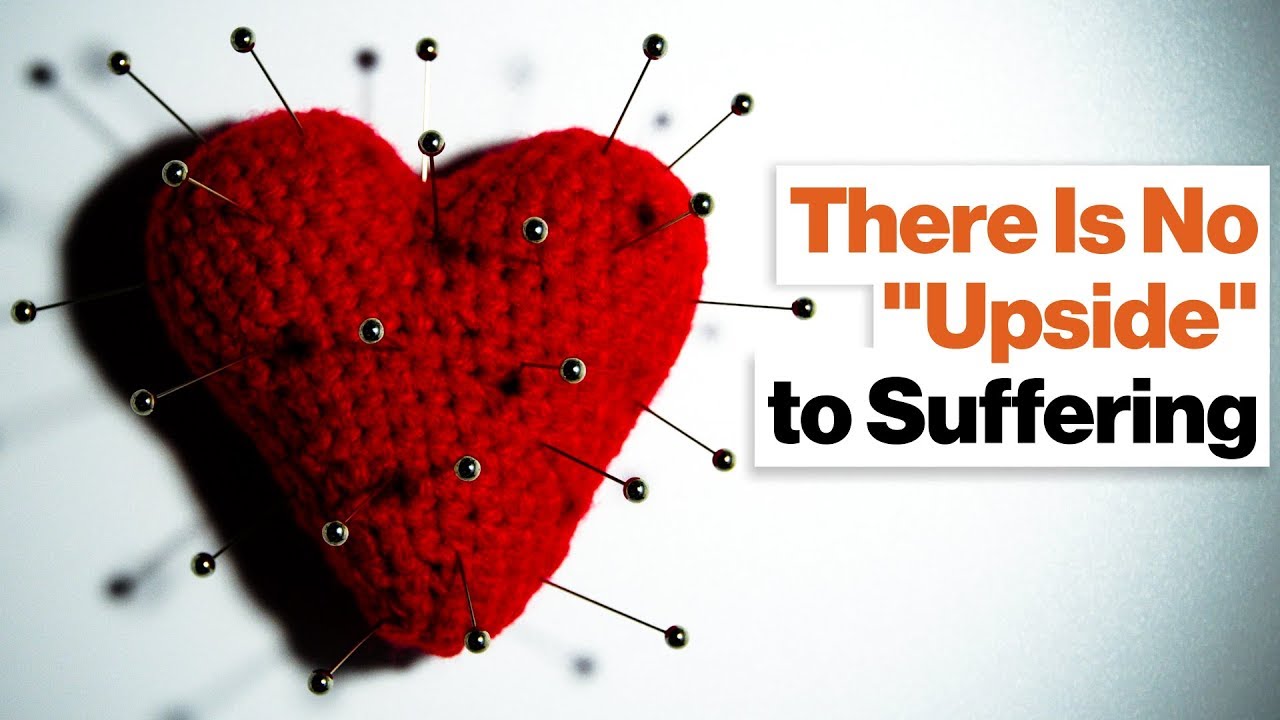
Don't Look for the Upside of Suffering—There Just Isn't One
Watch the newest video from Big Think
Join Big Think Edge for exclusive videos
----------------------------------------------------------------------------------
Author and New Yorker staff writer Ariel Levy makes a startlingly blunt observation about death here: "That's life," she says. "That's the price we pay to keep being here as living people, that's the human condition: you lose the people you love." It's a hard metaphor to swallow, but for someone who lost her spouse, her son, and her house, all in a two-month period, she's somewhat of an expert of being able to look at grief in a pragmatic and practical way. Ariel's poignant memoir on the subject, The Rules Do Not Apply, is out now.
----------------------------------------------------------------------------------
ARIEL LEVY:
Ariel Levy is a staff writer at The New Yorker magazine and author of the book Female Chauvinist Pigs: Women and the Rise of Raunch Culture. Her work has appeared in The Washington Post, The New Yorker, Vogue, Slate, Men's Journal and Blender. Levy was named one of the "Forty Under 40" most influential out individuals in the June/July 2009 issue of The Advocate.
Levy was raised in Larchmont, New York, and attended Wesleyan University in the 1990s. She says that her experiences at Wesleyan, which had "co-ed showers, on principle", strongly influenced her views regarding modern sexuality. After graduating from Wesleyan, she was briefly employed by Planned Parenthood, but claims that she was fired because she is "an extremely poor typist". She was hired by New York magazine shortly thereafter.
At New York magazine, where Levy was a contributing editor for 12 years, she wrote about John Waters, Donatella Versace, the writer George Trow, the feminist Andrea Dworkin, the artists Ryan McGinley and Dash Snow, Al Franken, Clay Aiken, Maureen Dowd, and Jude Law. Levy has explored issues regarding American drug use, gender roles, lesbian culture, and the popularity of U.S. pop culture staples such as Sex and the City and Gwen Stefani. At The New Yorker magazine, where Levy has been a staff writer since 2008, she has written profiles of Cindy McCain and Marc Jacobs.
In her memoir, The Rules Do Not Apply, Levy recalls her experiences with loss and reexamines the feminist ideal of “having it all.”
----------------------------------------------------------------------------------
TRANSCRIPT:
Ariel Levy: Well, I'm not hugely optimistic at this particular moment about the fate of the world, so I can't lie about that.
What I can say is that when I was in an intense state of grief and I had lost my son and my spouse and my house within a two month period, after the initial period of being like “I am F’d,” like, “This is not going to be okay. I'm going down,” eventually finding little nibs, little molecules in the air of hope about like a little thing, just like seeing a friend I really loved and remembering all the good times we'd had had like over 30 years or whatever, and then having like a little spot of hope like “maybe we'll have a good time again at some point.”
Maybe some other wonderful thing. Just anywhere you can find a little second of hope and feel grateful for it and sort of dig into it, that's the way through the tunnel of grief.
I mean that's what I've heard from a lot of people who I've been in communication with since this book came out and people then write to me about their experiences and come and tell me: that's how you live through, is like you just find some hope and it's like a little tiny fire and you blow on it until you've got yourself like a little hope “fire” going and then you can get through.
I think that when you lose a person or a marriage or suffer a trauma—but the main thing I'm thinking about is loss, when you lose someone—I mean first of all, that's life, that's the price we pay to keep being here as living people, that's the human condition: you lose the people you love.
And trying to sort of plow through that and look for the good in it? I don't think that works.
I think the way through pain is suffering, is like leaning into the suffering and being like “I’m going to actually go ahead and suffer my guts out.”
But throughout the process, moments of hope, if you're open to them, they come, and that's the way to keep going—is to find like where are there bits of hope and how can you be grateful for them and like feed them so that you can find some excitement about staying alive?
Sentinel Indexing in Progress
Metadata and chapters are available. Claim extraction for this episode is pending.
All video content is delivered via YouTube embedded players in accordance with the YouTube Terms of Service. Sentinel provides research tools that promote discovery and accountability across political media.