Big Think
@bigthink·8.8M subscribers·10.1K videos
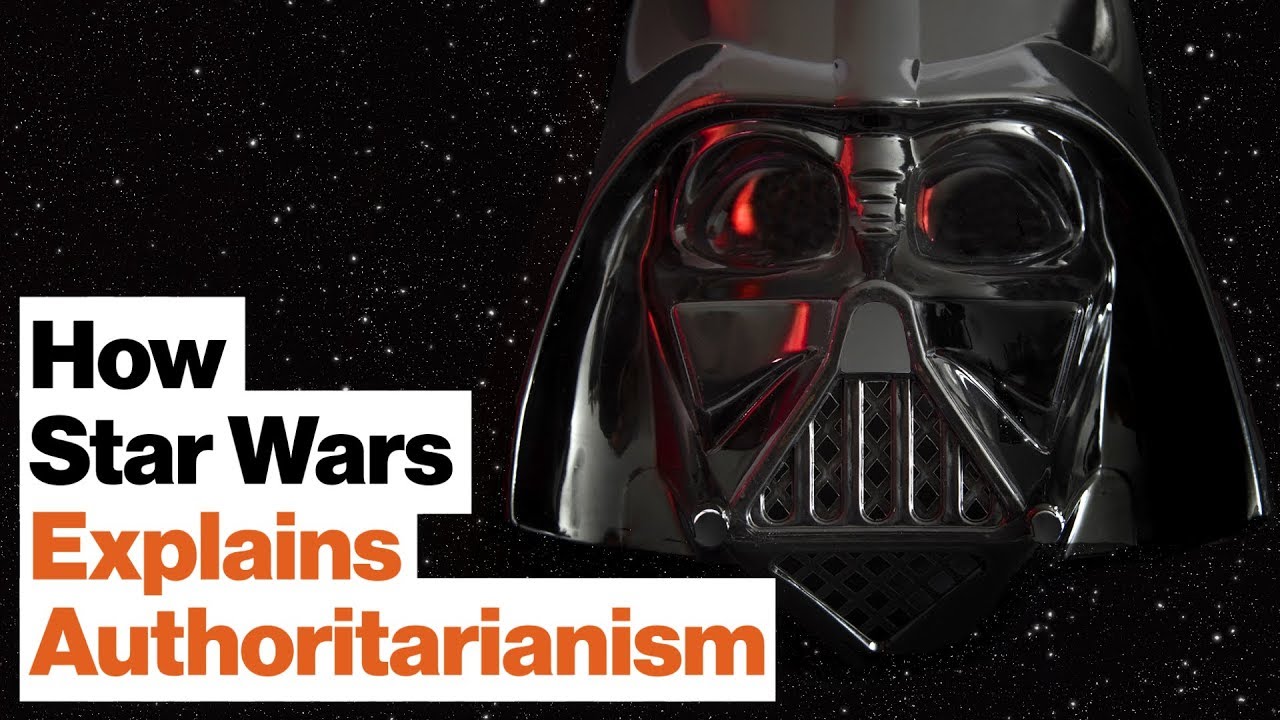
How Star Wars Helps Us Understand Authoritarianism | Cass Sunstein | Big Think
Posted
December 10, 2017
Views
30,353
Likes
848
Comments
114
Engagement
3.17%
December 10, 2017
30,353
848
114
3.17%
Every word spoken in this episode is indexed. Type any phrase to jump straight to the moment it was said.
Type any word or phrase that may have been spoken. Click a result to seek the player to that exact moment.
Try a name, a topic, or a quoted line
See what was published immediately before and after this episode.
 4:38Now Playing
How Star Wars Helps Us Understand Authoritarianism
New videos DAILY
Join Big Think Edge for exclusive video lessons from top thinkers and doers
----------------------------------------------------------------------------------
George Lucas probably had no idea that Star Wars, his story about a moisture farmer going on an adventure, would change the course of storytelling. Memorable characters sure help set it apart from other science fiction, but Harvard Law professor Cass Sunstein has good idea as to why it's such a global phenomenon. The original trilogy, he states, has something in it for everyone in that it tackles some very human problems: redemption, authoritarianism, and the appeal of darkness. Cass Sunstein’s research is cited in The Influential Mind: What the Brain Reveals about Our Power to Change Others by Tali Sharot.
----------------------------------------------------------------------------------
CASS SUNSTEIN:
Cass Sunstein is an legal scholar, known for his work in the fields of constitutional law, administrative law, environmental law, and law and behavioral economics, who was the Administrator of the White House Office of Information and Regulatory Affairs in the Obama administration. For 27 years, Sunstein taught at the University of Chicago Law School, where he continues to teach as the Harry Kalven Visiting Professor. Sunstein is currently Professor of Law at Harvard Law School.
----------------------------------------------------------------------------------
TRANSCRIPT:
Cass Sunstein: Well, what Star Wars does is it tells us about parents and children and how connected each is to the other, and it is probably the most stirring tale (I think) of boy’s need for a dad and a dad’s need for a boy that we have in modern culture. And it kind of nails some of the intensity of those feelings.
It also—and I think this is equally deep—tells us something about redemption.
So the idea is that if you can get your kid to love you it’s probably going to be okay.
And also if you do something heroic and good you can probably be redeemed in some sense of your soul—whether we’re talking about religion or not, you can be redeemed even if you were really a creep before that (at least if what you do that redeems yourself is very major and important, as it certainly was in Star Wars). I think we’re going to see themes about parents and kids and redemption in the new episodes as well.
In terms of empires and republics, what the movies kind of capture (and I think nail) is that authoritarianism has a bit of an appeal.
The idea that an authoritarian leader can get something done and maybe take a little bit of the chaos that freedom creates and then get it into some sort of management and that can make life a little more orderly—people like that.
But it also tells us that in every human heart there is a kind of need for freedom (meaning there isn’t going to be a boot on your face) and there’s going to be a capacity for governing yourself.
And the tale of the appeal of authoritarianism, which really kind of captures what happened in Nazi Germany and captures a little bit some of the appeal of authoritarians all over the world including, currently, Turkey—it gets that and it gets that in a way that is true to the arc of human history.
And the failures of authoritarianism—because people don't like a boot in their face—it kind of lightly, but memorably, captures that as well.
So, if you’re in a country that’s poor and where people’s property rights aren’t secure, or you go on the streets and someone might beat you up, or if you’re in a country that’s doing pretty well (like the United States and some European nations) but terrorism is a risk—or if terrorism is unlikely still you might get something stolen, or somebody might knock you out because there’s violent crime, or even if it doesn’t happen to you if you read about it in the newspaper—then you might think law and order is a pretty good corrective.
And even if law and order means that civil liberties and civil rights will be reduced, maybe that’s a trade you’ll be willing to take. And we certainly saw that in the United States at times over the past let’s say 40 years.
And while in the United States (in my view) nothing really horrific as happened in terms of the rise of authoritarianism, the fact that there have been movements away from civil rights and civil liberties is suggestive of something that’s possible when people feel really at risk.
So what Star Wars captures—and this makes it transcend the kind of simple dichotomy between the light side and the dark side of the force—is it says that the Dark Side, it does have a seductive power, either because it means that each of us can wield power if we “go dark”, or ...
For the full transcript, check out
Sentinel Indexing in Progress
Metadata and chapters are available. Claim extraction for this episode is pending.
All video content is delivered via YouTube embedded players in accordance with the YouTube Terms of Service. Sentinel provides research tools that promote discovery and accountability across political media.