Big Think
@bigthink·8.8M subscribers·10.1K videos
How NASA averted the 2060 apocalypse | Michelle Thaller | Big Think
Posted
February 27, 2018
Views
72,027
Likes
2,822
Comments
322
Engagement
4.37%
February 27, 2018
72,027
2,822
322
4.37%
Every word spoken in this episode is indexed. Type any phrase to jump straight to the moment it was said.
Type any word or phrase that may have been spoken. Click a result to seek the player to that exact moment.
Try a name, a topic, or a quoted line
 3:25Now Playing
How NASA averted the 2060 apocalypse
New videos DAILY
Join Big Think Edge for exclusive video lessons from top thinkers and doers
----------------------------------------------------------------------------------
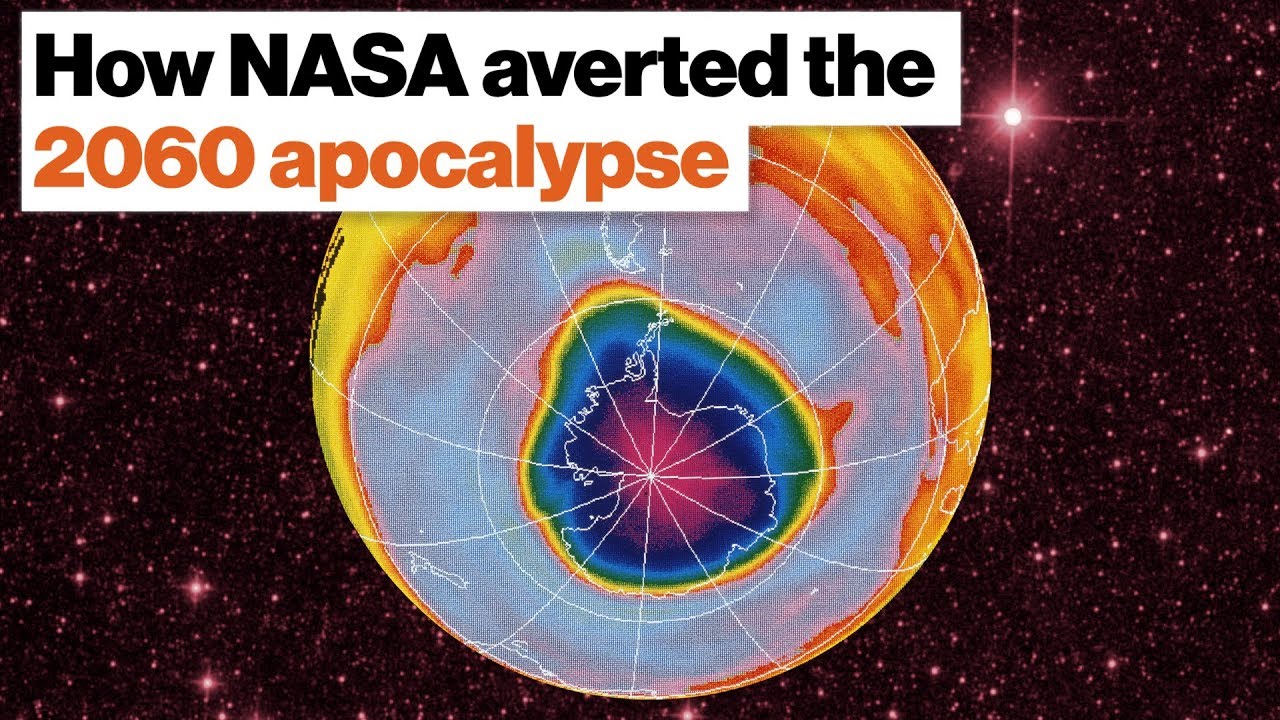
Pop quiz! Which NASA mission has been most critical to humanity? It's not the Moon landing. It's not the Apollo 8 mission, with its iconic Earthrise photo. It's not even spinoff tech like cell phones, baby formula, and GPS. "All those kind of fall flat, to tell you the truth," says Michelle Thaller, NASA's assistant director of science communication. "I think that people don’t understand." Thaller says the greatest mission NASA ever pulled off was saving your butt. While conducting blue sky research—curiosity-driven scientific investigation with no immediate "real-world" applications—that scientists in the 1980s discovered that the ozone layer was being depleted. Realizing the danger this posed to life on Earth, scientists—and NASA's crack team of science communicators—mobilized the public, the U.N., and governments to get the Montreal Protocol signed, and to ban ozone-depleting chemicals for good. "We’ve since done atmospheric models that show that we would have actually destroyed the ozone layer, had we done nothing, by the year 2060..." says Thaller. "That would have destroyed agriculture. Crops would have failed all over the world. You couldn’t have livestock outside. People couldn’t have lived outside. We very nearly destroyed civilization, and your grandchildren would have lived through that." The value of blue sky research is severely underestimated—especially when budgets are being drafted. But it has led to the best NASA spinoff Michelle Thaller can think of: grandchildren.
----------------------------------------------------------------------------------
MICHELLE THALLER:
Dr. Michelle Thaller is an astronomer who studies binary stars and the life cycles of stars. She is Assistant Director of Science Communication at NASA. She went to college at Harvard University, completed a post-doctoral research fellowship at the California Institute of Technology (Caltech) in Pasadena, Calif. then started working for the Jet Propulsion Laboratory's (JPL) Spitzer Space Telescope. After a hugely successful mission, she moved on to NASA's Goddard Space Flight Center (GSFC), in the Washington D.C. area. In her off-hours often puts on about 30lbs of Elizabethan garb and performs intricate Renaissance dances. For more information, visit
NASA.
----------------------------------------------------------------------------------
TRANSCRIPT:
Michelle Thaller: Well, I am one of the directors of science [at NASA], and my specialty is communications. There's the idea that a mission ends when you return the data, when you make the discoveries, when the scientists publish their papers. To me, the mission doesn’t end until you have some sort of public involvement, until you have some sort of public buy-in. I think that’s as important as any other part of the mission.
I’ve been trying to tell people for years that a communications team on a mission is just like having your crack team of electrical engineers or your best computer programmers. You need to have people that really understand communications well. And it helps—I mean, in my case I started out as a research astrophysicist and so I understand a lot of the topics as well. But I do communications now at NASA.
And as far as why NASA is important, I think this is one of these things that people have no idea: We run, at the moment, 108 science missions. Those are mostly spacecraft. Some of them are on balloons or sounding rockets or on the space station. Some of them are on the earth. We have people embedded with the Sami reindeer herders trying to understand how climate change is changing the migration of reindeer herds. I mean it’s amazing that NASA is all over. Everything from the disaster mitigation from all of those hurricanes—we actually sent staff to Puerto Rico when FEMA was overwhelmed, they had been setting up communication centers.
I mean everything from determining what set off the Big Bang to where those wildfires are going to be spreading to in southern California. We have 108 missions and I’ve never seen any organization operate more efficiently. I’ve never worked with more brilliant people.
I think people often don't understand what the real value is as far as blue sky research, you know. People talk about spinoffs and people joke about things like Velcro and Tang. I mean those are jokes, but the more intelligent people might notice things like microprocessors started at NASA. Cell phones. The reason you have computers, the reason the United States was poised to lead the computer revolution was because of the Apollo program. B...
For the full transcript, check out
Sentinel Indexing in Progress
Metadata and chapters are available. Claim extraction for this episode is pending.
All video content is delivered via YouTube embedded players in accordance with the YouTube Terms of Service. Sentinel provides research tools that promote discovery and accountability across political media.