Big Think
@bigthink·8.8M subscribers·10.1K videos
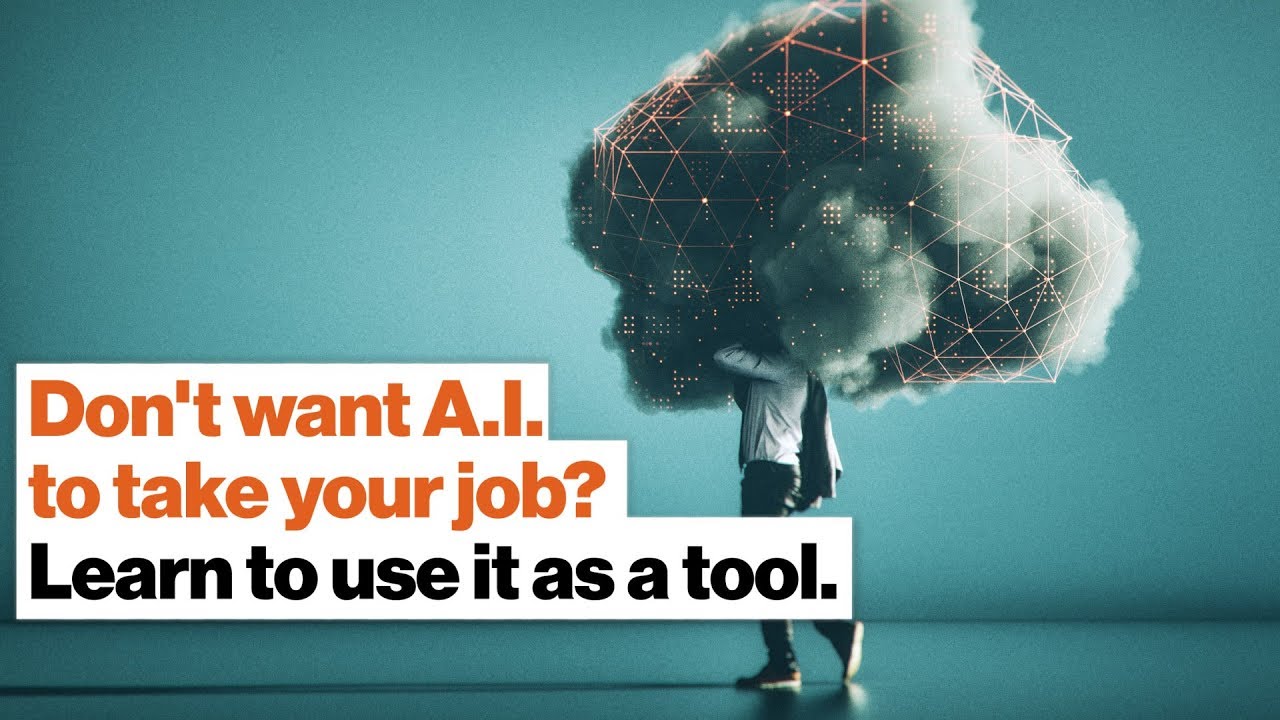
Don't want A.I. to take your job? Learn to use it as a tool. | Paul Daugherty | Big Think
Posted
May 28, 2018
Views
16,726
Likes
513
Comments
91
Engagement
May 28, 2018
16,726
513
91
3.61%
Every word spoken in this episode is indexed. Type any phrase to jump straight to the moment it was said.
Type any word or phrase that may have been spoken. Click a result to seek the player to that exact moment.
Try a name, a topic, or a quoted line
 5:12Now Playing
Don't want A.I. to take your job? Learn to use it as a tool.
Watch the newest video from Big Think
Join Big Think Edge for exclusive videos
----------------------------------------------------------------------------------
As the Chief Technology Officer for global management consulting firm Accenture, Paul Daugherty knows that there's a lot of people out there, in many industries, who are afraid of losing their jobs to artificial intelligence. Here, he offers some sage advice in dealing with AI: lean into the change. Using AI to help you find new jobs based on your current skills is just one way to adapt to this new technology. Paul's incredible new book is Human + Machine: Reimagining Work in the Age of AI.
----------------------------------------------------------------------------------
PAUL DAUGHERTY:
Paul Daugherty is Accenture’s chief technology & innovation officer and leads the company’s Technology Innovation & Ecosystem group. In addition to overseeing Accenture’s technology strategy, Mr. Daugherty has responsibility for driving innovation through R&D activities in Accenture’s Labs and leveraging emerging technologies to bring the newest innovations to clients globally.
He founded and oversees Accenture Ventures, which is focused on strategic equity investments and open innovation to accelerate growth. He also leads the company’s large group of highly skilled, certified technology architects, who apply new technologies and architectural foundations in building solutions for clients across industries.
Mr. Daugherty has played a key role in evolving Accenture’s technology business to respond to the changes in the industry. He developed the Digital Business vision and helped shape Accenture’s early moves to establish its digital business leadership. He founded Accenture’s cloud computing business and was instrumental in launching Accenture’s SaaS, big data and open source businesses, and played a key role in the company’s technology business during the major transitions to client/server computing and internet-based computing.
Mr. Daugherty is a passionate advocate for gender equality in the workplace and sponsoring STEM-related inclusion & diversity initiatives. He is a frequent speaker at conferences on industry and technology issues, and has published articles in a variety of publications. He sponsors Accenture’s technology initiatives with the World Economic Forum. Mr. Daugherty also serves as chairman of the board of Avanade, the leading provider of Microsoft technology services. He is on the board of directors for Girls Who Code, Accenture Global Services Limited and the Computer History Museum in Silicon Valley. He is on the advisory boards for Computer Science and Engineering at the University of Michigan and Answer ALS, where he serves as its Infrastructure and Technology Committee Lead. Mr. Daugherty helped found the advisory board of the Academy of Information Technology, a non-profit that works to boost IT careers for youth. In addition, he sponsors Accenture’s partnership with Code.org which is focused on bringing Computer Science education to students around the world.
----------------------------------------------------------------------------------
TRANSCRIPT:
Paul Daugherty: As you think about your talent and your workforce for the age of AI and where we’re moving to, there’s a few things that are very important to think about.
I think about two broad categories of skills that you need to prepare for.
One is what I’d call the Talent or the skills – the people that “do” AI. Who’s going to develop the AI? Those are the machine learning experts, the data scientists, the people with the STEM skills and coding skills that are going to build the technology of the future. And that is an important area that every organization needs to be preparing for in developing and building those types of skills. And that’s one important thing.
The bigger set of skills that I think every organization needs to think about are the people who use AI. Not the ones who do and build it, but the people who use AI. And that’s going to be basically everybody in the workforce, or almost everybody in the workforce, in your workforces or organization. And I think that’s an area where organizations haven’t spent enough time.
Everybody knows they have to develop and hire the AI experts and the coding experts; I think how the rest of your organization is going to adapt and use AI is the big question that we’re really trying to address in Human + Machine.
There’s a few things that I’d say that are really important there. One is you need to think about the learning platforms that you’re developing for your organization.
One thing that we found in the survey in the research work we did ......
To read the transcript, please go to.
Sentinel Indexing in Progress
Metadata and chapters are available. Claim extraction for this episode is pending.
All video content is delivered via YouTube embedded players in accordance with the YouTube Terms of Service. Sentinel provides research tools that promote discovery and accountability across political media.