Big Think
@bigthink·8.8M subscribers·10.1K videos
Self-healing DNA may protect astronauts from killer radiation | Michelle Thaller | Big Think
Posted
July 11, 2018
Views
26,813
Likes
1,232
Comments
118
Engagement
July 11, 2018
26,813
1,232
118
5.03%
Every word spoken in this episode is indexed. Type any phrase to jump straight to the moment it was said.
Type any word or phrase that may have been spoken. Click a result to seek the player to that exact moment.
Try a name, a topic, or a quoted line
 5:02Now Playing
Self-healing DNA may protect astronauts from killer radiation | Michelle Thaller
Watch the newest video from Big Think
Join Big Think Edge for exclusive videos
----------------------------------------------------------------------------------
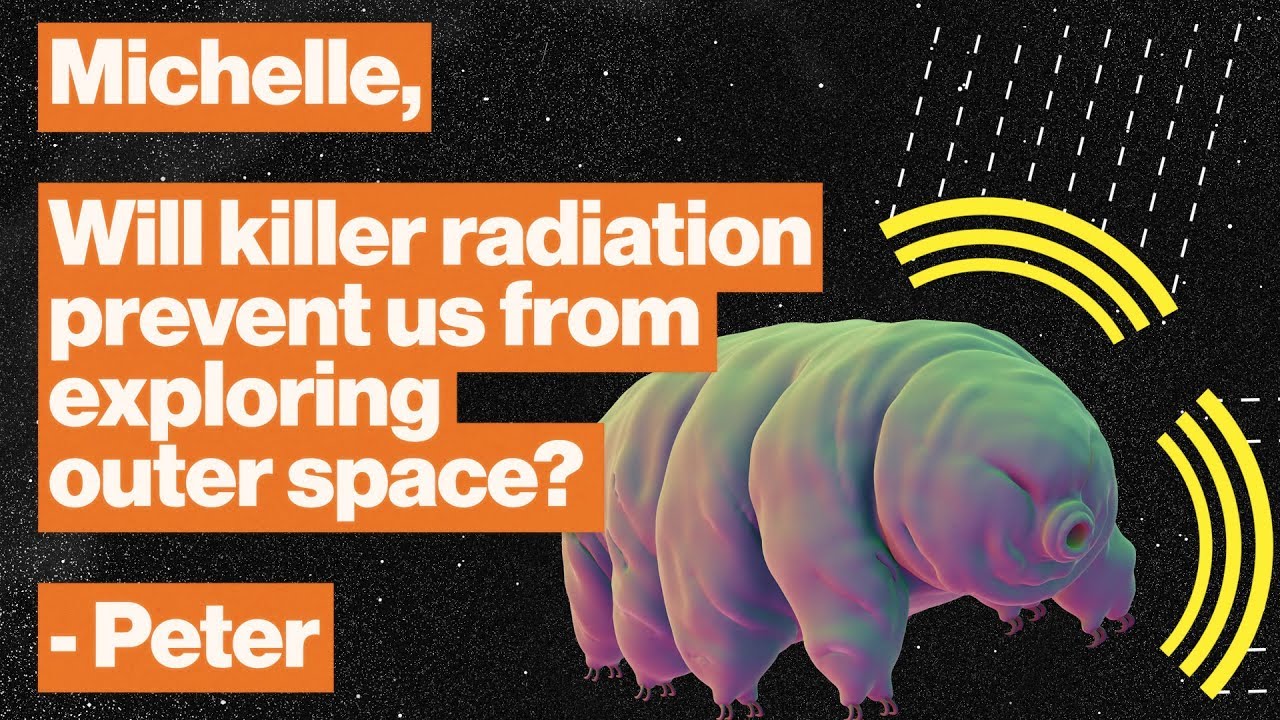
Can radiation in space limit human exploration? It's a real challenge, explains NASA's Michelle Thaller. She leads us through how radiation works on the space station and further out in space as we get closer to the sun. What about when we go to Mars? How can we survive that? Thaller offers leading approaches that can help us, including assistance from self-healing DNA and microscopic animals with six little arms.
----------------------------------------------------------------------------------
MICHELLE THALLER:
Dr. Michelle Thaller is an astronomer who studies binary stars and the life cycles of stars. She is Assistant Director of Science Communication at NASA. She went to college at Harvard University, completed a post-doctoral research fellowship at the California Institute of Technology (Caltech) in Pasadena, Calif. then started working for the Jet Propulsion Laboratory's (JPL) Spitzer Space Telescope. After a hugely successful mission, she moved on to NASA's Goddard Space Flight Center (GSFC), in the Washington D.C. area. In her off-hours often puts on about 30lbs of Elizabethan garb and performs intricate Renaissance dances. For more information, visit NASA.
----------------------------------------------------------------------------------
TRANSCRIPT:
Michelle Thaller: So Peter, you ask a really good question about radiation perhaps being a limiting factor in human exploration. And honestly this is something that people are working on very hard right now. It is indeed a challenge.
The astronauts on the space station are actually fairly well-protected from radiation. The earth has a liquid metal core that generates a strong magnetic field around the earth, and amazingly the space station, which is about 200 miles above us, is still in that protective magnetic field.
So when you’re just orbiting the earth on a space station the astronauts may get slightly higher doses of radiation, but they’re actually fairly well-protected.
What happens if you go beyond the earth’s magnetic field though is that all of a sudden you’re vulnerable to the radiation of space. And specifically it’s our wonderful friend the sun—I mean none of us would be here without the energy and the light of the sun, but the sun actually outputs a lot of high-energy particles and these create high radiation levels anywhere where there isn’t a protected magnetic field.
So for example, if you went to the moon, and in fact astronauts went to the moon in the 1960s and the 1970s, had there been a very powerful solar storm when the astronauts were there it may have made them very sick and might have even killed them. So in some sense it was good luck that when the astronauts were up on the moon not protected by the earth’s magnetic field the sun was relatively quiet.
However, on a trip to Mars, which might take months (up to six months), you’re not going to be able to rely just on good luck. There will be solar activity. There will be bursts of high-energy particles from the sun. So how do you protect astronauts from that?
And we’re working on technology—In some cases it’s a special kind of sleeping bag that you can get into and zip yourself up and have some protection, other ideas one of the best protectors against radiation is water. So if you have liquid water tanks on one side of your spacecraft you might be able to shelter from a solar storm by putting the water tanks between you and the sun.
But if you’re actually going to be living and working in space for a long time, this really is a problem. If we were to send astronauts to Mars, for example, they wouldn’t be protected from the radiation unless they could dig under the ground and actually build their habitats—even just as much as ten feet down would be enough. But that’s hard. The Martian soil is very hard and rocky and not easy to dig through, and before you could go there you’d have to send construction equipment to actually build all of these habitats. So we understand that this is a problem. It’s one of the things that is limiting our exploration of the solar system.
The robots that we build that go to Mars, like the Mars Rover or the spacecraft, there’s one orbiting Jupiter, they have to be extremely protected and shielded from the radiation of space. In fact our mission to Jupiter right now is called Juno and the instruments are inside a 700-pound box of almost pure titanium to protect it from the radiation around Jupiter. Even with that protection we only expect the instruments to last about two years; the radiation is that intense.
So you could not...
Read the full transcript at
Sentinel Indexing in Progress
Metadata and chapters are available. Claim extraction for this episode is pending.
All video content is delivered via YouTube embedded players in accordance with the YouTube Terms of Service. Sentinel provides research tools that promote discovery and accountability across political media.