Big Think
@bigthink·8.8M subscribers·10.1K videos
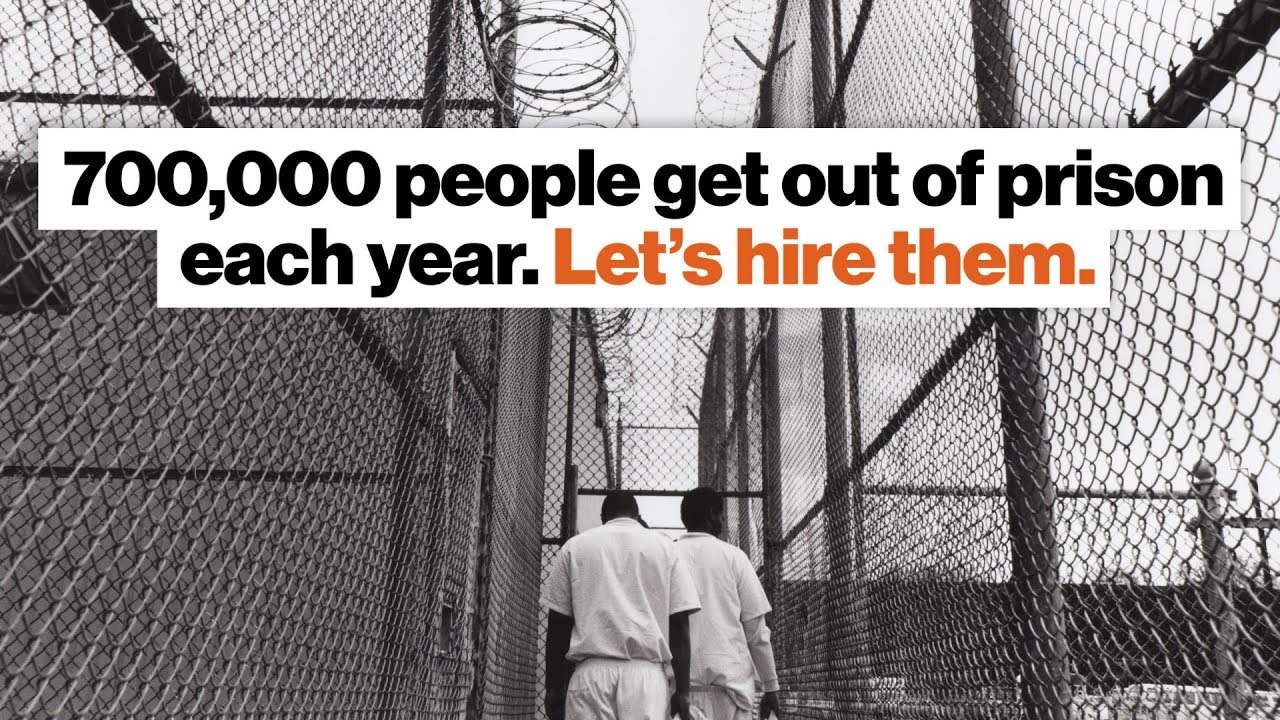
700,000 people get out of prison each year. Let’s hire them. | Johnny C. Taylor, Jr. | Big Think
Posted
April 4, 2019
Views
9,023
Likes
430
Comments
136
Engagement
April 4, 2019
9,023
430
136
6.27%
Every word spoken in this episode is indexed. Type any phrase to jump straight to the moment it was said.
Type any word or phrase that may have been spoken. Click a result to seek the player to that exact moment.
Try a name, a topic, or a quoted line
 5:10Now Playing
700,000 people get out of prison each year. Let’s hire them.
Watch the newest video from Big Think
Join Big Think Edge for exclusive videos
----------------------------------------------------------------------------------
The U.S. has a talent shortage. There are 7.3 million open jobs, and only 6 million people currently looking for jobs, says President and CEO of SHRM Johnny C. Taylor, Jr.
The solution? Let the formerly incarcerated work good jobs that contribute to the economy.
SHRM research shows that 80% of HR managers are interested and willing to hire the formerly incarcerated. The bias exists at the employee and customer level – but that bias is changing fast for the better.
----------------------------------------------------------------------------------
JOHNNY C. TAYLOR, JR.:
Johnny C. Taylor, Jr., is President and Chief Executive Officer of the Society for Human Resource Management (SHRM), the world's largest HR professional society. As a global leader on human capital, culture and leadership, Mr. Taylor is a sought-after voice by C-suite executives as well as state and federal elected policymakers on all matters affecting work, workers and the workplace. He is frequently invited to testify before Congress on critical workforce issues—from sexual harassment to paid leave—and authors a weekly column, "Ask HR," in USA Today, the country's largest newspaper.
----------------------------------------------------------------------------------
TRANSCRIPT:
JOHNNY C. TAYLOR, JR.: I'm passionate about getting talent back to work really for three different reasons. One, and frankly it may appeal to some of your viewers, I'm a taxpayer. And anything that we can do to reduce recidivism, keep people off of the rolls as an expense, a government expense and a prison, as taxpayers, is a positive. So there's that part of me. We have 7.3 million open jobs, and only 6 million people currently looking for jobs, which means we have a talent shortage. And if we can do anything to eliminate that talent shortage, that's 1.3 million people, roughly. Every year some 700,000 or so people are released from jails and prisons in America. So we can use some of that population, that 700,000-person population, to make a dent in that 1.3 million-person deficit. So it's just practically smart.
And then the third part of me, which is more humanitarian based, is people who have made mistakes should be deserving of a second chance. It is just I mean, because all of us have made mistakes; some have been caught, some haven't. But these people have presumably paid their debt to society. And if the idea is: I make a mistake at 25 years old. I go to jail for five years or prison for five years. And then I get out. What do I have to look forward to if, forever, I'm going to wear the scarlet letter, Convict, the C, that says I'll never get another opportunity? Life is over, then.
The holy grail of this would be if we could identify people who are six months, a year, away from release and begin giving them transitional skills: work skills, life skills. Think about this. I was just meeting with someone who's been incarcerated for 25 years. The cell phone, as we know it, didn't exist then. So when they come out, they're going to have to get adjusted to all of that. The world has literally transformed in 25 years. So in an ideal state, we would begin helping them transition back into a world that they pushed the pause button on two and a half decades ago. And we've got to catch them up pretty quickly so that they acclimate and don't recidivate. That's number one. But once we do get them out, the most important thing we can do is get them back to work housing and work. And they're sort of inextricably intertwined. But housing is critical. And we've got to find places for people to have a permanent place. Mind you, they've had housing for some significant period of time. And on the outside, absent that, there's an instability that makes them more vulnerable. And then you've got to pay for that housing, which is where the job comes in.
We employers have to reach out to this population and let all of our biases go away. And we really do have to overcome our own biases. We talk about implicit bias, unconscious bias. People think, oh, that's just in the context of race and gender. Well, the fact of the matter is we have a lot of biases, one of which is a bias that we have against the formerly incarcerated. And maybe it's because of television and everything that we see in movies and the characterizations of people who are in jail, but all of that comes through, whether we're conscious of it or not, when we are talking to someone who we know has been incarcerated...
Read the full transcript at
Sentinel Indexing in Progress
Metadata and chapters are available. Claim extraction for this episode is pending.
All video content is delivered via YouTube embedded players in accordance with the YouTube Terms of Service. Sentinel provides research tools that promote discovery and accountability across political media.