Big Think
@bigthink·8.8M subscribers·10.1K videos
College education is still a class luxury in America. PeerForward is changing that. | Aloysia Jean
Posted
August 1, 2019
Views
7,007
Likes
216
Comments
9
Engagement
August 1, 2019
7,007
216
9
3.21%
Every word spoken in this episode is indexed. Type any phrase to jump straight to the moment it was said.
Type any word or phrase that may have been spoken. Click a result to seek the player to that exact moment.
Try a name, a topic, or a quoted line
 4:59Now Playing
College education is still a class luxury in America. PeerForward is changing that.
New videos DAILY
Join Big Think Edge for exclusive video lessons from top thinkers and doers
----------------------------------------------------------------------------------
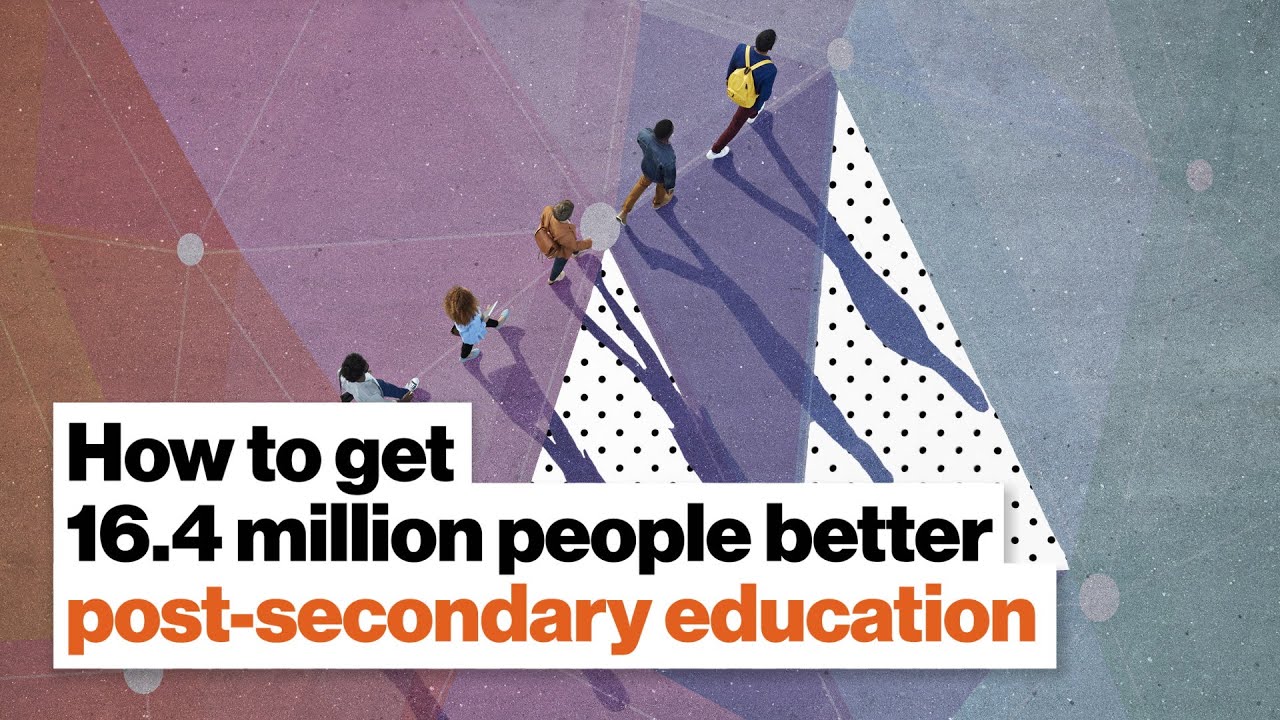
More than two-thirds of American jobs require some kind of secondary education. Unfortunately, kids growing up in a low-income area simply do not have the same resources as wealthier areas when it comes to applying for college or making it to graduation.
PeerForward works with students in low-income areas to get them into college by helping them identify their target college, find and apply for financial aid, and consider how their choice of major connects to their future career.
PeerForward now is expanding onto college campuses to help students persist to earning a degree. The organization hopes to reach 10,000 college students by 2024.PeerForward is a winner of the Lumina Prize. Discover what they're about here.
----------------------------------------------------------------------------------
ALOYSIA JEAN
Aloysia “AJ” Jean is a communities engagement specialist at PeerForward, where she is focused on creating and implementing innovative solutions for college access and college persistence programs serving low-income and first-generation students. AJ is a PeerForward Alumna 2011.
----------------------------------------------------------------------------------
TRANSCRIPT:
ALOYSIA JEAN: I wouldn't be where I am right now without the help of my community, especially my PeerForward community. Applying to college can really feel like an obstacle too big to bear, especially if you don't have people beside you to help you forge that path. I went into this thinking that I had to forge it alone.
But by the end of it, I was so grateful to have the help of PeerForward beside me, not only because they gave me the tools and the skills that I need, but because they gave me the encouragement and the support and the love and the empathy that I needed to feel seen and to feel like I could actually do it.
So right now, your zip code is probably the best predictor of whether or not you'll graduate from a two or four-year college. We want to change that. We no longer want circumstances outside of our control to predict whether or not we'll actually be able to achieve what we set our minds to. Our problem is the fact that often in low-income communities, guidance counselors and guidance counseling staff is understaffed and overwhelmed.
The college degree gap between low and high-income communities is vast. And it's a problem that's persisted for more than 50 years. When I compare people from my hometown to my network from college, it's clear to me that the statistics are true. By age 24, folks from high-income communities are five times more likely to earn a college degree than the folks I grew up with. A degree can feel like an unattainable luxury. But in reality, more than 2/3 of American jobs require some post-secondary credentials.
Our method of making sure that low-income students have a better chance at receiving a higher education is mind-blowingly simple. We take a resource that's available in every high school and college campus -- influential students, students who have a drive to get to college, students who have a drive to get that degree, students who have that drive to make a change in their own communities. We don't count on our students to just be influencers of the mind. We count on them to influence students to action.
We've identified three key steps that help students get a better chance at a higher education. First, we teach students how to identify and recognize what characteristics they want in a college that's perfect for them. How is it that you're going to operate in this space? And what do you want this space to look like for you?
Two, we teach them different ways of finding financial aid and applying for it, not just the FAFSA and the CSS Profile, but how to identify different streams of revenue to pay for the college price tag and how to not let that price tag deter you from getting to your dream of that college degree.
Third, we help connect college to career. Why does it matter what you're studying? And how will it affect your life after you get this degree? It's not just what you're studying but where it'll get you. And we want to make sure that everyone takes enough time to think about it that by the time they reach their senior year, they have a plan in place.
We teach students much more than how to navigate the college application process. We teach students how to make real change in their community. And I'm so grateful that I have the opportunity to pass down those skills to a new generation of peer leaders who will hopefully go on to cre...
For the full transcript, check out
Sentinel Indexing in Progress
Metadata and chapters are available. Claim extraction for this episode is pending.
All video content is delivered via YouTube embedded players in accordance with the YouTube Terms of Service. Sentinel provides research tools that promote discovery and accountability across political media.