Bill Kristol
@ConversationsFCG·74K subscribers·402 videos
Harvey Mansfield on Montesquieu's "The Spirit of the Laws"
Posted
February 22, 2020
Views
18,403
February 22, 2020
18,403
Every word spoken in this episode is indexed. Type any phrase to jump straight to the moment it was said.
Type any word or phrase that may have been spoken. Click a result to seek the player to that exact moment.
Try a name, a topic, or a quoted line
 1:12:01Now Playing
An introduction to central themes of Montesquieu's 1748 masterwork.
Click "Show more" to view chapters.
Chapter 1 (00:15 - 37:04): Montesquieu's Political Philosophy
Chapter 2 (37:04 - 1:12:00): Interpreting Montesquieu
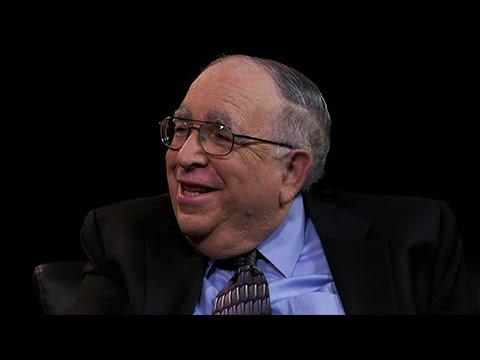
Though not read nearly as much as it should be, Montesquieu’s "The Spirit of the Laws" (1748) is a fundamental text in the history of political philosophy. Featuring key presentations of themes including the separation of powers, the effect of commerce in politics, and the nature of republican and monarchical governments, "The Spirit of the Laws" had profound influence on the founders and the Constitution—as well as on the school of political thought that came to be called modern liberalism. In this Conversation, Harvey Mansfield presents a powerfully illuminating introduction to Montesquieu’s great—though extremely challenging—work. He explains how Montesquieu opposed the idea of an unlimited concentration of power, a notion that came into the modern world especially through the teaching of Thomas Hobbes. In challenging it, however, Montesquieu does not try to return to Aristotle’s notion of a “best regime,” which, he implies, leads to imperialism. Rather, Montesquieu accepts the modern notion of power but turns it against itself through his doctrine of the “separation of powers.” As for the tendency toward imperialism, Montesquieu’s alternative is the “commercial republic,” which will inevitably try to expand but do so more peacefully. This is a must-see introduction to a work that can help us better understand both the United States and the modern world more generally.
Sentinel Indexing in Progress
Metadata and chapters are available. Claim extraction for this episode is pending.
All video content is delivered via YouTube embedded players in accordance with the YouTube Terms of Service. Sentinel provides research tools that promote discovery and accountability across political media.