
Bloomberg News
@Bloomberg-News·2.8M subscribers·40.1K videos
Could Sawdust Solve the World's Plastic Problem?
Posted
July 22, 2019
Views
1,096
Likes
19
Comments
1
Engagement
1.82%
July 22, 2019
1,096
19
1
1.82%
Every word spoken in this episode is indexed. Type any phrase to jump straight to the moment it was said.
Type any word or phrase that may have been spoken. Click a result to seek the player to that exact moment.
Try a name, a topic, or a quoted line
You’re on July 22, 2019. Earlier episodes are to the left, later ones to the right — the row keeps loading as you go. Click any card to open it.
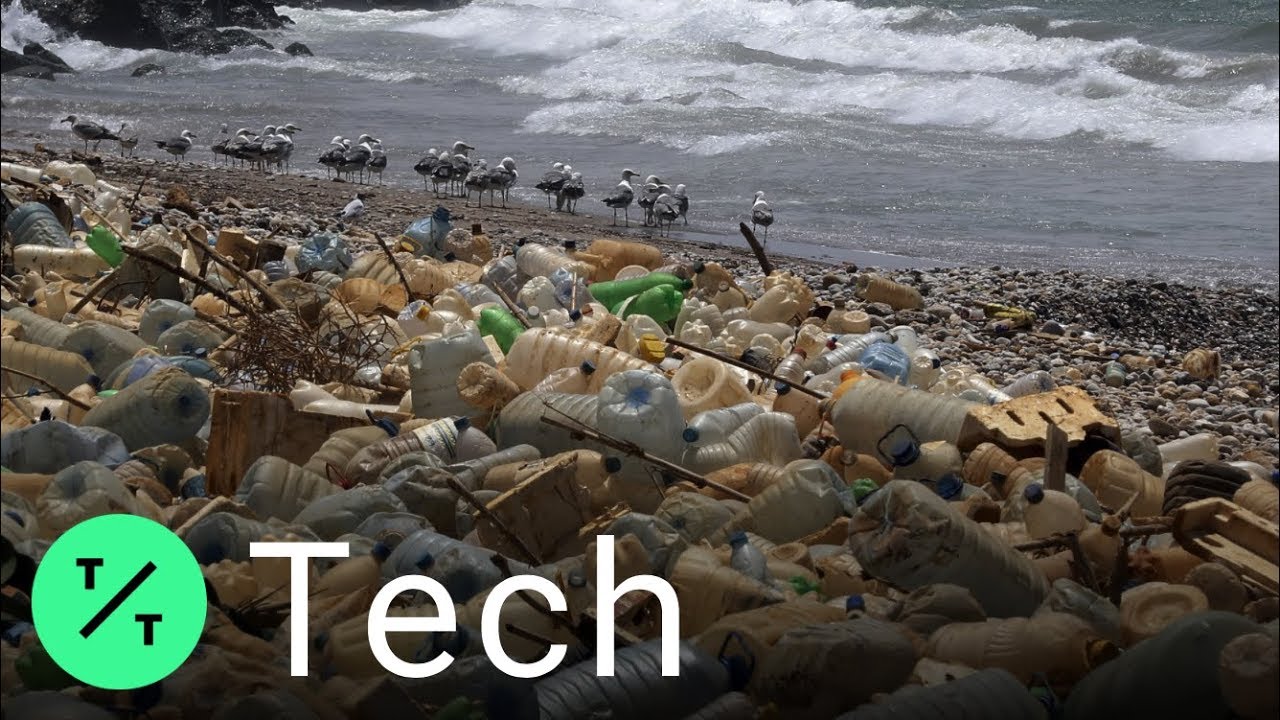 Jul 22, 20190:49Now Playing
A technology startup near Ontario’s leafy border with Michigan says it has the answer to the world’s plastic pollution problem: sawdust.
Origin Materials is getting ready to pay sawmills in the area $20 a ton for the scraps left over in the process of turning logs into lumber, which it will use to make recyclable plastic bottles that remove carbon dioxide from the sky because they’re made from sustainably sourced wood waste. Nestle SA, Danone SA and PepsiCo Inc. plan to sell water in Origin’s recyclable plant-based bottles in early 2022.
It’s one of the many unconventional ways conceived by scientists to reduce the world’s reliance on plastics made from petroleum, which emit as much climate-damaging pollutants as 189 coal plants each year from production to incineration. Other so-called bio-based plastics are being developed from sugar, corn, algae, seaweed, sewage and even dead beetles.
“Consumers are caring about plastic in a way that they haven’t in a long time, maybe ever,” said John Bissell, 34, who founded Origin Materials in 2008 and has spent 10 years working as an engineer developing alternative plastics that don’t contribute to climate change. “Everyday things like bottles and clothing can now become carbon negative, but remain otherwise functionally identical.”
That may be true in theory, but phasing out petroleum-based plastics will be an uphill battle. Use of the material has become so ingrained for societies around the world that about half of all new oil demand through 2040 will come from petrochemicals, an industry that relies on plastics for most of its business, according to BloombergNEF. The $500 billion global plastics market is responsible for 5% of greenhouse gas emissions, Friends of the Earth data show. Some projections see that ratio tripling in the next 30 years.
Plant-based plastics, especially varieties made from sugar cane, are starting to seep into the mainstream as companies try to respond to consumers who are increasingly angry about the ecologically devastating impact of plastics. London-based Bulldog sells its male skincare products in plastic tubes made from sugar cane. Last year, Danish toymaker Lego A/S started including botanical pieces, like leaves, bushes and trees, made entirely of plant-based plastics in its box sets.
It’ll take getting big food and beverage companies on board to really alter the equation. Nestle alone produces 1.7 million tons of plastic packaging a year, according to the Ellen MacArthur Foundation, enough to make over 51 billion bottles. Beverage makers like Coca-Cola Co. and Pepsi use a lot more than that. Coca-Cola rolled out its so-called plantbottle in 2009, but it’s still 70% petroleum based.
“There is no doubt that awareness around plastic waste has become more prominent in the last two years,” said Simon Lowden, president of PepsiCo’s global snacks group, which announced in 2016 it would seek to reduce absolute greenhouse gas emissions by 20% by 2030.
As part of a strategy to find more sustainable packaging, Pepsi last year joined Nestle and Danone’s NaturALL Bottle Alliance to find ways to reduce the carbon footprint of beverage bottles. All three plan to buy 100% plant-derived bottles from Origin Materials when its Ontario plant gets up and running at the end of 2020 with a starting capacity of 300 million bottles a year.
Origin Materials developed a way to extract cellulose from wood waste to make para-xylene, a hydrocarbon usually derived from oil used to manufacture PET, one of the most common plastics today. Since trees and plants naturally capture CO2 through photosynthesis, using sustainably sourced sawdust and wood chips more than offsets any pollutants released in the manufacturing process, according to Bissell.
Subscribe to our YouTube channel
TICTOC ON SOCIAL:
Follow TicToc on Twitter
Like TicToc on Facebook
Follow TicToc on Instagram
Watch all of TicToc’s videos
Listen to TicToc’s podcast
Subscribe to our newsletter
TicToc by Bloomberg is global news for the life you lead. We are a 24/7 news network that covers breaking news, politics, technology, business and entertainment stories from around the globe, supported by a network of Bloomberg’s 2,700 journalists across 120 countries.
Sentinel Indexing in Progress
Metadata and chapters are available. Claim extraction for this episode is pending.
All video content is delivered via YouTube embedded players in accordance with the YouTube Terms of Service. Sentinel provides research tools that promote discovery and accountability across political media.