
Bloomberg News
@Bloomberg-News·2.8M subscribers·40.1K videos
Trump Arrives in Ohio After Dayton Mass Shooting
Posted
August 7, 2019
Views
12,469
Likes
98
Comments
184
Engagement
2.26%
August 7, 2019
12,469
98
184
2.26%
Every word spoken in this episode is indexed. Type any phrase to jump straight to the moment it was said.
Type any word or phrase that may have been spoken. Click a result to seek the player to that exact moment.
Try a name, a topic, or a quoted line
Episode Timeline
Every episode in order around the one you’re watching — click any card and the page flips straight to it.
 4:44Now Playing
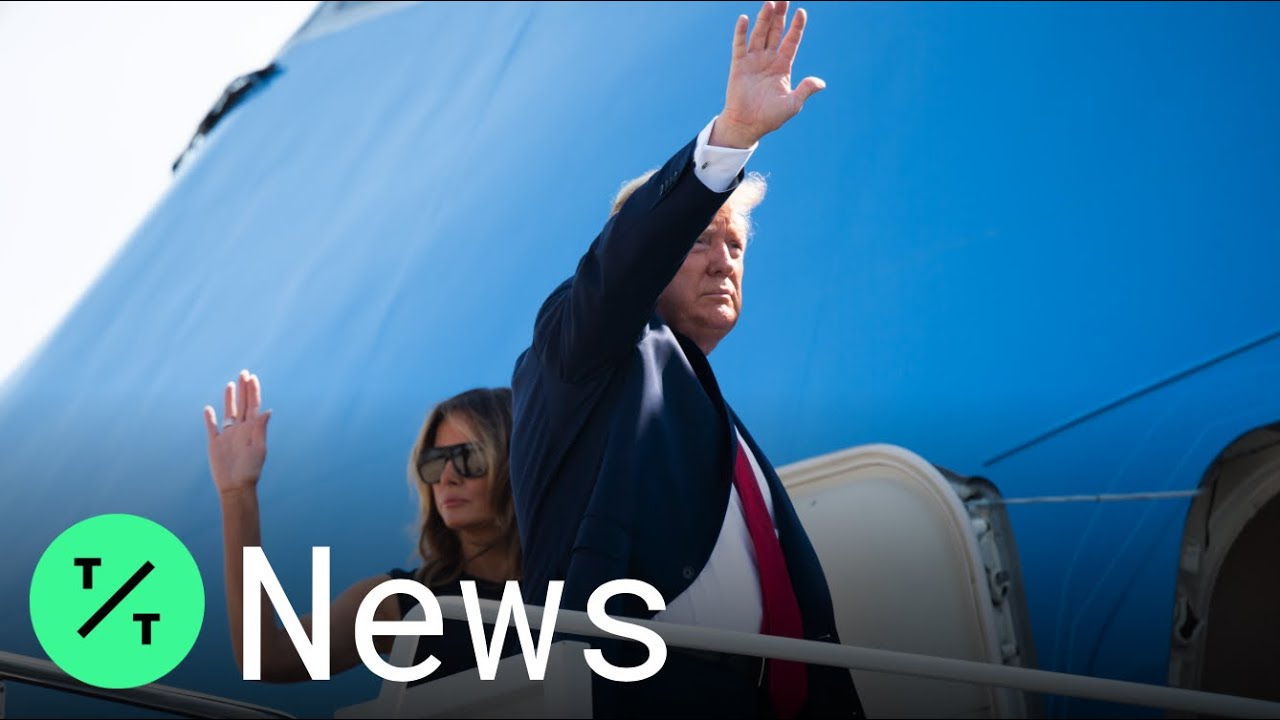
President Donald Trump defended his rhetoric Wednesday as he headed out to offer a message of healing and unity in El Paso and Dayton, where he was to be met by unusual hostility from people who fault his own incendiary words as contributing to last weekend’s mass shootings.
The mayors of both cities were calling for Trump to change the way he talks about immigrants. Multiple protests were planned. And Democratic presidential candidates continued to criticize him, including former Rep. Beto O’Rourke, who will address a counter-rally in his hometown of El Paso during the president’s visit.
As he left the White House, Trump defended his rhetoric while strongly criticizing those who say he bears some responsibility for the nation’s divisions, returning to political arguing even as he called for unity.
“My critics are political people,” Trump said, noting the apparent political leanings of the shooter in the Dayton killings and suggesting the man was supportive of Democrats.
“Had nothing to do with President Trump,” Trump said. “So these are people that are looking for political gain.”
He also denied his rhetoric had anything to do with the violence, claiming instead that he “brings people together. Our country is doing incredibly well.”
It is a highly unusual predicament for an American president to at once try to unite a community and a nation at the same time he is being criticized as contributing to a combustible climate that can spawn violence.
Some 85% of U.S. adults believe the tone and nature of political debate has become more negative, with a majority saying Trump has changed things for the worse, according to recent Pew Research Center polling.
And more than three quarters, 78%, say that elected officials who use heated or aggressive language to talk about certain people or groups make violence against those people more likely.
Trump traveled to Ohio, before heading to Texas. White House officials have said the visits would be similar to those he’s paid to grieving communities in the past, with the Republican president and the first lady saluting first responders and spending time with mourning families and survivors.
“We’ll be meeting with first responders, law enforcement and some of the victims and paying my respects and regards,” Trump said Wednesday morning. “It’s a terrific opportunity, really, to congratulate some of the police and law enforcement. The job they’ve done was incredible. Really incredible”
White House spokesman Hogan Gidley said Tuesday that Trump also wants “to have a conversation” about ways to head off future deadly episodes.
“We can do something impactful to prevent this from ever happening again, if we come together,” the spokesman said.
That’s a tough assignment for a president who thrives on division and whose aides say he views stoking discord and unease about cultural, economic and demographic changes as key to his reelection.
Trump insisted that Congress was making progress on possible new gun legislation. He said he has had “plenty of talks” with lawmakers in recent days and that there is “a great appetite, and I mean a very strong appetite, for background checks.”
But passage of a pending background check bill in the Senate remains unlikely Support for a bipartisan measure reached a high-point with a 2013 vote after the Sandy Hook shooting but it fell short of the 60 votes needed to advance.
Trump, who often seems most comfortable on rally stages with deeply partisan crowds, has not excelled at projecting empathy in public, often mixing what can sound like perfunctory expressions of grief with awkward offhand remarks. While he has offered hugs to tornado victims and spent time at the bedsides of shooting victims, he has yet to project the kind of emotion and vulnerability of his recent predecessors.
Barack Obama grew visibly shaken as he addressed the nation in the wake of the Sandy Hook elementary school massacre and teared up while delivering a 2016 speech on new gun control efforts. George W. Bush helped bring the country together following the Sept. 11 attacks, notably standing atop the smoking rubble of the World Trade Center, his arm draped over the shoulder of a firefighter, as he shouted through a bullhorn.
Subscribe to our YouTube channel
TICTOC ON SOCIAL:
Follow TicToc on Twitter
Like TicToc on Facebook
Follow TicToc on Instagram
Watch all of TicToc’s videos
Listen to TicToc’s podcast
Subscribe to our newsletter
TicToc by Bloomberg is global news for the life you lead. We are a 24/7 news network that covers breaking news, politics, technology, business and entertainment stories from around the globe, supported by a network of Bloomberg’s 2,700 journalists across 120 countries.
Sentinel Indexing in Progress
Metadata and chapters are available. Claim extraction for this episode is pending.
All video content is delivered via YouTube embedded players in accordance with the YouTube Terms of Service. Sentinel provides research tools that promote discovery and accountability across political media.