
Bloomberg News
@Bloomberg-News·2.8M subscribers·40.1K videos
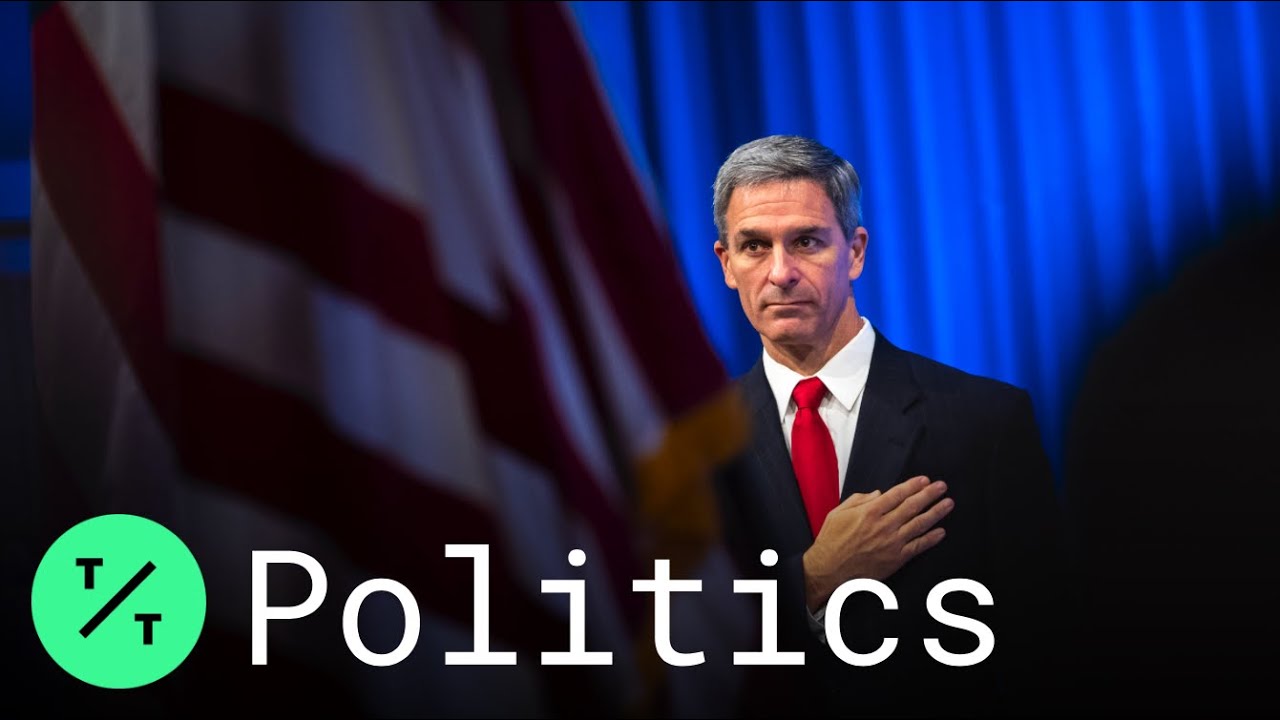
Cuccinelli Unveils Trump Policy That Favors Wealthier Immigrants
Posted
August 12, 2019
Views
32,944
Likes
333
Comments
785
Engagement
August 12, 2019
32,944
333
785
3.39%
Every word spoken in this episode is indexed. Type any phrase to jump straight to the moment it was said.
Type any word or phrase that may have been spoken. Click a result to seek the player to that exact moment.
Try a name, a topic, or a quoted line
Episode Timeline
Every episode in order around the one you’re watching — click any card and the page flips straight to it.
 27:19Now Playing
Trump administration rules that could deny green cards to immigrants who use Medicaid, food stamps, housing vouchers or other forms of public assistance are going into effect, one of its most aggressive moves to restrict legal immigration.
Federal law already requires those seeking green cards and legal status to prove they will not be a burden to the U.S., or what’s called a “public charge,” but the new rules, made public on Monday, detail a broader range of programs that could disqualify them.
Much of President Donald Trump’s effort to crack down on illegal immigration has been in the spotlight, but this rule change targets people who entered the United States legally and are seeking permanent status. It’s part of a push to move the U.S. to a system that focuses on immigrants’ skills instead of emphasizing the reunification of families, as it has done.
U.S. Citizenship and Immigration Services officers will now weigh public assistance along with other factors such as education, household income and health to determine whether to grant legal status.
The rules will take effect in mid-October. They don’t apply to U.S. citizens, even if the U.S. citizen is related to an immigrant who is subject to them.
The acting director of Citizenship and Immigration Services, Ken Cuccinelli, said the rule change fits with the Republican president’s message.
“We want to see people coming to this country who are self-sufficient,” Cuccinelli said. “That’s a core principle of the American Dream. It’s deeply embedded in our history, and particularly our history related to legal immigration.”
Immigrants make up a small percentage of those who get public benefits. In fact, many are ineligible for public benefits because of their immigration status.
But advocates worry the rules will scare immigrants into not asking for help. And they are concerned the rules give too broad an authority to decide whether someone is likely to need public assistance at any time, giving immigration officials the ability to deny legal status to more people.
On average, 544,000 people apply annually for green cards, with about 382,000 falling into categories that would be subject to this review, according to the government.
Guidelines in use since 1999 referred to a public charge as someone primarily dependent on cash assistance, income maintenance or government support for long-term institutionalization.
Under the new rules, the Department of Homeland Security has redefined a public charge as someone who is “more likely than not” to receive public benefits for more than 12 months within a 36-month period. If someone has two benefits, that is counted as two months. And the definition has been broadened to include Medicaid, housing assistance and food assistance under the Supplemental Nutrition Assistance Program, or SNAP.
Following publication of the proposed rules last fall, Homeland Security received 266,000 public comments, more than triple the average number for a rule change at the agency, and it made a series of amendments to the final rules as a result.
For example, women who are pregnant and on Medicaid or who need public assistance will not be subject to the new rules during the pregnancy and for 60 days after the birth of the baby.
The Medicare Part D low-income subsidy won’t be considered a public benefit. And public benefits received by children up until age 21 won’t be considered. Nor will emergency medical assistance, school lunch programs, foster care or adoption, student loans and mortgages, food pantries, homeless shelters or disaster relief.
Cuccinelli said the comments resulted in changes that “we think it made a better, stronger rule.”
Green card hopefuls will be required to submit three years of federal tax returns in addition to a history of employment. And if immigrants have private health insurance that will weigh heavily in their favor.
Active U.S. military members are exempt. So are refugees or asylum seekers, and the rules would not be applied retroactively, officials said. But the Trump administration also has moved to drastically reduce asylum in the U.S.
Subscribe to our YouTube channel
TICTOC ON SOCIAL:
Follow TicToc on Twitter
Like TicToc on Facebook
Follow TicToc on Instagram
Watch all of TicToc’s videos
Listen to TicToc’s podcast
Subscribe to our newsletter
TicToc by Bloomberg is global news for the life you lead. We are a 24/7 news network that covers breaking news, politics, technology, business and entertainment stories from around the globe, supported by a network of Bloomberg’s 2,700 journalists across 120 countries.
Sentinel Indexing in Progress
Metadata and chapters are available. Claim extraction for this episode is pending.
All video content is delivered via YouTube embedded players in accordance with the YouTube Terms of Service. Sentinel provides research tools that promote discovery and accountability across political media.