
Bloomberg News
@Bloomberg-News·2.8M subscribers·40.1K videos
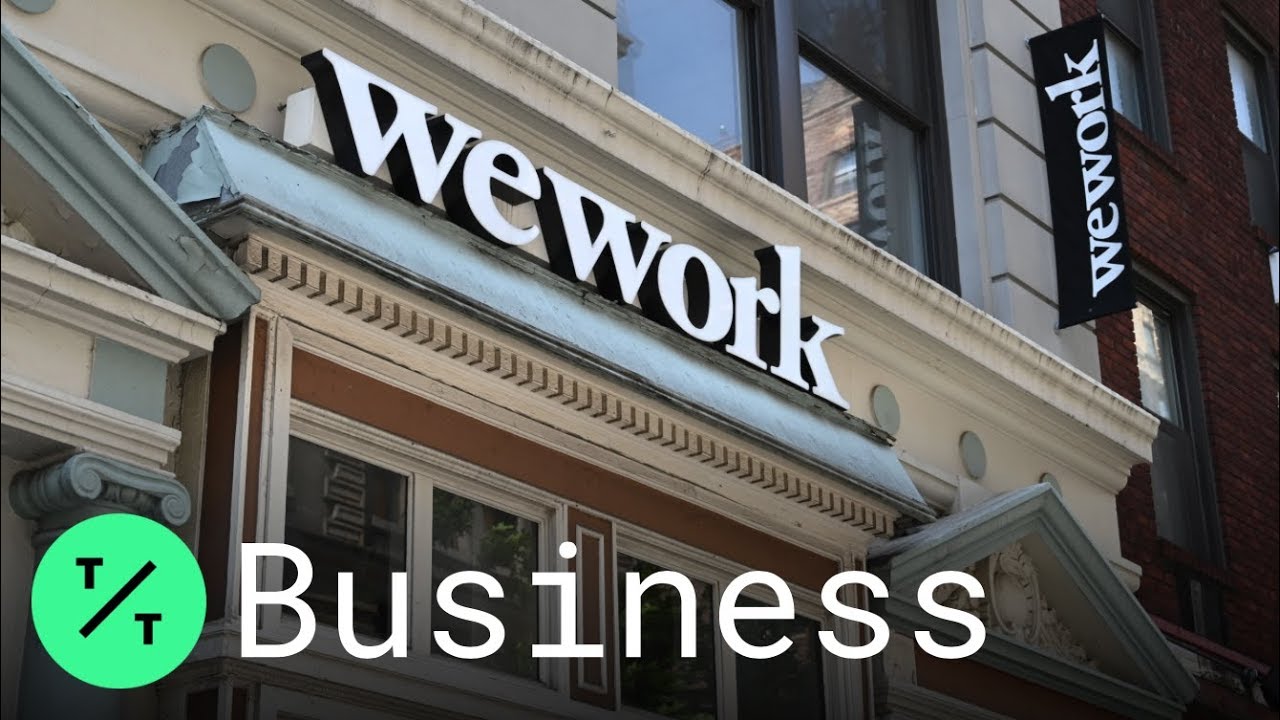
WeWork Files for IPO, Revealing Massive Losses
Posted
August 14, 2019
Views
1,070
Likes
9
Comments
1
Engagement
0.93%
August 14, 2019
1,070
9
1
0.93%
Every word spoken in this episode is indexed. Type any phrase to jump straight to the moment it was said.
Type any word or phrase that may have been spoken. Click a result to seek the player to that exact moment.
Try a name, a topic, or a quoted line
Episode Timeline
Every episode in order around the one you’re watching — click any card and the page flips straight to it.
 0:58Now Playing
WeWork Cos. disclosed its plans for an initial public offering, revealing a net loss of $690 million in the first six months of this year as it moves toward a fall listing that will test investors’ appetite for money-losing startups.
Revenue in the first-half more than doubled to $1.54 billion, the U.S. Securities and Exchange Commission filing showed. The company plans to list shares under the symbol “WE,” although the exchange wasn’t listed.
One of the main risk factors the company highlighted on Wednesday was its “ability to achieve profitability at a company level in light of our history of losses.” Chief Executive Officer Adam Neumann faces persistent questions about WeWork’s propensity to burn cash. The company has described some of its more scrutinized expenses, including a flashy contest series that cost more than $40 million, as “critical means through which we express our key values.”
In an unconventional move, there will be three classes of common stock at WeWork: Class A shares with one vote each, plus “high-vote stock” in the form of Class B and Class C shares.
The office-rental company listed an offering size of $1 billion, which is typically a placeholder that will be revised when terms of the share sale are set later. WeWork had been targeting a share sale of about $3.5 billion in September, people familiar with the matter have said. That would make it the second-biggest IPO of the year, topped only by Uber Technologies Inc.’s $8.1 billion listing in May. In parallel with the stock offering, WeWork has been in talks to raise as much as $6 billion in debt.
JPMorgan Chase & Co. and Goldman Sachs Group Inc. will be the lead underwriters on the offering. Executives from major banks had been courting the company for years.
WeWork’s annual revenue more than doubled to $1.8 billion in 2018 compared to $886 million in the previous year. The full-year net loss attributable to the company widened more than 80% to $1.6 billion, from a loss of $883.9 million in 2017. It lost about $430 million in 2016.
The company said it could one day be profitable if it “stopped investing in our growth and instead allowed our existing pipeline of locations to mature.” WeWork said only 30% of its open locations are mature and that 70% of its locations had been open for two years or less. It also has a revenue backlog of $4 billion, eight times its backlog last year, it added.
New York-based WeWork, which leases office space to companies and freelance workers, has raised more than $12 billion in funding since its founding. SoftBank Group Corp. is the company’s largest backer and has valued the unprofitable business at $47 billion. WeWork is by far the most valuable co-working business, though numerous rivals around the world are trying to lure away members.
WeWork -- which changed its name to the We Co. in a diversification move earlier this year -- has in recent weeks been looking to raise a significant amount of debt. It was seeking to borrow $2 billion through a letter-of-credit facility and $4 billion from a delayed-draw term loan, Bloomberg previously reported. Banks will have to make good on their commitments only if at least $3 billion is raised in the IPO. It confirmed in the filing that it entered into a commitment letter this month for a credit facility of as much as $6 billion.
Subscribe to our YouTube channel
TICTOC ON SOCIAL:
Follow TicToc on Twitter
Like TicToc on Facebook
Follow TicToc on Instagram
Watch all of TicToc’s videos
Listen to TicToc’s podcast
Subscribe to our newsletter
TicToc by Bloomberg is global news for the life you lead. We are a 24/7 news network that covers breaking news, politics, technology, business and entertainment stories from around the globe, supported by a network of Bloomberg’s 2,700 journalists across 120 countries.
Sentinel Indexing in Progress
Metadata and chapters are available. Claim extraction for this episode is pending.
All video content is delivered via YouTube embedded players in accordance with the YouTube Terms of Service. Sentinel provides research tools that promote discovery and accountability across political media.