Bloomberg News
@Bloomberg-News·2.8M subscribers·40.1K videos
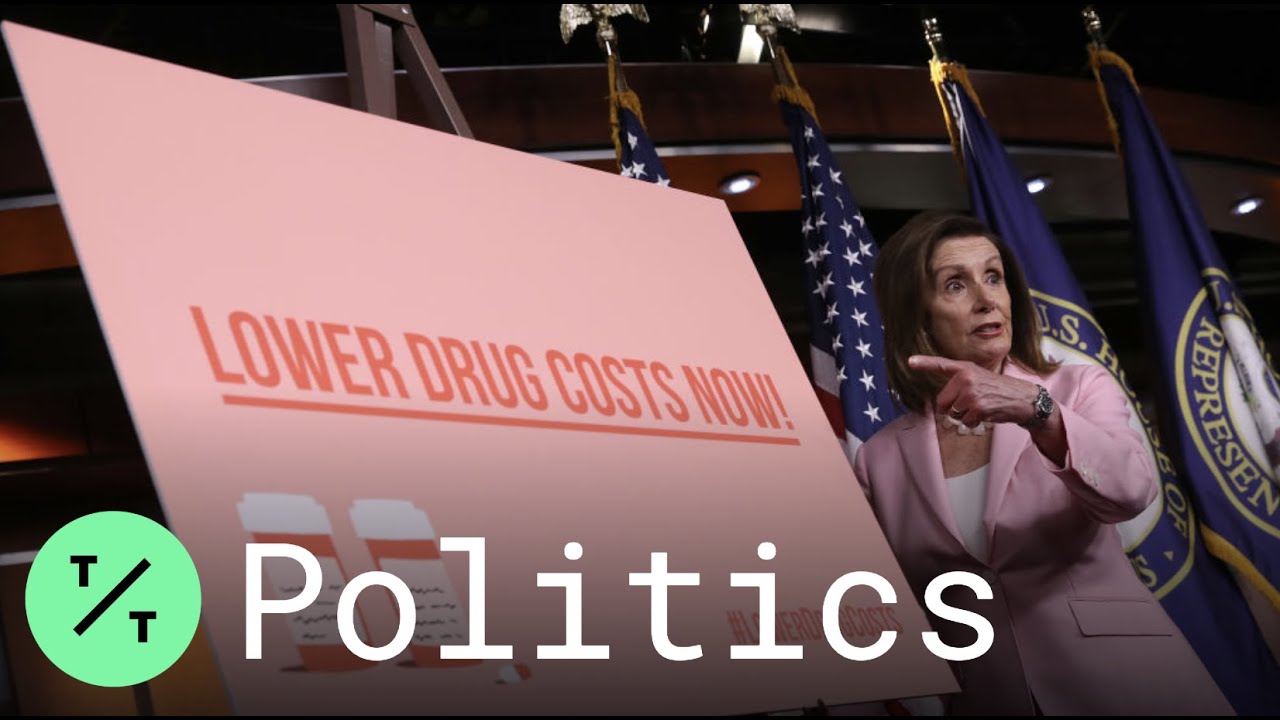
Pelosi Pitches Prescription Drug Plan for Medicare Recipients
Posted
September 19, 2019
Views
1,679
Likes
8
Comments
17
Engagement
September 19, 2019
1,679
8
17
1.49%
Every word spoken in this episode is indexed. Type any phrase to jump straight to the moment it was said.
Type any word or phrase that may have been spoken. Click a result to seek the player to that exact moment.
Try a name, a topic, or a quoted line
Episode Timeline
Every episode in order around the one you’re watching — click any card and the page flips straight to it.
 1:40Now Playing
House Speaker Nancy Pelosi, trying to seize the agenda on a leading consumer issue, announced an ambitious prescription drug plan Thursday that would allow Medicare to negotiate prices for seniors and younger people.
The proposal would direct Medicare to bargain over as many as 250, but no fewer than 25, of the costliest drugs. Insulin is on the list. Drugmakers that refuse to negotiate could face steep penalties. Companies that raise prices beyond inflation would have to pay rebates to Medicare.
The plan would limit copays for seniors covered by Medicare’s “Part D” prescription drug program to $2,000. Medicare-negotiated prices would be available to other buyers, such as employer health plans.
It’s shaping up as a high-stakes gamble for all sides in Washington. Polls show that high drug prices have Americans worried, and regardless of party affiliation, they want Congress to act. As a candidate, President Donald Trump called for Medicare negotiations but then later seemed to drop the idea.
Pelosi, D-calif., said her goal is a deal that Trump can sign onto and that could pass the GOP-controlled Senate.
Youtube video thumbnail
“We don’t want a political issue at the polls,” Pelosi said at a news conference. “We want a solution in Congress, and we want it now.”
But in the Senate, Republican John Cornyn of Texas said the proposal “has absolutely no chance —zero, zip, nada” of passing. Some House Republicans quickly dismissed it as “socialism.”
The 2003 law that created Medicare’s prescription drug benefit barred the program from negotiating prices, a restriction Democrats have long opposed. Most Republicans say they believe price negotiations are best left to private players such as insurance companies.
The industry group Pharmaceutical Research and Manufacturers of America said Pelosi’s plan was “radical” and would usher in an era of government price-setting that would “blow up” the current system, stifling innovation. But the health insurance industry said the plan was “bold reform” and that drug costs are “out of control.” Public Citizen, a consumer group on the political left, said the bill didn’t go far enough because it left intact drugmakers’ monopoly on new medicines.
A leading House progressive, Texas Democrat Lloyd Doggett, agreed that more is required. “This new bill was promoted as a way to sway President Trump and a reluctant Republican Senate,” said Doggett. “I await their embrace.”
While the legislation leans left politically it also incorporates ideas from the Trump administration and from Republican and Democratic senators — a signal Pelosi wants a deal.
Pelosi’s proposal would:
—authorize Medicare to negotiate prices for up to 250 drugs with the greatest total cost to society. That includes pharmacy drugs under the Part D prescription benefit, and Part B medications dispensed in doctors’ offices, such as many cancer drugs. Medicare would negotiate for as many drugs as possible on a list refreshed annually, but no fewer than 25. The maximum price would be determined using a blend of international prices, similar to a more limited proposal from the administration. Drug companies that balk at making a deal would face penalties that start at 65% of sales for the drug at issue, and escalate if they hold out.
—require drugmakers to pay rebates to Medicare if they raise prices beyond the increase in inflation. That idea resembles a plan from Sens. Chuck Grassley, R-Iowa, and Ron Wyden, D-Ore. Their proposal has cleared a key committee, with Trump’s support. But many Senate Republicans oppose inflation rebates, and it’s unclear what Majority Leader Mitch McConnell, R-Ky., plans to do next.
—limit what seniors pay out of pocket for their medications to $2,000 a year. Currently, Medicare’s pharmacy benefit has no cap on copays, and the advent of drugs costing hundreds of thousands of dollars a year has left some seniors saddled with bills that rival a mortgage payment. An out-of-pocket limit is part of the Grassley-Wyden bill and is backed by the administration.
For now, criticism of the industry — from Trump and lawmakers of both parties — appears to be having an effect on prices.
Subscribe to our YouTube channel
TICTOC ON SOCIAL:
Follow TicToc on Twitter
Like TicToc on Facebook
Follow TicToc on Instagram
Watch all of TicToc’s videos
Listen to TicToc’s podcast
Subscribe to our newsletter
TicToc by Bloomberg is global news for the life you lead. We are a 24/7 news network that covers breaking news, politics, technology, business and entertainment stories from around the globe, supported by a network of Bloomberg’s 2,700 journalists across 120 countries.
Sentinel Indexing in Progress
Metadata and chapters are available. Claim extraction for this episode is pending.
All video content is delivered via YouTube embedded players in accordance with the YouTube Terms of Service. Sentinel provides research tools that promote discovery and accountability across political media.