Bloomberg News
@Bloomberg-News·2.8M subscribers·40.1K videos
The Winners and Losers Under the New USMCA Trade Deal
Posted
December 12, 2019
Views
1,207
Likes
16
Comments
4
Engagement
1.66%
December 12, 2019
1,207
16
4
1.66%
Every word spoken in this episode is indexed. Type any phrase to jump straight to the moment it was said.
Type any word or phrase that may have been spoken. Click a result to seek the player to that exact moment.
Try a name, a topic, or a quoted line
See what was published immediately before and after this episode.
 0:26
0:26 0:42Now Playing
Companies, workers and lawmakers in three countries have spent the past year in limbo awaiting final touches on the U.S.-Mexico-Canada free-trade agreement. Now they have a better sense of who won -- and who lost.
The accord awaits a vote next week in the U.S. House of Representatives, where Democrats successfully wrung last-minute revisions to ensure its passage. The U.S. Senate plans to vote in 2020, while legislatures in Mexico and Canada will also have to ratify the updated agreement.
While the so-called USMCA deal marks a political win for President Donald Trump as he seeks re-election, the overall benefit to U.S. GDP is small: a 0.35 % increase in the agreement’s sixth year, according to official U.S. estimates. Yet, like all trade deals, this one creates winners and losers in the business community. The countries’ political leaders, steel industries and online shoppers stand to benefit, while U.S. drug companies, Mexican businesses, Canadian dairy farmers come off second-best.
U.S. agricultural exports: U.S. dairy and poultry get new market access to Canada, and there are some gains for wheat and alcoholic beverages. The boost is small, but farmers are hoping that progress on one trade agreement portends an end to the trade war with China.
Internet companies: The USMCA has a new digital trade section that will help data-intensive internet firms avoid onerous data storage and taxation requirements. The industry beat back a last-minute attempt to remove liability protections for companies like Alphabet Inc.’s Google, Facebook, Inc. and Twitter, Inc. for content posted by users.
Online shoppers and Amazon.com, Inc: The deal will raise Canada and Mexico’s de-minimis levels, or the threshold above which consumers pay tax on a cross-border shipment. This means, for instance, that Canadians will now be able to buy more online, tax-free.
U.S. firms: Business groups such as the National Association of Manufacturers and American Petroleum Institute pushed hard for all parties to get on board because they wanted to eliminate the possibility, however remote, that Trump would end free trade in North America. The boost to business confidence could mean the economic benefit from enacting the deal exceeds expectations. The Business Roundtable, which represents U.S. CEOs, endorsed the USMCA on Wednesday, though it raised concerns about weaker intellectual property protections and new labor-enforcement mechanisms.
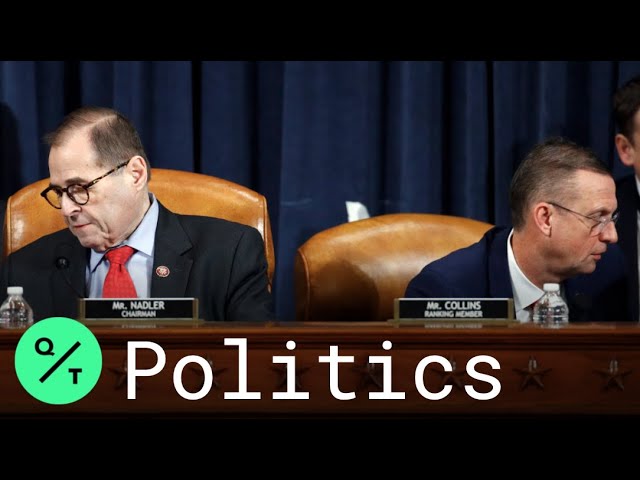
U.S. President Donald Trump: Less than an hour before House Democrats said they plan to vote on Trump’s trade deal, they presented articles of impeachment against him. Finalizing this deal gives Trump a much needed political win as he fights off impeachment and runs for re-election in 2020.
Canadian Prime Minister Justin Trudeau: The country had a few red-line issues, including maintaining so-called Chapter 19 dispute panels contained in the old Nafta, which U.S. negotiators wanted to kill but conceded to keep. One of Canada’s big concessions was agreeing to raise patent protections for biologic drugs, but this was removed from the final version. That means Canada got one of its core goals and won’t have to follow through on one of its main concessions.
Mexican President Andres Manuel Lopez Obrador: While Mexico’s private sector is worried about some part of the deal -- including the process for labor complaints -- AMLO emerged as mostly a winner. Just finalizing the deal means that AMLO was able to preserve free trade with the U.S., the country’s largest commercial partner. Failure to do so, and having Trump withdraw from Nafta, could have been catastrophic for the stagnant Mexican economy.
House Speaker Nancy Pelosi: Pelosi told her caucus that in the final talks, Democrats ate the “lunch” of Trump’s trade negotiators. Democrats got most of what they wanted. Pelosi set up a working group to ensure that a range of voices -- from Alabama moderate Terri Sewell to Connecticut liberal Rosa DeLauro -- could be heard. The talks got bogged down at times, but the consensus-building gave her most vulnerable members a way to show voters they’re working on more than impeaching Trump.
Subscribe to our YouTube channel
QUICKTAKE ON SOCIAL:
Follow QuickTake on Twitter: twitter.com/quicktake
Like QuickTake on Facebook: facebook.com/quicktake
Follow QuickTake on Instagram: instagram.com/quicktake
Subscribe to our newsletter
Email us at quicktakenews@gmail.com
QuickTake by Bloomberg is a global news network delivering up-to-the-minute analysis on the biggest news, trends and ideas for a new generation of leaders.
Sentinel Indexing in Progress
Metadata and chapters are available. Claim extraction for this episode is pending.
All video content is delivered via YouTube embedded players in accordance with the YouTube Terms of Service. Sentinel provides research tools that promote discovery and accountability across political media.