Bloomberg News
@Bloomberg-News·2.8M subscribers·40.1K videos
Train Stations In Paris Get Busy Again As France Eases Lockdown
Posted
May 11, 2020
Views
3,527
Likes
16
Comments
8
Engagement
May 11, 2020
3,527
16
8
0.68%
Every word spoken in this episode is indexed. Type any phrase to jump straight to the moment it was said.
Type any word or phrase that may have been spoken. Click a result to seek the player to that exact moment.
Try a name, a topic, or a quoted line
 0:25Now Playing
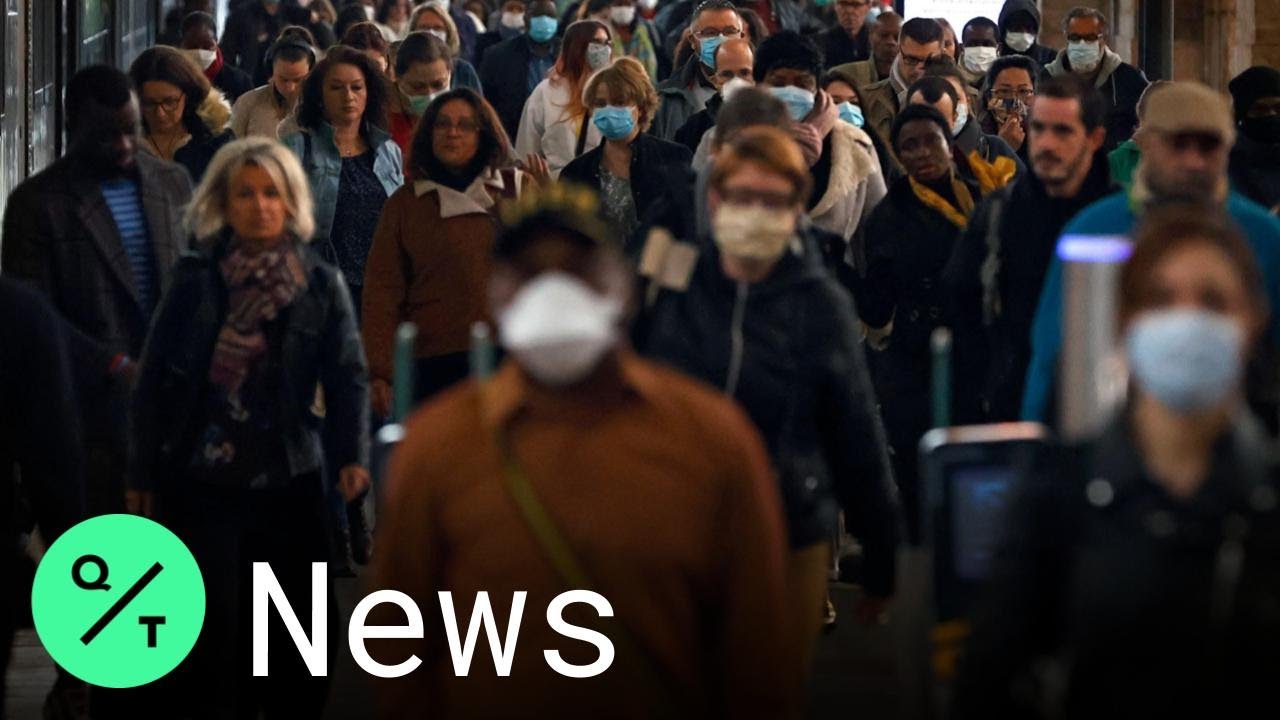
Paris’s train stations welcomed returning commuters, the Swiss rushed out to stock up on coffee and Spaniards could return to outdoor cafes, as Europe ventures its biggest step yet to reopen in the coronavirus era.
Governments across the continent eased restrictions as the spread of the pandemic slows. France made its first significant move by allowing more travel, while shops were reopened in Switzerland and Greece. Barbers resumed in the Netherlands, and Denmark halved distancing requirements.
At the Gare du Nord in the French capital, passengers remained sparse on Monday morning, as volunteers passed out face masks to those who forgot to bring their own. Normally throbbing with harried office workers, channel-hopping business people and overwhelmed tourists, traffic at Europe’s busiest rail hub was a fraction of pre-crisis levels. But people were at least moving again.
“Transport was fine,” said Laura Hattiger after her first commute in weeks from Beauvais to central Paris. She had her working hours reduced by two hours a day in order to allow for travel disruptions. “There weren’t that many people.”
While governments across the continent are hoping their economies bounce back swiftly, tentative steps to revive activity are likely to herald a tough slog lasting months. After more than 150,000 deaths on the continent -- more than half of the global toll -- European leaders are taking a cautious approach to reactivating public life.
The bleak outlook was underscored by the European Commission’s May 6 forecast for an unprecedented 7.4% economic contraction in the European Union this year, the worst recession in its history. Even that dire projection assumes the virus will be kept under control as member states gradually lift lockdowns.
To make matters worse, southern European nations especially hard hit by the outbreak have limited ability to respond due to large piles of public debt. The Commission forecasts slumps in output this year exceeding 9% in Italy, Spain and Greece, compared to a 6.5% decline in Germany.
In Spain, 50% of outdoor seating capacity could be used for restaurants and bars in about half of the country, and people could meet with up to 10 others privately. Rules in Madrid and Barcelona remain more restrictive, even as the country with Europe’s most extensive outbreak recorded its lowest daily death toll in almost two months.
In Germany, which last week announced plans for a broad restart of Europe’s largest economy, a drop in new cases was tempered by a worrying increase in a measure of the speed of the spread, with the so-called reproduction factor rising to 1.13. The country has allowed all shops to reopen and paved the way for restaurants, bars and professional soccer to restart.
Subscribe to our YouTube channel
QUICKTAKE ON SOCIAL:
Follow QuickTake on Twitter: twitter.com/quicktake
Like QuickTake on Facebook: facebook.com/quicktake
Follow QuickTake on Instagram: instagram.com/quicktake
Subscribe to our newsletter
Email us at quicktakenews@gmail.com
QuickTake by Bloomberg is a global news network delivering up-to-the-minute analysis on the biggest news, trends and ideas for a new generation of leaders.
Sentinel Indexing in Progress
Metadata and chapters are available. Claim extraction for this episode is pending.
All video content is delivered via YouTube embedded players in accordance with the YouTube Terms of Service. Sentinel provides research tools that promote discovery and accountability across political media.