Bloomberg News
@Bloomberg-News·2.8M subscribers·40.1K videos
Security Swarms U.S. Consulate in Chengdu After China Shuts It Down
Posted
July 24, 2020
Views
94,277
Likes
555
Comments
728
Engagement
July 24, 2020
94,277
555
728
1.36%
Every word spoken in this episode is indexed. Type any phrase to jump straight to the moment it was said.
Type any word or phrase that may have been spoken. Click a result to seek the player to that exact moment.
Try a name, a topic, or a quoted line
 1:00Now Playing
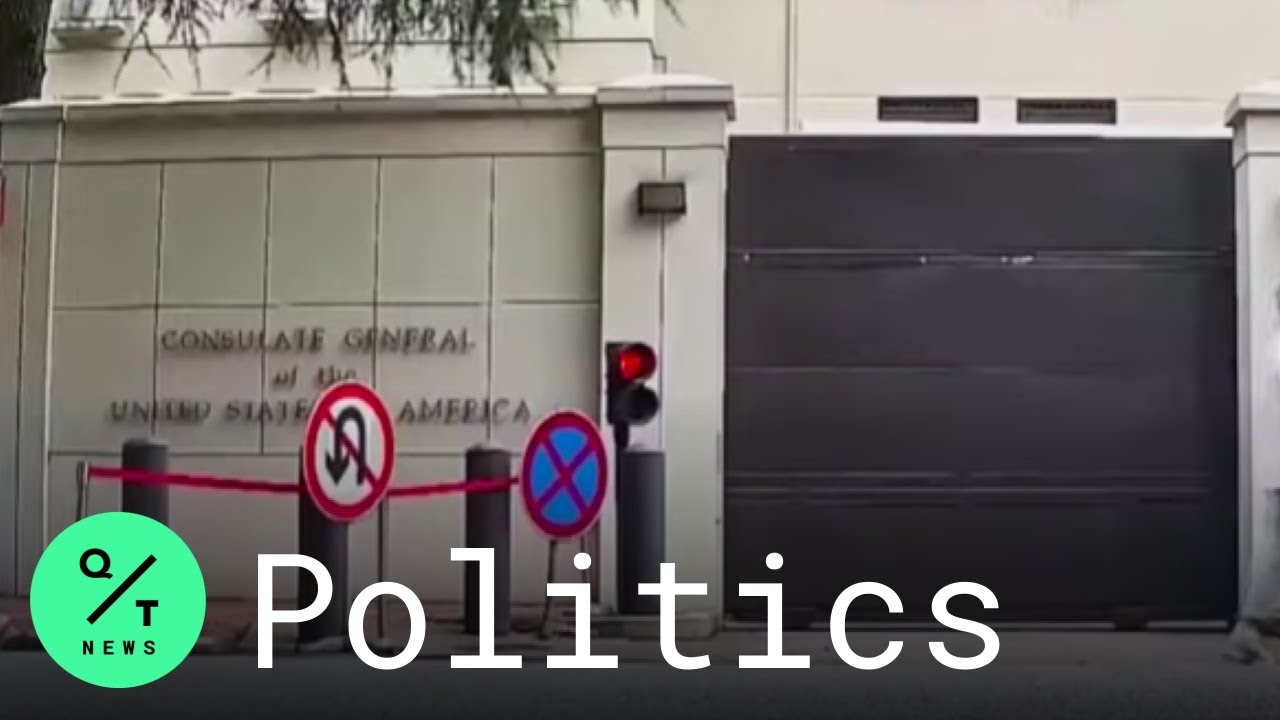
Security agents and curious onlookers descended on central Chengdu, as the leafy southwestern Chinese city suddenly became the centerpiece of the latest chapter in collapsing relations between Beijing and Washington.
China’s decision Friday to close the American consulate in the Sichuan provincial capital -- in retaliation for a similar move by the U.S. three days earlier in Houston -- drew usually large groups of pedestrians onto the streets around the facility. Dozens of police and army personnel patrolled the street outside the building, checking IDs, searching phones and ordering passersby to delete photos and videos of the area.
State broadcaster China Central Television began live-streaming footage of the consulate’s entrance. More than 20 million internet users were following the feed by Friday afternoon, in an odd echo of videos circulated earlier this week on social media showing Chinese consulate personnel in Houston burning what appeared to be reams of paper after learning of their looming expulsion.
“It’s a shame,” said the owner of a nearby noodle shop popular with American diplomats, who went by the surname Ma. “They were always polite and spoke pretty good Chinese,” he said, adding that his street-side eatery got many Western customers because it serves less spicy versions of local cuisine.
The Chengdu mission, which opened in 1985, covers Chongqing, Guizhou, Yunnan, as well as Sichuan. The consulate has also served as a key listening post to follow events in Tibet, where Communist Party efforts to suppress dissent have long been a focus of tensions between China and the West. Intel Corp., Dell Technologies Inc., and Procter & Gamble Co. are among American multinationals with a presence in Chengdu.
Chinese Foreign Ministry spokesman Wang Wenbin told a regular news briefing Friday in Beijing that some consulate staff had “engaged in activities inconsistent with their capacity, interfered in China’s internal affairs and harmed China’s national security interests.” The U.S. State Department had similarly accused China of using the Houston consulate as a hub for spying and influence operations before taking the unprecedented step of closing it down.
“It was a reasonable reaction,” said one Chengdu resident who lives near the embassy and asked not to be named. “It was the U.S. who first broke the peaceful relationship.”
A total of roughly 700 diplomats are normally assigned to the U.S. embassy and five consulates in China
In 2012, former Chongqing police chief Wang Lijun sought refuge in the Chengdu consulate with evidence linking the family of his then boss, former Chongqing party secretary Bo Xilai, to the death of a British businessman. The episode exposed a scandal that would see Bo ousted and his wife convicted of murder, leading Xi to launch a nationwide anti-corruption campaign.
Local residents said that the police presence increased markedly overnight. Cao Yu, who works at a Japanese restaurant near the consulate, said he felt scared as he rode his bicycle to work in the morning.
“The relationship between the U.S. and China is getting a bit strange on the national level,” he said. “But on a personal level I don’t feel any resentment toward Americans.”
The impact of the consulate’s closure will be felt by the cottage industry of agents and travel companies that serve Chinese citizens applying for U.S. visas. On Friday, employees stood in the doorways of several such shops located across from the consulate to watch the action.
One shop owner, who asked not to be named, said on Thursday she didn’t know much about the dispute between the U.S. and China, but was worried that a closure could severely affect her business. The U.S. had scaled back some services when the coronavirus epidemic flared in China earlier this year.
Stefan Kurktschiev, a 32-year-old German who teaches at an international school in the city, said he was concerned about growing barriers between China and the world.
”That’s my biggest worry, that the relationship between China and some western countries, especially the States, starts deteriorating,” he said. “Just like people in personal relationships, countries should also communicate with each other. Clear communication is the best way to avoid misunderstandings.”
Subscribe to our YouTube channel
QUICKTAKE ON SOCIAL:
Follow QuickTake on Twitter: twitter.com/quicktake
Like QuickTake on Facebook: facebook.com/quicktake
Follow QuickTake on Instagram: instagram.com/quicktake
Subscribe to our newsletter
Email us at quicktakenews@gmail.com
QuickTake by Bloomberg is a global news network delivering up-to-the-minute analysis on the biggest news, trends and ideas for a new generation of leaders.
Sentinel Indexing in Progress
Metadata and chapters are available. Claim extraction for this episode is pending.
All video content is delivered via YouTube embedded players in accordance with the YouTube Terms of Service. Sentinel provides research tools that promote discovery and accountability across political media.