
Bloomberg News
@Bloomberg-News·2.8M subscribers·40.1K videos
Dengue Infections Dramatically Reduced Using Bacteria
Posted
August 28, 2020
Views
1,500
Likes
30
Comments
4
Engagement
2.27%
August 28, 2020
1,500
30
4
2.27%
Every word spoken in this episode is indexed. Type any phrase to jump straight to the moment it was said.
Type any word or phrase that may have been spoken. Click a result to seek the player to that exact moment.
Try a name, a topic, or a quoted line
 3:02Now Playing
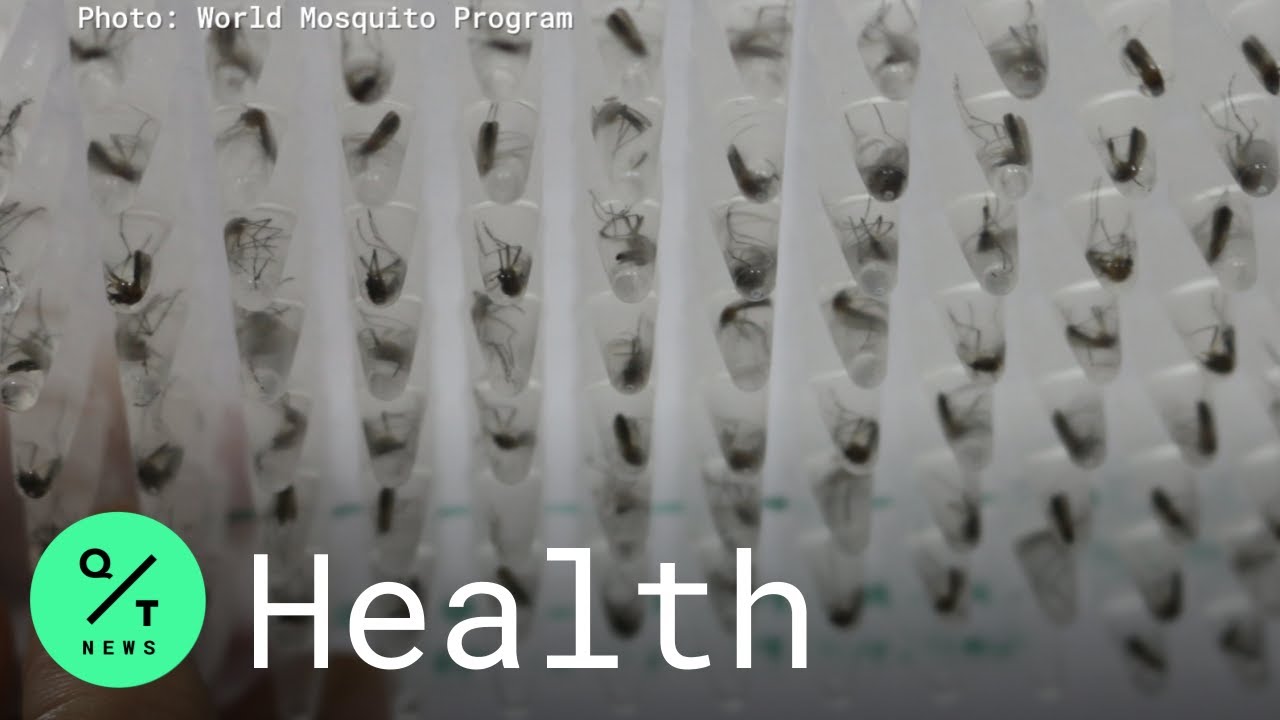
Scientists at the World Mosquito Program are fighting fire with fire, infecting mosquitos with bacteria called Wolbachi that prevents them from getting dengue. The results of the randomized controlled trial show a 77% reduction in dengue in Wolbachia-treated areas of Yogyakarta, Indonesia, compared to untreated areas.
Cameron Simmons, the Director of the Oceania Hub at the World Mosquito Program explains how it’s done.
“When a mosquito has got Wolbachia in it, they're no longer susceptible to getting infected by these dengue viruses. So if the mosquito can't get dengue, then it can’t transmit it between humans. The second trick that Wolbachia has is that it's able to invade or establish itself into a mosquito population by manipulating the mosquito reproductive outcomes. And what that means is that you only need to release a few mosquitoes in a community for Wolbachia to establish into all of the mosquitoes in that community and persist in those mosquitoes and for many years and in fact probably decades.”
The World Mosquito Program conducted the randomized controlled trial over the course of 27 months.
“What we did with our partners in Yogyakarta was to take the city of Yogyakarta and divide it into 24 areas. And 12 of those areas were randomly selected to receive Wolbachia into the local mosquito population. The other 12 continued with routine dengue control approaches. Over the course of that 27 months, what we found at the conclusion of the study was a 77% reduction in the number of dengue cases when we compared Wolbachia-treated neighborhoods to untreated neighborhoods. So Wolbachia was providing really substantial protection to local residents from getting dengue.”
Cameron says they’re expanding the trial across Yogyakarta.
“What's really exciting for us going forward is putting Wolbachia right across the city of Yogyakarta, protecting the half a million people who live there, protecting the other half a million people who come into the city every day to work. We're really optimistic we might be able to achieve effective elimination of dengue as a public health problem in this city when the Wolbachia is deployed citywide.”
He adds, “It's the first time an intervention against this mosquito has ever demonstrated success in controlling disease.”
This approach also reduces the risk of other mosquito-borne diseases like Zika and chikungunya.
Subscribe to our YouTube channel
QUICKTAKE ON SOCIAL:
Follow QuickTake on Twitter: twitter.com/quicktake
Like QuickTake on Facebook: facebook.com/quicktake
Follow QuickTake on Instagram: instagram.com/quicktake
Subscribe to our newsletter
Email us at quicktakenews@gmail.com
QuickTake by Bloomberg is a global news network delivering up-to-the-minute analysis on the biggest news, trends and ideas for a new generation of leaders.
Sentinel Indexing in Progress
Metadata and chapters are available. Claim extraction for this episode is pending.
All video content is delivered via YouTube embedded players in accordance with the YouTube Terms of Service. Sentinel provides research tools that promote discovery and accountability across political media.