
Bloomberg News
@Bloomberg-News·2.8M subscribers·40.1K videos
Greenland's Ice Cap is Breaking Off For the Second Year in a Row
Posted
September 16, 2020
Views
1,324
Likes
15
Comments
16
Engagement
September 16, 2020
1,324
15
16
2.34%
Every word spoken in this episode is indexed. Type any phrase to jump straight to the moment it was said.
Type any word or phrase that may have been spoken. Click a result to seek the player to that exact moment.
Try a name, a topic, or a quoted line
Episode Timeline
Every episode in order around the one you’re watching — click any card and the page flips straight to it.
 0:18Now Playing
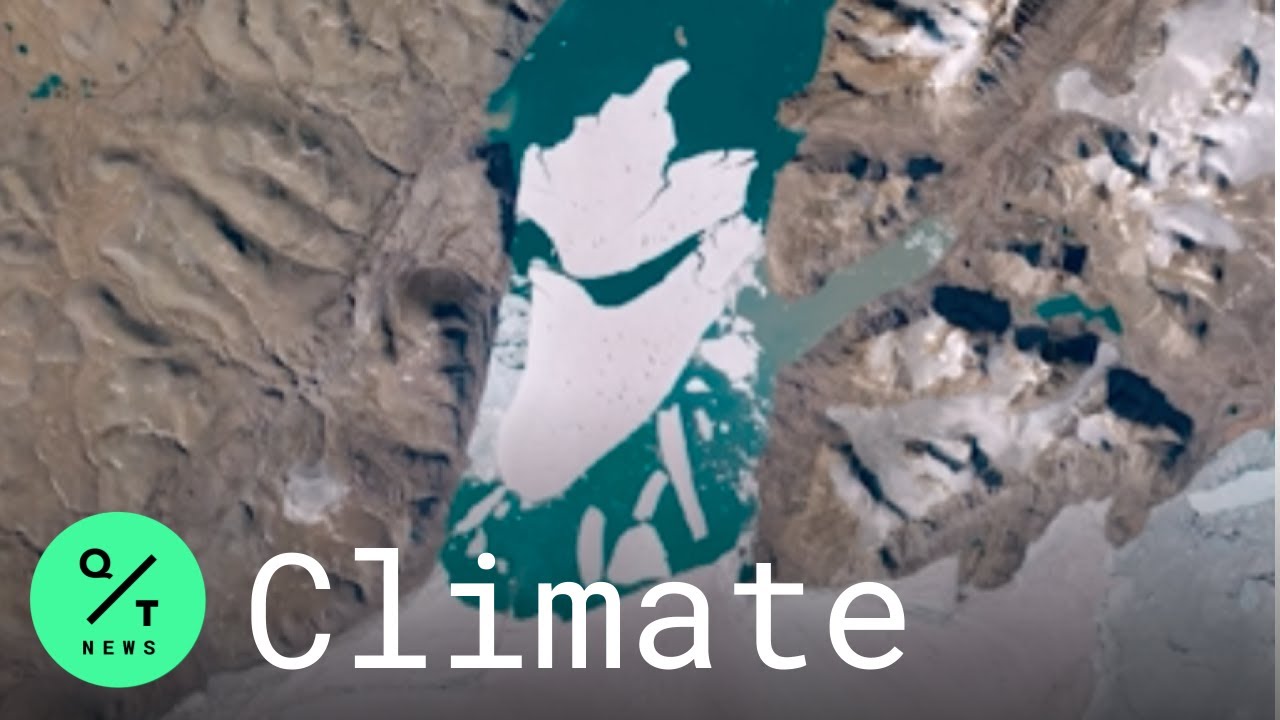
The Northeast Greenland Ice Stream has lost more than 19 square miles (50 square kilometers) for the second year in a row, the Geological Survey of Denmark and Greenland reported. The giant glacier has now been reduced by 60 square miles in the past two decades.
Part of the Spalte glacier, the ice cap section broke off the fjord Nioghalvfjerdsfjorden. The glacier is at the end of the Northeast Greenland Ice Stream, where it flows off land and into the ocean.
As the summer melt season reaches its peak, the largest Arctic ice shelf has jettisoned a piece of ice twice the size of Manhattan.
Ice shelves are a barrier that prevent land-based glaciers from sliding into the ocean, where they go on to melt and contributed to rising sea levels. When those structures weaken and disintegrate, as the Northeast Greenland Ice Stream has now done, glacier movement picks up.
“Using almost 30 years of satellite data, we see speed up in the glacier flow over the past decade,” said Anne Solgaard, a research scientist at the Geological Survey of Denmark and Greenland in a statement. The current disintegration is only part of the problem, she noted, with acceleration measured upstream also “indicating a large-scale change to this huge glacier.”
Northeastern Greenland has warmed by about 3°C since 1980, and both this year and last have brought record-breaking heat. The Arctic has long faced the onslaught of rising temperatures, and the effects are only intensifying. As nations court new shipping and fossil-fuel exploration opportunities, scientists warn that summertime Arctic sea ice may only have years left.
In another sign of the dramatic shift happening as the Arctic rapidly warms, a study published in journal Nature Climate Change on Monday found that the region’s ice has departed its prior climate period and is entering a new one, a process that might have kicked off as far back as 2000. The findings suggest that Arctic temperatures have entered a new normal, with rain and snow patterns expected to break with the past.
A major break in an ice stream that drains 16% of Greenland’s inland ice is only the newest symptom of the Arctic’s new climate. “We should be very concerned,” said Jason Box, another research professor at the Geological Survey of Denmark and Greenland.
Subscribe to our YouTube channel
QUICKTAKE ON SOCIAL:
Follow QuickTake on Twitter: twitter.com/quicktake
Like QuickTake on Facebook: facebook.com/quicktake
Follow QuickTake on Instagram: instagram.com/quicktake
Subscribe to our newsletter
Email us at quicktakenews@gmail.com
QuickTake by Bloomberg is a global news network delivering up-to-the-minute analysis on the biggest news, trends and ideas for a new generation of leaders.
Sentinel Indexing in Progress
Metadata and chapters are available. Claim extraction for this episode is pending.
All video content is delivered via YouTube embedded players in accordance with the YouTube Terms of Service. Sentinel provides research tools that promote discovery and accountability across political media.