Bloomberg News
@Bloomberg-News·2.8M subscribers·40.1K videos
Heavy Turnout Reported in Austin, Dallas as Texas Begins Early Voting
Posted
October 13, 2020
Views
4,979
Likes
60
Comments
60
Engagement
October 13, 2020
4,979
60
60
2.41%
Every word spoken in this episode is indexed. Type any phrase to jump straight to the moment it was said.
Type any word or phrase that may have been spoken. Click a result to seek the player to that exact moment.
Try a name, a topic, or a quoted line
See what was published immediately before and after this episode.
 1:02Now Playing
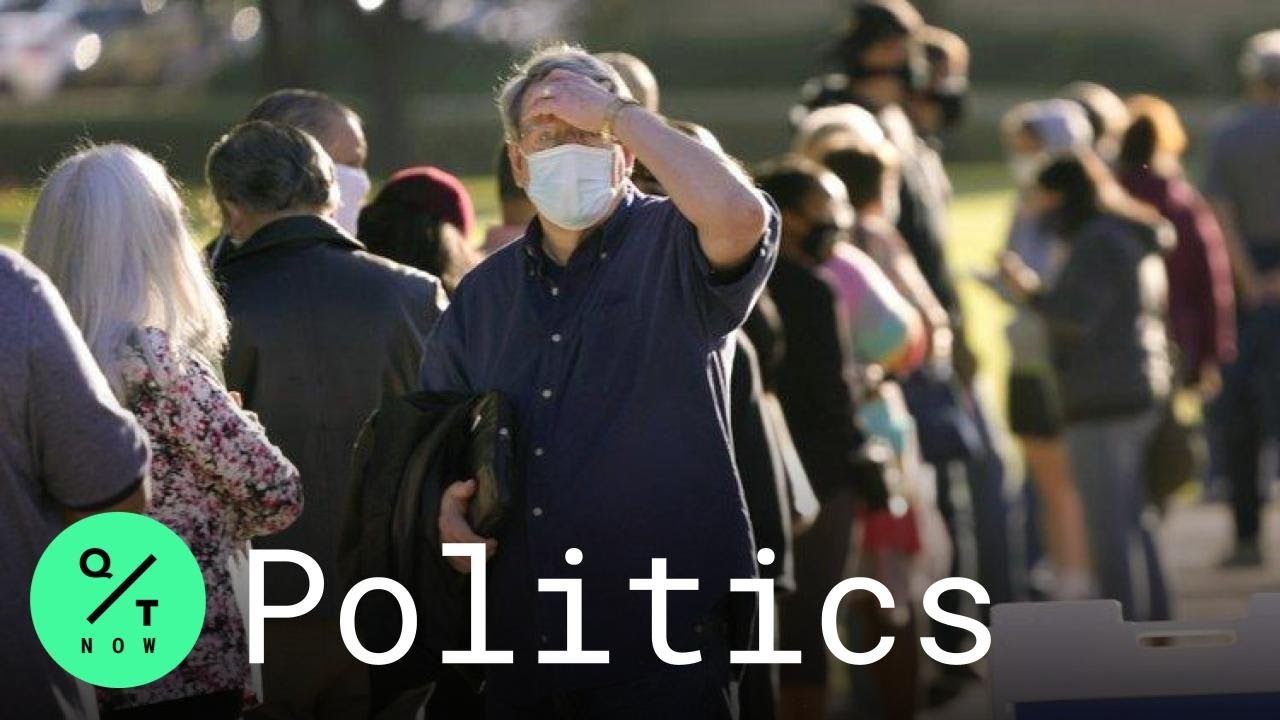
Eating at a restaurant as the coronavirus spreads across Texas doesn’t necessarily feel safe to Regina Cuchapin, but the Houston resident is willing to take a calculated risk and put herself among crowds to do at least one thing: vote.
Cuchapin and many millions of others in the nation’s second most populous state will perform their civic duty in person. Texas is one of just five states that did not substantially expand mail-in voting this year, despite official health warnings against attending large gatherings to curb the spread of COVID-19. To be allowed to vote by absentee ballot in Texas, voters must be 65 or older; have a disability; or be outside the county where you’re registered to vote on Election Day and during early voting.
Cuchapin, a healthcare worker and registered Democrat, said she felt reassured by the measures county voting officials have taken to protect voters, even as the state’s death toll from the coronavirus raced toward 17,000.
“I think that now that people know how serious it is and what precautions to take, I think those who are ready to come out are taking those precautions,” said Cuchapin, who plans to participate in early voting, which began Tuesday.
Long lines greeted voters across Texas. In suburban Houston’s Fort Bend County, technical problems kept machines offline for more than hour as hundreds of people waited to vote. The county’s top elected official said he would authorize an investigation.
“Those who are responsible will be held accountable,” said Fort Bend County Judge KP George.
Much is at stake this cycle in America’s largest red state, which has competitive congressional and state legislative races and has hit the presidential radar as a potential battleground. Yet the state’s 16 million registered voters — on both sides of the aisle — say their desire to cast a ballot outweighs their virus concerns.
In Harris County — which includes Houston and is home to more than 2.4 million voters — there will be triple the number of polling places compared to previous elections. Voters will be able to choose between standing in socially distant lines to vote in person at a polling place, or a drive-thru option that resembles pulling up to order at a fast-food restaurant. Some polling places will stay open later than usual on select nights, and on Oct. 29, seven locations will be open for 24 hours.
To staff more than 100 voting locations, Harris County officials have doubled the number of paid election workers to 11,000. Bilingual poll workers will be available at each location, and high school students will be on-hand as technology aides.
Other large counties are taking similar measures. Travis County, which includes the state capital of Austin, will also have dates with extended hours at select locations during early voting. Dallas County is positioning clear barriers between election workers and voters, and poll workers will sanitize any surfaces that are touched and will provide finger coverings or a popsicle stick to be used as a stylus on voting machines. El Paso County has developed an app to inform voters about voting locations and wait times.
Getting to this point in Texas — which has some of the strictest voting laws in the country — has been fraught with legal battles. Republican Gov. Greg Abbott expanded the amount of time for early voting, but he also limited the number of places where voters can hand-deliver their ballot to one per county, saying without proof that this would “help stop attempts at illegal voting.” Democrats and voting rights groups sued, pointing out that some Texas counties are larger than entire states.
Texas Republicans have echoed President Donald Trump’s rhetoric that mail-in voting is ripe for fraud, though proof is thin. Harris County, which is run by Democrats, tried to send applications for mail ballots to all of its registered voters, but Abbott sued and the Texas Supreme Court sided with the governor.
“It is more likely that you will get struck by lightning than experience voter fraud,” Harris County Clerk Chris Hollins said during a tour of the Houston area’s temporary voting headquarters. To drive home his point, he pointed to a metal cage under 24-hour law enforcement surveillance where dropped-off and mailed-in ballots are kept secure until Election Day.
Subscribe to our YouTube channel
QUICKTAKE ON SOCIAL:
Follow QuickTake on Twitter: twitter.com/quicktake
Like QuickTake on Facebook: facebook.com/quicktake
Follow QuickTake on Instagram: instagram.com/quicktake
Subscribe to our newsletter
Email us at quicktakenews@gmail.com
QuickTake by Bloomberg is a global news network delivering up-to-the-minute analysis on the biggest news, trends and ideas for a new generation of leaders.
Sentinel Indexing in Progress
Metadata and chapters are available. Claim extraction for this episode is pending.
All video content is delivered via YouTube embedded players in accordance with the YouTube Terms of Service. Sentinel provides research tools that promote discovery and accountability across political media.