Bloomberg News
@Bloomberg-News·2.8M subscribers·40.1K videos
Chileans Queue to Vote in Landmark Constitutional Referendum
Posted
October 25, 2020
Views
5,937
Likes
44
Comments
18
Engagement
October 25, 2020
5,937
44
18
1.04%
Every word spoken in this episode is indexed. Type any phrase to jump straight to the moment it was said.
Type any word or phrase that may have been spoken. Click a result to seek the player to that exact moment.
Try a name, a topic, or a quoted line
 1:01Now Playing
Caught between their status as Latin America’s economic standout and growing internal outrage over inequality, Chileans start a process of self-definition on Sunday as they choose whether and how to draft a new constitution.
If, as expected, Chileans vote to ditch the charter drawn up under the dictatorship of Augusto Pinochet, the country’s long-running economic stability could be put to the test through greater social spending and changes to certain pro-market rules that have been seen by many to benefit a small group of business elites.
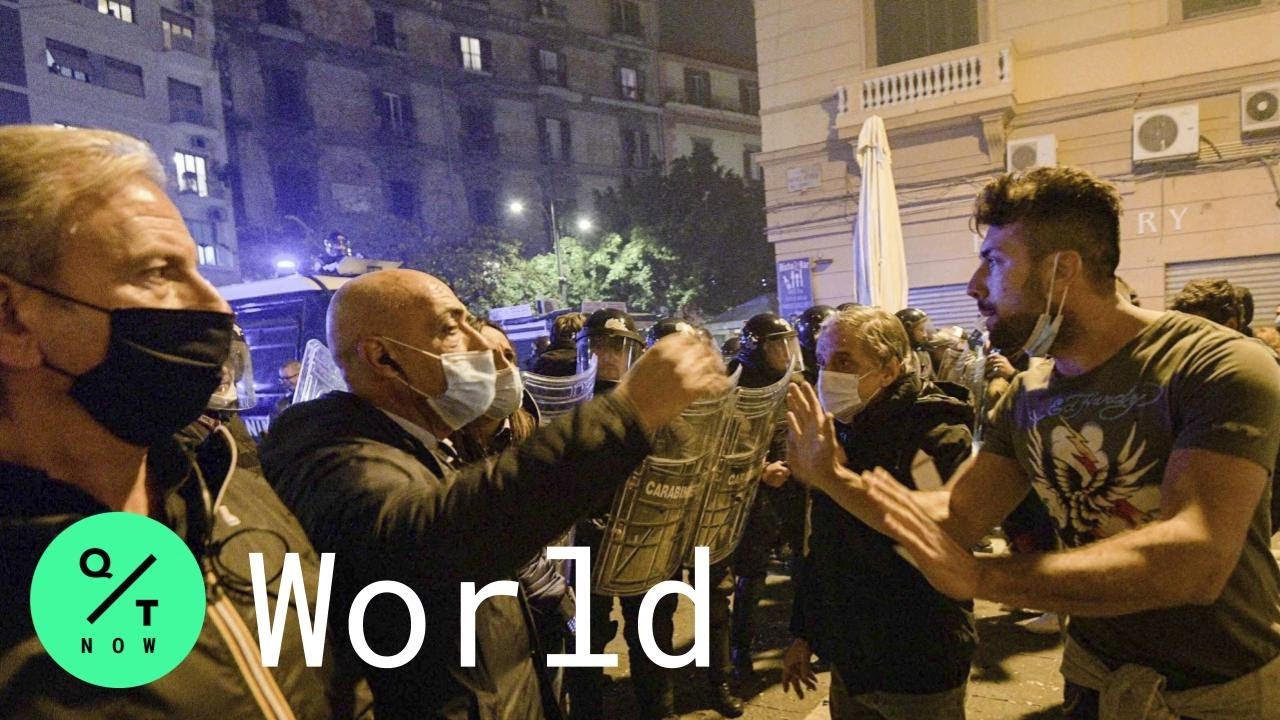
The whole process, meant to restore political stability, will actually fray the nerves of a tense and divided nation. Thirty years after the end of Pinochet’s regime, Chile erupted in protests last October to demand an end to his economic legacy of unfettered capitalism, enshrined in the constitution. The demonstrations brought millions onto the streets demanding change, but also saw hundreds of shops looted, buildings burnt and the army brought back to restore order. Chileans must now decide what new system to build from the ashes.
And amid all the instability over the new constitution, Chile will also hold a presidential election in November 2021. With the center-left opposition deeply divided and the current government unpopular, the outcome is far from clear.
“After the referendum, a new period of instability and mobilization will begin,” said Kenneth Bunker, a political analyst and founder of polling and electoral website Tresquintos.cl. “We’ll see deep political fragmentation where new presidential figures and new leaderships may rise from the streets.”
If Chileans say yes to a new constitution, they must then elect the body to write it in April. After that comes as much as a year of debate, followed by a final vote on whether to accept the charter.
When the demonstrations erupted a year ago, they came as a shock to many investors and a governing class that thought the Chilean model of economic growth was widely embraced.
Citizens will answer two questions on Sunday. Do you want a new constitution and what body should draw it up? A poll carried out in late September by Criteria Research showed 72% will answer “Apruebo,” I approve, to the first question, while a smaller majority backs a new constituent assembly to write up the charter. The alternative is a mix of existing lawmakers and newly elected officials.
Should “Apruebo” fail to win, “massive social discontent could arise, putting the country’s political stability at risk,” Alonso Cervera, an analyst at Credit Suisse, wrote in a report this week.
Those tensions have been evident. Last Sunday, tens of thousands marched through central Santiago demanding greater equality in an all-day demonstration of support for a new constitution. But in the streets to the south of the main thoroughfare, rioters set light to two churches, smashed windows and burned barricades.
In the meantime, markets are suffering. The MSCI Chile equity index has underperformed all its regional peers save for Colombia since the wave of protests and riots erupted 12 months ago. Trading volume and new issuances in the local fixed income market have plummeted this year.
While most Chileans demand change in a deeply unequal society where the state provides the bare minimum of services, many on the right regard Sunday’s vote as a threat to everything that made the country a model of sound economic management in Latin America.
They are concerned the new charter will enshrine a series of rights to education, health and housing, and undermine the fiscal prudence that has made Chile the highest-rated sovereign in Latin America.
To avoid more radical viewpoints from making it into the constitution, the right has insisted on a clause that all articles must be approved by two-thirds of the convention members. But that carries its own risks.
With little hope of an accord, Chile could end up “with an excessively abbreviated constitution that would likely fail in bringing greater political stability,” Leonardo Suarez, head of research at brokerage firm LarrainVial, wrote in a report.
And the unrest and political uncertainty will damp growth even as the government plans stimulus measures to counter the effects of coronavirus lockdowns, according to a report by Mathieu Racheter, emerging markets analyst at Julius Baer.
“The constitutional debate will continue to weigh on local asset prices for months, if not years, keeping flows pretty quiet,” Racheter said.
Subscribe to our YouTube channel
QUICKTAKE ON SOCIAL:
Follow QuickTake on Twitter: twitter.com/quicktake
Like QuickTake on Facebook: facebook.com/quicktake
Follow QuickTake on Instagram: instagram.com/quicktake
Subscribe to our newsletter
Email us at quicktakenews@gmail.com
QuickTake by Bloomberg is a global news network delivering up-to-the-minute analysis on the biggest news, trends and ideas for a new generation of leaders.
Sentinel Indexing in Progress
Metadata and chapters are available. Claim extraction for this episode is pending.
All video content is delivered via YouTube embedded players in accordance with the YouTube Terms of Service. Sentinel provides research tools that promote discovery and accountability across political media.