Bloomberg News
@Bloomberg-News·2.8M subscribers·40.1K videos
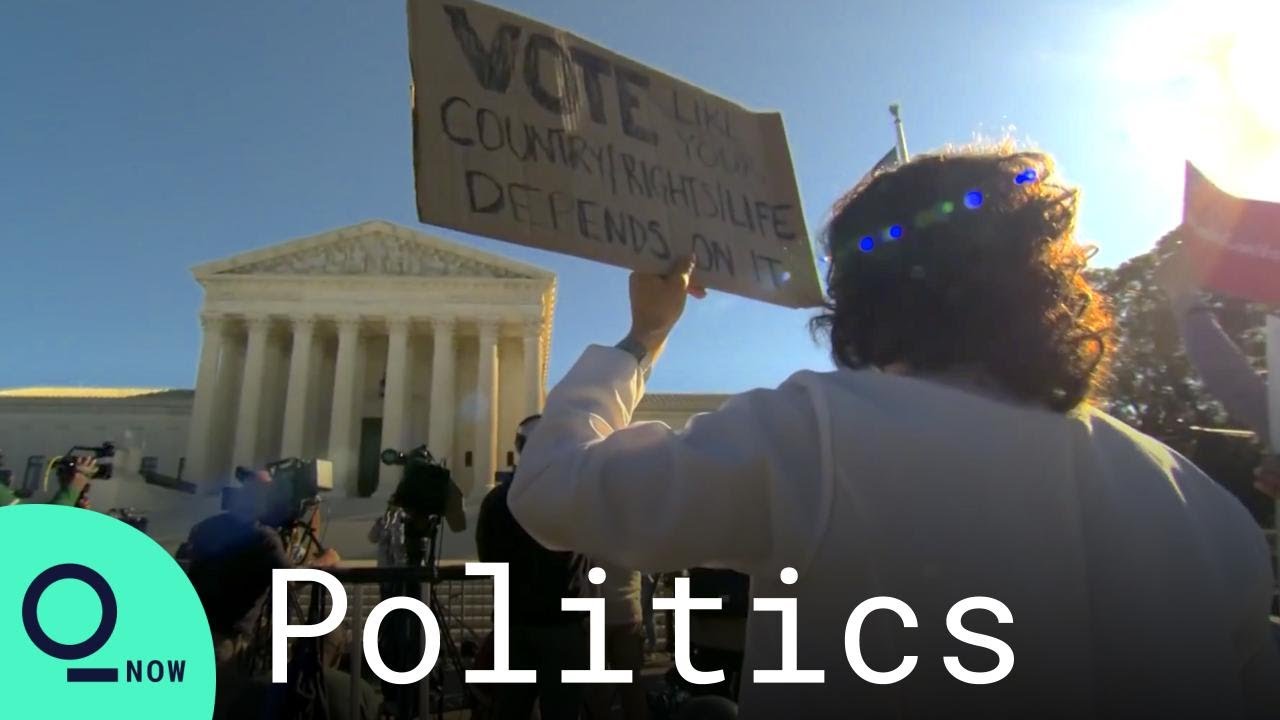
Demonstrators Rally In Support of ACA Outside Supreme Court
Posted
November 10, 2020
Views
515
Likes
11
Comments
2
Engagement
2.52%
November 10, 2020
515
11
2
2.52%
Every word spoken in this episode is indexed. Type any phrase to jump straight to the moment it was said.
Type any word or phrase that may have been spoken. Click a result to seek the player to that exact moment.
Try a name, a topic, or a quoted line
See what was published immediately before and after this episode.
 5:48Now Playing
The latest Republican bid to kill the Affordable Care Act comes before the U.S. Supreme Court Tuesday in an argument that will test its strengthened conservative majority and could produce a decision wiping out health insurance for 20 million people.
President Donald Trump’s administration is joining Republican-led states in challenging a law the GOP has been trying to wipe out since it was enacted in 2010. The House and a group of Democratic-controlled states are defending the measure, also known as Obamacare.
With health care accounting for a sixth of the U.S. economy, the stakes are massive. The challenge jeopardizes the health care of more than 135 million Americans with pre-existing conditions, including those who have had Covid-19, according to estimates from the liberal Center for American Progress.
Advocates for patients, doctors, hospitals and insurance companies are urging the court to uphold the law, warning of chaos should the measure be invalidated in the midst of a pandemic. A ruling is likely by June.
Democrat Joe Biden’s defeat of Trump in the presidential race means Congress could override any ruling invalidating the law. But its willingness to do so could depend on two Jan. 5 Georgia runoffs that will determine whether Democrats take the control of the Senate.
After last week’s election the Senate stands at 48-48, with Republicans leading as-yet uncalled races in North Carolina and Alaska.
Republicans are banking on the Supreme Court’s 6-3 majority with new Justice Amy Coney Barrett and two other Trump appointees, Neil Gorsuch and Brett Kavanaugh.
The fight centers on the ACA’s so-called individual mandate to acquire insurance. The Supreme Court upheld the provision in 2012 when Chief Justice John Roberts said it was a legitimate use of Congress’s taxing power, because it included a penalty on people who lacked policies.
When Republicans took control of Congress and the White House in 2017, they zeroed-out the tax penalty, leaving the mandate with no practical consequences. The Trump administration and states led by Texas now say the mandate must be struck down because it no longer qualifies as a tax.
And they say the mandate is so integral to the law, even without any penalty, the rest of the ACA can’t stand without it.
That argument could face an uphill fight. Roberts and Kavanaugh have expressed reluctance to toss out an entire statute just because one part is unconstitutional. In a ruling this year on the federal robocall ban, Kavanaugh said the court should “sever” the unconstitutional provision as long as the rest of the statute can fully operate on its own.
“Constitutional litigation is not a game of gotcha against Congress, where litigants can ride a discrete constitutional flaw in a statute to take down the whole, otherwise constitutional statute,” Kavanaugh wrote.
Roberts has twice voted to uphold core parts of the law, in 2012 and in a 2015 ruling that backed crucial tax credits in the law.
Nor is Barrett a sure bet to void the entire law, although she has criticized Roberts’s reasoning in the previous rulings. At her Senate confirmation hearing last month, Barrett said that “the presumption is always in favor of severability.”
The challengers to the law also face what could be a key procedural hurdle. The law’s defenders say the states and individuals that filed the lawsuit lacked the legal right to sue because they weren’t injured by the individual mandate.
The Affordable Care Act, signed into law by President Barack Obama, was a sweeping health-care overhaul. It expanded the Medicaid program for the poor, provided consumers with subsidies, created marketplaces to shop for insurance policies, required insurers to cover people with pre-existing conditions, and let children stay on their parents’ policies until age 26.
The law became more vulnerable when Barrett replaced the late Justice Ruth Bader Ginsburg, who was one of two justices to back every aspect of the law in 2012. Ginsburg’s death on Sept. 18 meant the court no longer had all five justices who voted to uphold the individual mandate in 2012.
The case is California v. Texas, 19-840.
Subscribe to our YouTube channel
Bloomberg Quicktake brings you live global news and original shows spanning business, technology, politics and culture. Make sense of the stories changing your business and your world.
To watch complete coverage on Bloomberg Quicktake 24/7, visit or watch on Apple TV, Roku, Samsung Smart TV, Fire TV and Android TV on the Bloomberg app.
Connect with us on…
Breaking News on YouTube
Sentinel Indexing in Progress
Metadata and chapters are available. Claim extraction for this episode is pending.
All video content is delivered via YouTube embedded players in accordance with the YouTube Terms of Service. Sentinel provides research tools that promote discovery and accountability across political media.