Bloomberg News
@Bloomberg-News·2.8M subscribers·40.1K videos
Pfizer Covid-19 Vaccine Brings Vision of Relief as Pandemic Rages On
Posted
November 10, 2020
Views
588
Likes
5
Comments
4
Engagement
November 10, 2020
588
5
4
1.53%
Every word spoken in this episode is indexed. Type any phrase to jump straight to the moment it was said.
Type any word or phrase that may have been spoken. Click a result to seek the player to that exact moment.
Try a name, a topic, or a quoted line
See what was published immediately before and after this episode.
 3:21Now Playing
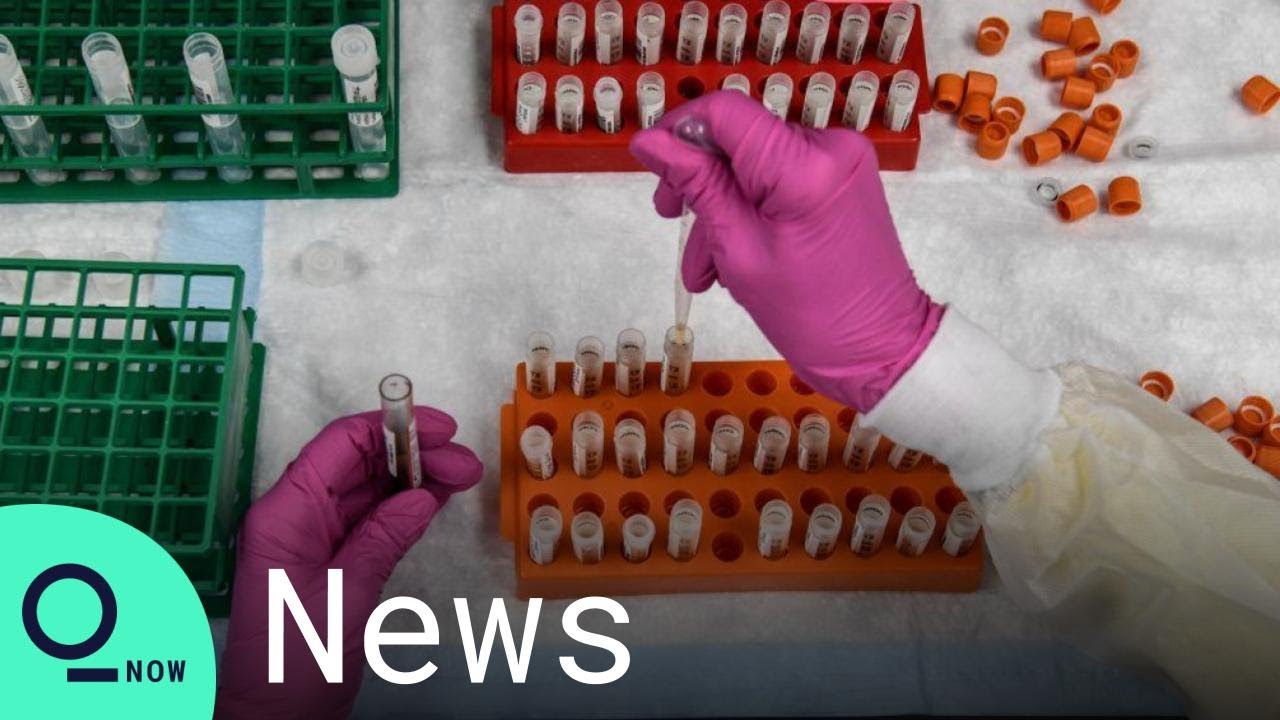
The experimental shot, developed by American drugmaker Pfizer Inc. and German biotechnology firm BioNTech SE, appears more than 90% effective in stopping SARS-CoV-2 infections, the companies said Monday.
If the data hold up, that means that for every 10 cases of Covid-19, nine could be stopped. A virus becomes a pandemic because vulnerable hosts create chains of infection. A vaccine at that level of effectiveness, administered widely, is enough to break those chains. If the good news holds, it’s the beginning of the end.
“It’s a really good day for biomedical research,” Anthony Fauci, director of the National Institute of Allergy and Infectious Diseases, said Monday. “It’s over 90%, which is just extraordinary and it’s going to have a major impact on everything that we do with regard to Covid.”
In coming weeks, more data will emerge. It’s likely not to be as euphorically positive: The vaccine may work better in some groups than in others. There could be safety concerns that limit its use – including rare side effects that take two or three months to emerge. And the shot must be stored at ultra-low temperatures, a logistical challenge that will make distribution harder and slower.
No matter the obstacles, it’s far better to have a vaccine that appears effective than one that isn’t. And believing there is a vaccine coming allows people around the world to envision an end to social-distancing measures and sacrifices. It means not seeing family for one more holiday, not holidays forever more. It means wearing a mask for a few more months, not for a few more years. And it may be an inoculation against the toxic politicization of public-health measures that have saved – and will continue to save – thousands of lives.
Pfizer’s coup is also likely good news for other vaccine makers like Moderna Inc. that rely on the same mRNA technology, which delivers tailored genetic instructions to prompt the body to produce an immune response. And it shows, in the field, that a vaccine can offer a level of protection against the virus.
Pfizer and BioNTech’s likely next step will be to submit an emergency use authorization application to the U.S. Food and Drug Administration, and continue to gather and provide data on the vaccine’s safety and efficacy. Once that happens, the agency will likely take several weeks to review the package. Even after an approval, supplies will be limited and are likely to go first to front-line health-care workers and highly vulnerable people. Across government science agencies, top health officials have cautioned that most Americans won’t get a vaccine until spring at the earliest.
After news of the trials emerged, the S&P 500 climbed toward a record amid trading volume. But a positive press release and a high-flying stock market don’t mean anything’s actually different in this moment. Only a few countries have defeated the virus without a vaccine in hand. Some were small and well-managed enough to fight back, like New Zealand. Others had technical competence, like South Korea. Some were willing to take draconian measures of control, like China.
The rest of the world has had neither the will nor the skill to beat the virus.
There is more to be learned about the experimental vaccine – Pfizer found out the positive results only Sunday. While it had signed up 44,000 people for the trial, the pandemic’s summer ebb meant that enough infections to make the trial trustworthy were slow to accumulate. With the explosion of the virus in recent weeks, more people in the experiment were exposed and infections in the placebo group started to roll in.
The data-monitoring committee – an independent group – was told of the results Sunday, according to a person familiar with the matter. Pfizer’s CEO Albert Bourla found out around 2 p.m., and held an early-evening Zoom call with the board to share the good news, said another person. The company’s communications staff then stayed up through the night, with executives involved in the trial finalizing the press release.
In the meantime, scientists will demand that we see the actual data, and traders will take the markets for a ride as investors start seriously thinking about the pandemic’s end.
Subscribe to our YouTube channel
Bloomberg Quicktake brings you live global news and original shows spanning business, technology, politics and culture. Make sense of the stories changing your business and your world.
To watch complete coverage on Bloomberg Quicktake 24/7, visit or watch on Apple TV, Roku, Samsung Smart TV, Fire TV and Android TV on the Bloomberg app.
Connect with us on…
Breaking News on YouTube
Sentinel Indexing in Progress
Metadata and chapters are available. Claim extraction for this episode is pending.
All video content is delivered via YouTube embedded players in accordance with the YouTube Terms of Service. Sentinel provides research tools that promote discovery and accountability across political media.