Bloomberg News
@Bloomberg-News·2.8M subscribers·40.1K videos
Johnson Announces $15.9 Billion Climate Change Plan to Create 250,000 Jobs
Posted
November 18, 2020
Views
654
Likes
16
Comments
28
Engagement
November 18, 2020
654
16
28
6.73%
Every word spoken in this episode is indexed. Type any phrase to jump straight to the moment it was said.
Type any word or phrase that may have been spoken. Click a result to seek the player to that exact moment.
Try a name, a topic, or a quoted line
Episode Timeline
Every episode in order around the one you’re watching — click any card and the page flips straight to it.
 0:50Now Playing
U.K. Prime Minister Boris Johnson announced a 12 billion-pound ($15.9 billion) plan to boost green industries and tackle climate change, in a blueprint he says will create or support as many as 250,000 jobs.
As he seeks to relaunch his premiership and revive the economy, Johnson aims to use his plan for a “green industrial revolution” to deliver on his pledge to invest in former industrial heartlands that voted for him at last year’s election.
Under the wide-ranging proposals, sales of new petrol and diesel cars will be banned from 2030, the government will back investment in electric vehicles, hydrogen, wind and nuclear power, and measures to make homes more energy efficient.
“Although this year has taken a very different path to the one we expected, I haven’t lost sight of our ambitious plans to level up across the country,” Johnson said in a statement released by his office. “My ten-point plan will create, support and protect hundreds of thousands of green jobs, whilst making strides towards net zero by 2050.”
Britain is due to host next year’s COP26 global climate change summit in Scotland and has committed to a net zero carbon economy by 2050. The premier also intends to use his commitment to tackling climate change to help build a strong partnership with U.S. President-elect Joe Biden.
The most radical policy is perhaps the phasing out of diesel and gas car sales by 2030, 10 years earlier than previously scheduled. This puts the U.K. ahead of France and Spain, which have 2040 target dates, and in line with Ireland and the Netherlands. The only country with a more ambitious target for such a ban is Norway, with a date of 2025.
A U.K. government spokeswoman said the plan included at least 3 billion pounds of new government spending.
JOHNSON’S TEN-POINT PLAN FOR A ‘GREEN INDUSTRIAL REVOLUTION’
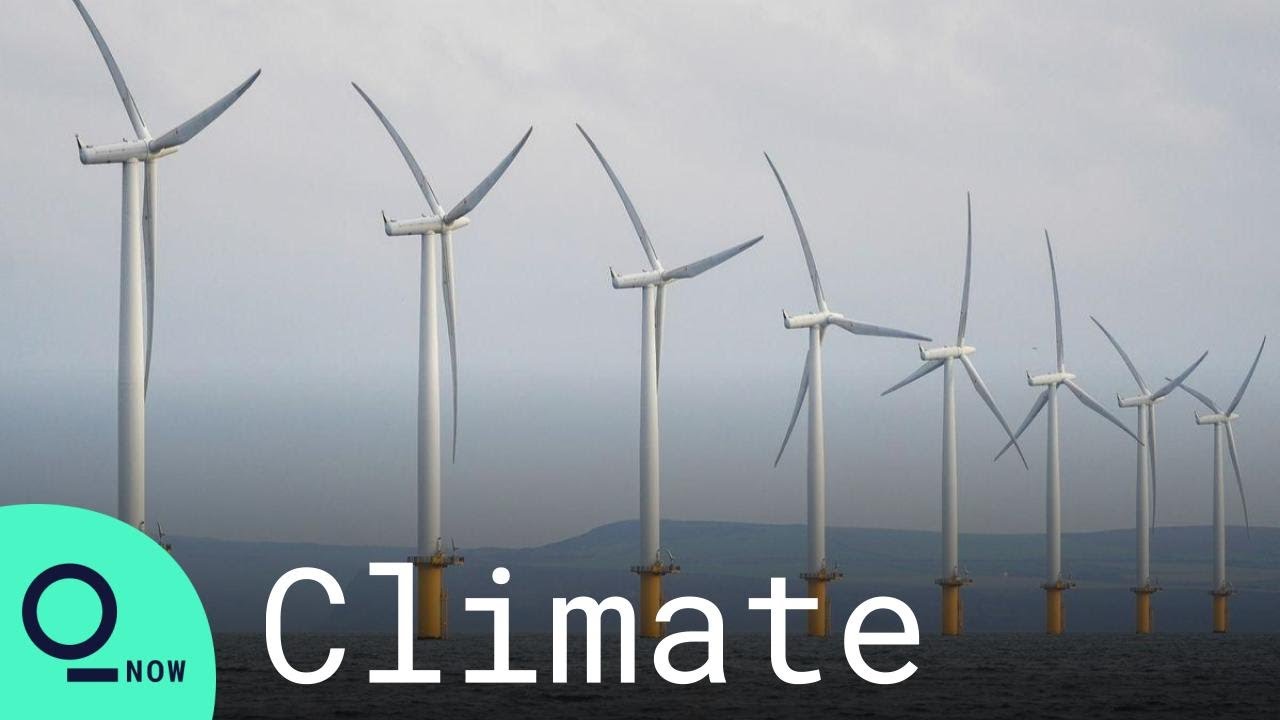
1. Offshore wind: Quadruple U.K. production to 40 gigawatts by 2030, supporting up to 60,000 jobs.
2. Hydrogen: Generate 5GW of low-carbon hydrogen production capacity by 2030. Develop the first town heated entirely by hydrogen by 2030.
3. Nuclear: Advance nuclear as clean energy source by developing large and smaller-scale plants, which could support 10,000 jobs.
4. Electric vehicles: End sale of new petrol and diesel cars by 2030, but allow sale of hybrid vehicles until 2035. Accelerate transition to electric vehicles.
5. Public transport, cycling and walking: Make cycling and walking more attractive, invest in zero-emission public transport.
6. Zero-emission planes and ships: Support “difficult-to-decarbonize” industries to become greener.
7. Homes and public buildings: Make these greener, warmer and more energy-efficient, creating 50,000 jobs by 2030.
8. Carbon capture: Remove 10 million tonnes of carbon dioxide by 2030.
9. Nature: Plant 30,000 hectares of trees every year.
10. Innovation and finance: Develop cutting-edge technologies and make the City of London a global center of green finance.
Greenpeace U.K.’s head of politics, Rebecca Newsom, welcomed the “landmark announcement” signaling the end for polluting cars and vans, as “a historic turning point” in addressing climate change.
“Although there are some significant question marks and gaps, overall this is a big step forward for tackling the climate emergency,” Newsom said.
Lord Nicholas Stern, Chair of the Grantham Research Institute on Climate Change and the Environment at the London School of Economics and Political Science, said the plan represents “a crucial next step” to a low carbon economy, but called for more spending to deliver it.
Read more: Climate Crisis Is Boris Johnson’s Chance to Woo Joe Biden
The government will invest 1.3 billion pounds on speeding up the roll-out of charging points for electric vehicles in residential streets, homes and highways in England, with 582 million pounds in grants to encourage consumers to buy zero or ultra-low emission vehicles.
Nearly 500 million pounds will be spent in the next four years to boost the production of electric vehicle batteries.
Government will spend as much as 500 million pounds on trial programs to test the use of hydrogen for heating and cooking at home.
Subscribe to our YouTube channel
Bloomberg Quicktake brings you live global news and original shows spanning business, technology, politics and culture. Make sense of the stories changing your business and your world.
To watch complete coverage on Bloomberg Quicktake 24/7, visit or watch on Apple TV, Roku, Samsung Smart TV, Fire TV and Android TV on the Bloomberg app.
Connect with us on…
Breaking News on YouTube
Sentinel Indexing in Progress
Metadata and chapters are available. Claim extraction for this episode is pending.
All video content is delivered via YouTube embedded players in accordance with the YouTube Terms of Service. Sentinel provides research tools that promote discovery and accountability across political media.