Bloomberg News
@Bloomberg-News·2.8M subscribers·40.1K videos
Turkey President Erdogan Gets Ready for a Rocky Four Years of Biden
Posted
November 24, 2020
Views
10,466
Likes
98
Comments
132
Engagement
November 24, 2020
10,466
98
132
2.20%
Every word spoken in this episode is indexed. Type any phrase to jump straight to the moment it was said.
Type any word or phrase that may have been spoken. Click a result to seek the player to that exact moment.
Try a name, a topic, or a quoted line
Episode Timeline
Every episode in order around the one you’re watching — click any card and the page flips straight to it.
 3:41
3:41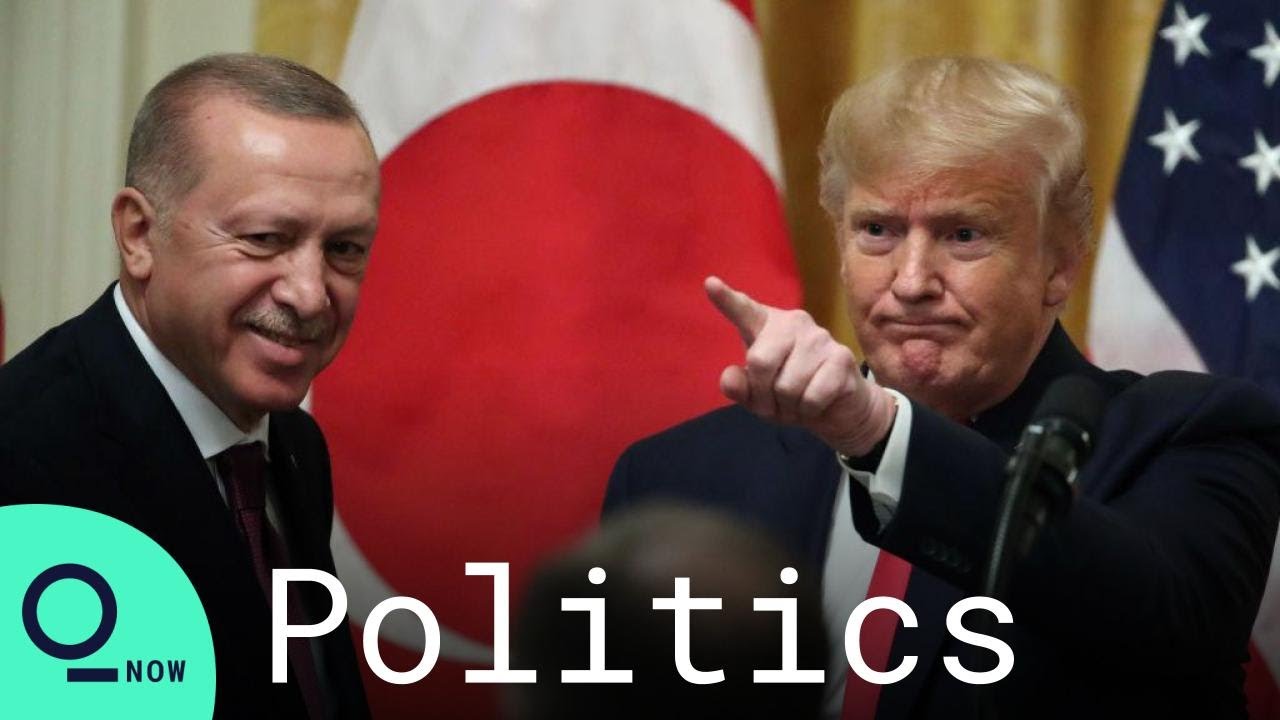 5:31Now Playing
As the world begins to position for Joe Biden’s move into the White House, few leaders are moving as quickly as Recep Tayyip Erdogan with the next four years looking set to be more difficult to navigate than the last.
Turkey’s president and his advisers know the former U.S. vice president well, but that isn’t necessarily a plus with American sanctions against Turkey ready to deploy and held back to date only by Donald Trump.
By the time Biden left office in 2017, he had overseen a collapse in relations from close partnership to mutual distrust. In an interview with the New York Times published in January, he called Erdogan an “autocrat” and said the U.S. should back opponents to oust him at the ballot box. “He has to pay a price.”
That price could be significant. As well as the threat of sanctions, potentially heavy penalties hang over a Turkish state bank. There are also unresolved differences over the status of Kurdish fighters in Syria, Turkey’s maritime claims in the Mediterranean and other areas.
Concern over what could come next may help to explain the Turkish leader’s decision to congratulate Biden and accept his victory in contrast to other strongmen who have benefited from Trump’s tenure, such as Brazil’s Jair Bolsonaro or Russia’s Vladimir Putin.
Ahead of last weekend’s virtual Group of 20 video summit, Erdogan spoke in a phone call with Saudi host King Salman. Both countries have angered Washington’s foreign policy establishment, but enjoyed protection from Trump.
In a speech on Saturday, Erdogan pushed back against the idea that Turkey’s recent befriending of Russia was “an alternative to our long-established ties with America.” And on Sunday, he called for closer cooperation with Europe, with which he’s been sparring for months.
Erdogan was able to do as he liked for four years “literally because he had a friend in the White House,” said Damian Murphy, point man on Turkey for Bob Menendez, the ranking Democrat on the Senate Foreign Relations Committee. “All that certainly will change from the U.S. perspective, when you have an administration with a more responsible approach to the region and to Erdogan.”
The last few years have seen Erdogan adopt a much more assertive foreign policy that racked up successes in Syria, Libya and most recently Azerbaijan, often at the expense of stronger powers. He even tried taking on financial markets, pressuring Turkey’s central bank to keep interest rates low and pumping credit into the economy long before Covid-19 struck.
The next American leadership is taking shape. Biden intends to nominate Antony Blinken, his national security adviser when he was vice president under Barack Obama, as secretary of state. Yet just how differently a Biden administration would in reality treat Turkey is unknown.
There remains unresolved U.S.-Turkish differences over the status of Kurdish fighters in Syria.Photographer: Delil Souleiman/AFP/Getty Images
A spokesperson for the transition team declined to comment on plans for Turkey, saying Biden believed in the principle that U.S. foreign policy should be run by one president at a time.
Erdogan appears to be preparing for the worst. Turkey’s parliament approved legislation on Thursday to repatriate Turkish energy and mining companies established abroad. A Turkish Energy Ministry official said the move aimed to guard against the impact of potential sanctions.
On Nov. 7, the day Biden’s election victory was called, Erdogan fired his central bank chief and switched to less risky monetary and fiscal policies. The timing may have been coincidence, given that a correction was overdue to avoid a looming financial crisis. Still, it will also help make the economy more resistant to shocks. The bank’s new governor raised interest rates sharply, stabilizing the lira.
Those shocks could now come rapidly. Erdogan’s 2019 decision to take delivery of the S-400 surface-to-air missile defense systems from Russia is subject to sanctions mandated by Congress.
Subscribe to our YouTube channel
Bloomberg Quicktake brings you live global news and original shows spanning business, technology, politics and culture. Make sense of the stories changing your business and your world.
To watch complete coverage on Bloomberg Quicktake 24/7, visit or watch on Apple TV, Roku, Samsung Smart TV, Fire TV and Android TV on the Bloomberg app.
Have a story to tell? Fill out this survey for a chance to have it featured on Bloomberg Quicktake
Connect with us on…
Breaking News on YouTube
Sentinel Indexing in Progress
Metadata and chapters are available. Claim extraction for this episode is pending.
All video content is delivered via YouTube embedded players in accordance with the YouTube Terms of Service. Sentinel provides research tools that promote discovery and accountability across political media.