Bloomberg News
@Bloomberg-News·2.8M subscribers·40.1K videos
Hong Kong Leader Defends Beijing’s Efforts to Exert More Political Control
Posted
November 25, 2020
Views
7,324
Likes
8
Comments
1
Engagement
November 25, 2020
7,324
8
1
0.12%
Every word spoken in this episode is indexed. Type any phrase to jump straight to the moment it was said.
Type any word or phrase that may have been spoken. Click a result to seek the player to that exact moment.
Try a name, a topic, or a quoted line
Episode Timeline
Every episode in order around the one you’re watching — click any card and the page flips straight to it.
 2:13Now Playing
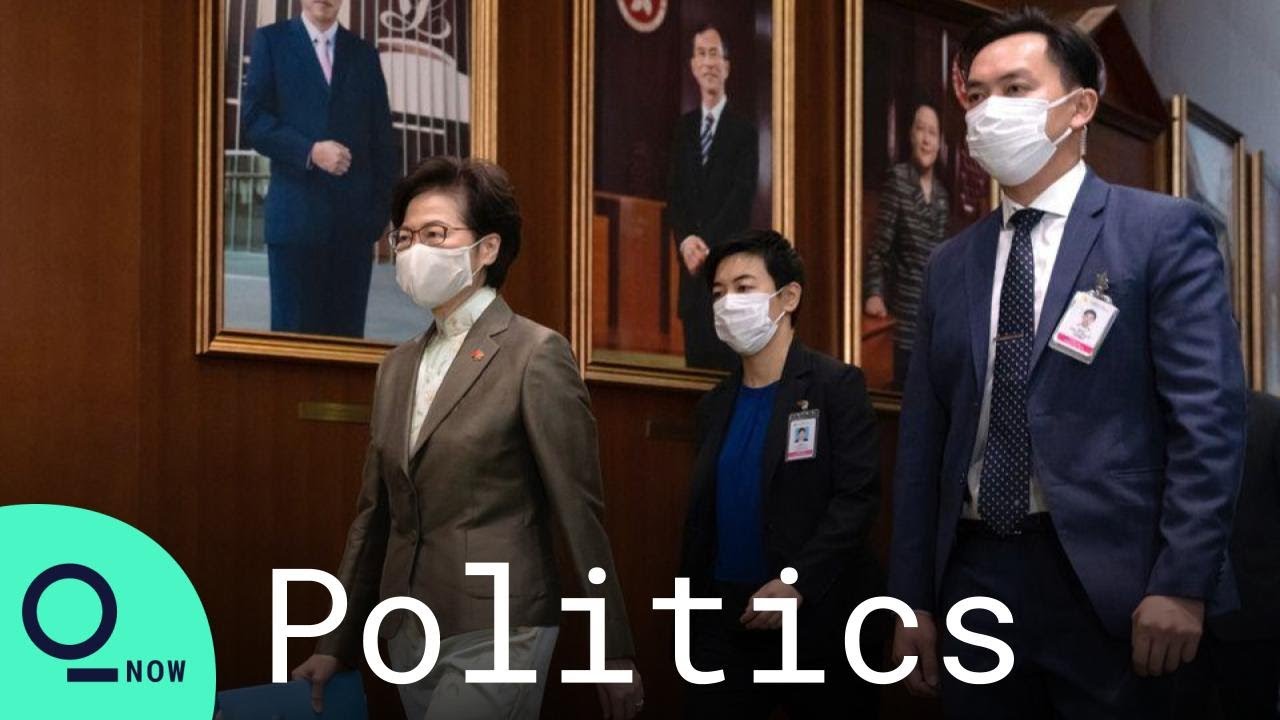
Last year, Hong Kong Chief Executive Carrie Lam only made it through a few lines of her annual policy address before pro-democracy lawmakers forced her to flee the chamber and deliver it virtually.
On Wednesday, she spoke for more than two hours to a legislative body with no members of an opposition that has long resisted the city’s integration with the mainland. After quoting Chinese President Xi Jinping at the outset, Lam defended Beijing’s sweeping actions to exert greater political control over Hong Kong while outlining steps aimed at interlocking the two economies.
The address, which was delayed so Lam could consult Communist Party leaders in Beijing, featured a slew of references to the mainland compared with last year’s abbreviated speech. They included a section on the benefits of a sweeping China-imposed national security law, which prompted the U.S. to revoke Hong Kong’s special trading privileges and sanction top Chinese and Hong Kong leaders, including Lam.
The 24,000-word speech featured few immediate measures that would provide relief for a city reeling from a new wave of virus infections, an economy in deep contraction and worsening wealth inequality. The Hang Seng Index pared an earlier gain of as much as 1.7% to close up 0.3% on the day.
“For many small businesses that are still fighting to survive they would be disappointed, especially now that the city is entering the fourth wave of Covid outbreak,” said Tommy Wu, senior economist with Oxford Economics in Hong Kong.
“The main objective of today’s policy speech was really about Hong Kong-China integration in the post-national security law era,” he said. “Many of the economic policies mentioned in the speech have a mainland China element to it, from finance to tech to youth employment.”
Lam’s remarks reinforced the extent to which Hong Kong’s future is tethered to China, a trend that has only accelerated as Beijing moved to snuff out any political dissent in the former British colony. While the city remains a conduit for Chinese companies to raise capital, more Western businesses are questioning Hong Kong’s viability as a financial hub -- particularly as doubts grow over the independence of the judiciary.
Lam spent a sizable part of her speech promoting the Greater Bay Area concept that seeks to create a Silicon Valley-style regional economic zone with the nearby mainland cities of Guangzhou and Shenzhen. She spoke about various programs to boost employment opportunities for young Hong Kongers to take jobs in the mainland, including wage subsidies for Hong Kong tech companies to deploy staff in mainland cities and funding for a cross-boundary youth entrepreneurship plan.
“The biggest opportunity lies with central government support to tap into the mainland market,” Lam said. “This is the growth engine.”
However, critics in Hong Kong see the project as an attempt to further erode the former British colony’s autonomy following Beijing’s moves to crack down on political speech and assembly. Opposition politician Claudia Mo, who resigned along with other pro-democracy politicians this month, criticized Lam’s remarks on the Greater Bay Area, saying on Twitter that it would mark the “end of Hong Kong as we know it.”
While some young people in Hong Kong would take up the offer to look for work in China, the majority are unlikely to jump at the opportunity, said Jean-Pierre Cabestan, chair professor of political science at Hong Kong Baptist University and author of several books on Chinese politics.
“For them it’s a plan B if they can’t find anything here, or even a plan C,” he said. “And some want to leave Hong Kong anyway to go to Canada, Australia -- to migrate, because they can’t stand it anymore.”
Subscribe to our YouTube channel
Bloomberg Quicktake brings you live global news and original shows spanning business, technology, politics and culture. Make sense of the stories changing your business and your world.
To watch complete coverage on Bloomberg Quicktake 24/7, visit or watch on Apple TV, Roku, Samsung Smart TV, Fire TV and Android TV on the Bloomberg app.
Have a story to tell? Fill out this survey for a chance to have it featured on Bloomberg Quicktake
Connect with us on…
Breaking News on YouTube
Sentinel Indexing in Progress
Metadata and chapters are available. Claim extraction for this episode is pending.
All video content is delivered via YouTube embedded players in accordance with the YouTube Terms of Service. Sentinel provides research tools that promote discovery and accountability across political media.