Bloomberg News
@Bloomberg-News·2.8M subscribers·40.1K videos
Americans Face New Covid-19 Restrictions After Thanksgiving
Posted
December 1, 2020
Views
606
Likes
11
Comments
3
Engagement
2.31%
December 1, 2020
606
11
3
2.31%
Every word spoken in this episode is indexed. Type any phrase to jump straight to the moment it was said.
Type any word or phrase that may have been spoken. Click a result to seek the player to that exact moment.
Try a name, a topic, or a quoted line
Episode Timeline
Every episode in order around the one you’re watching — click any card and the page flips straight to it.
 7:04Now Playing
Coronavirus infections are already reaching unprecedented levels throughout the U.S. Now with Thanksgiving in the rearview mirror and Christmas and New Year’s just around the curve, the question is: Just how much worse is the pandemic going to get?
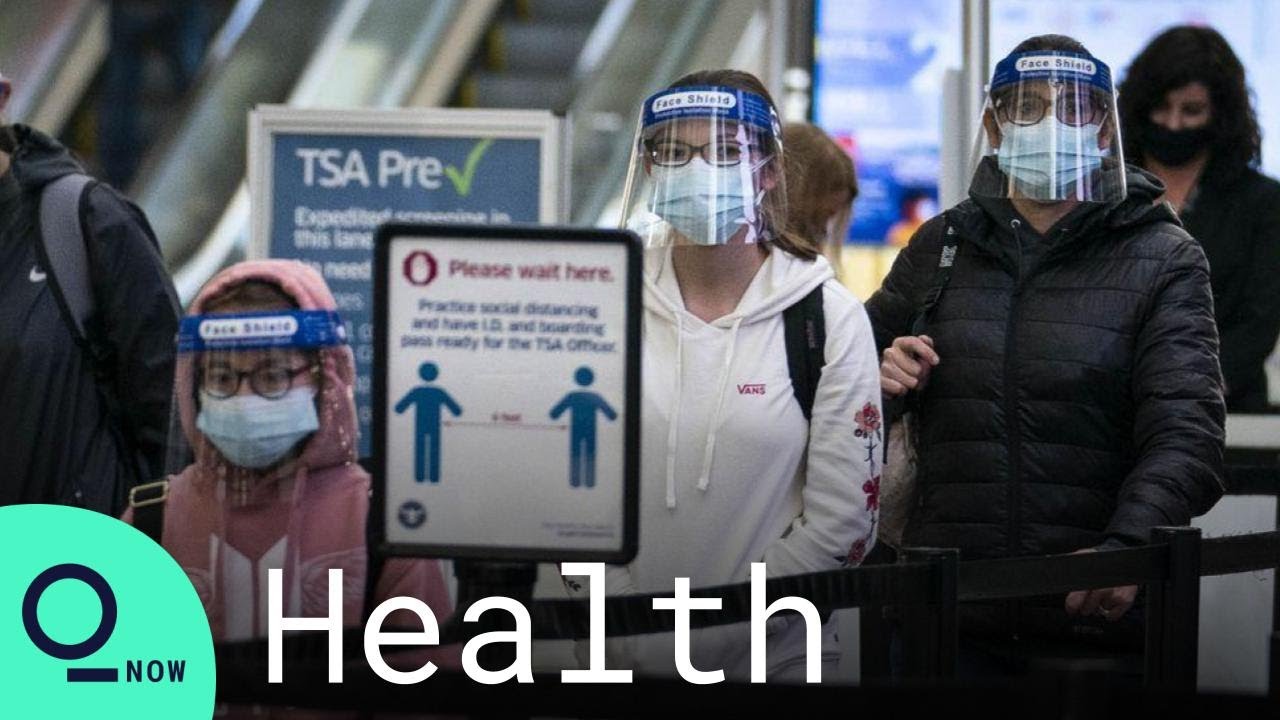
The latest travel data out Monday suggest that things are looking grim. Between 800,000 and 1.1 million people flew in the days leading up to and after the holiday, according to data released by the Transportation Safety Administration. Though those numbers are a fraction of typical Thanksgiving travel patterns, they are far higher than public health officials and epidemiologists hoped to see.
Anthony Fauci, director of the National Institute of Allergy and Infectious Diseases, told ABC’s “This Week” on Sunday that the U.S. may be about to see “a surge upon a surge.” On CBS’ “Face the Nation,” Deborah Birx, the White House coronavirus response coordinator, said that Americans who traveled this past week should “assume that you were exposed and you became infected.” She urged those that traveled to get tested within the next week.
The number of new COVID-19 cases in the U.S. topped 200,000 for the first time Friday. There have been more than 265,000 deaths. Last Wednesday, as millions had already begun their holiday travel, the Centers for Disease Control and Prevention forecast as many as 21,400 new deaths due to the virus over the next four weeks.
Ashish Jha, dean of Brown University’s School of Public Health, said he suspects those numbers are not high enough.
“Everytime I look at the data, it’s worse,” he said.
Jha says he expects the number of new deaths to be more in the range of 25,000 to 30,000 in the Thanksgiving aftermath.
“Things are going to be so bad over the next month,” Jha said.
Exactly how bad it will get is difficult to say. Americans not only flew, but also drove to Thanksgiving celebrations. Before the holiday, the American Automobile Association predicted significant declines in bus, train and cruise travel, but only a slight drop in car travel. AAA said it would not have travel figures for the holiday anytime soon.
Car travel was projected to fall 4.3% from last year's pre-pandemic level, to 47.8 million travelers. With less travel this year by public transportation, AAA estimates driving will account for 95% of all holiday travel. On Monday, AAA said travel may have been less than initially forecast because of climbing infection rates and public health warnings. U.S. gasoline demand decreased 7.3% in seven days ending Nov. 28, according to GasBuddy, the travel and navigation app.
Subscribe to our YouTube channel
Bloomberg Quicktake brings you live global news and original shows spanning business, technology, politics and culture. Make sense of the stories changing your business and your world.
To watch complete coverage on Bloomberg Quicktake 24/7, visit or watch on Apple TV, Roku, Samsung Smart TV, Fire TV and Android TV on the Bloomberg app.
Have a story to tell? Fill out this survey for a chance to have it featured on Bloomberg Quicktake
Connect with us on…
Breaking News on YouTube
Sentinel Indexing in Progress
Metadata and chapters are available. Claim extraction for this episode is pending.
All video content is delivered via YouTube embedded players in accordance with the YouTube Terms of Service. Sentinel provides research tools that promote discovery and accountability across political media.