
Bloomberg News
@Bloomberg-News·2.8M subscribers·40.1K videos
Chuck Yeager, U S Pilot Who Broke the Sound Barrier, Dies at 97
Posted
December 8, 2020
Views
19,173
Likes
276
Comments
70
Engagement
December 8, 2020
19,173
276
70
1.80%
Every word spoken in this episode is indexed. Type any phrase to jump straight to the moment it was said.
Type any word or phrase that may have been spoken. Click a result to seek the player to that exact moment.
Try a name, a topic, or a quoted line
 0:50Now Playing
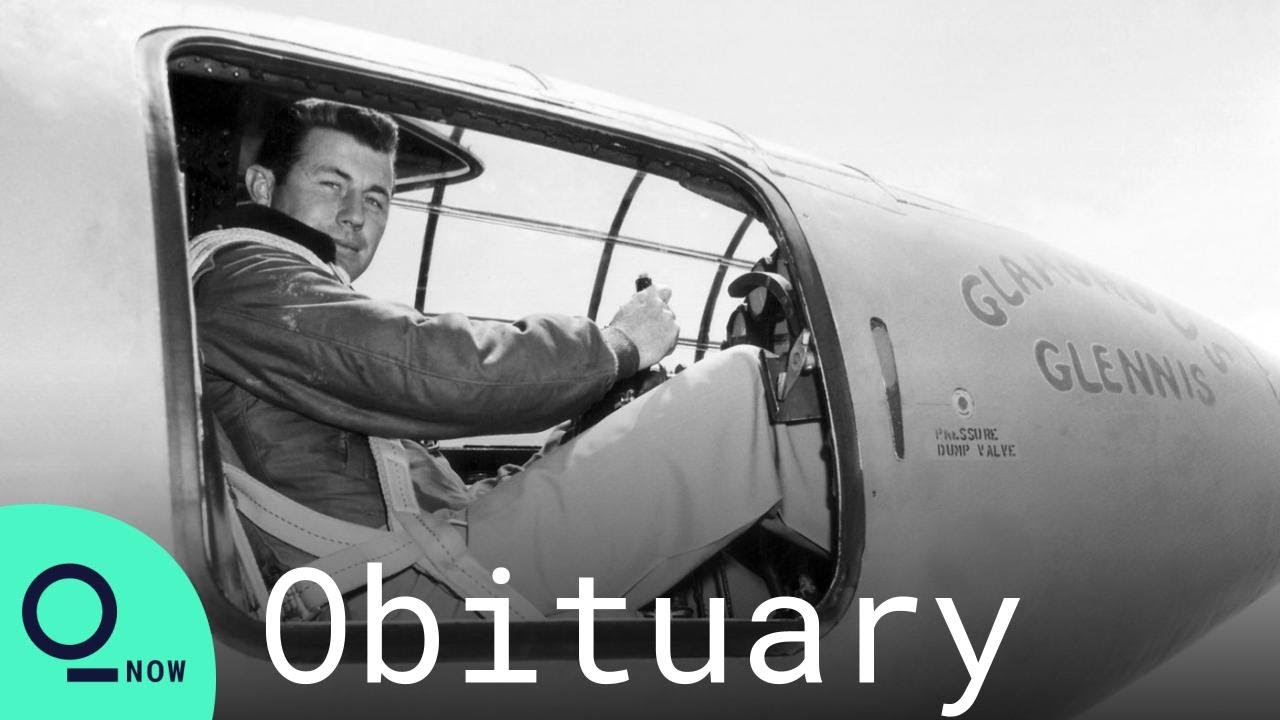
Chuck Yeager, the World War II fighter ace who became the first human to fly faster than the speed of sound, epitomizing the derring-do that Tom Wolfe celebrated as “The Right Stuff,” has died. He was 97.
His wife, Victoria Yeager, announced Yeager’s death in a post on his verified Twitter account, saying his was an “incredible life well lived” and that his “legacy of strength, adventure, and patriotism will be remembered forever.”
Yeager “challenged each of us to test the limits of what’s possible,” said Senator Joe Manchin, a West Virginia Democrat and former governor of the state where Yeager was born.
Considered the greatest test pilot ever by many contemporaries, Yeager said he never had interest in becoming an astronaut, a role he mocked as “little more than Spam in the can.” Still, he trained and inspired many fellow U.S. test pilots who pioneered space exploration.
Yeager’s 20/10 vision enabled him to “see forever,” in the words of fellow flier Clarence “Bud” Anderson. He began building his legend in World War II when he downed five German planes in one day. He sealed his place in history in 1947, at 24, when he became the first person to fly at supersonic speed.
The attempt to break the ominously named “sound barrier” was carried out with Cold War secrecy and intensity because of its implications for air combat. The U.S. Air Force had chosen Yeager to pilot the experimental Bell X-1 rocket ship at Muroc Lake, in California’s Mojave Desert, now Edwards Air Force Base.
The plan was to push closer and closer to the speed of sound -- Mach 1, or roughly 665 mph (1,070 kph) at the cruising altitude of today’s passenger planes -- over the course of numerous tests. The gradual approach was deemed necessary to study the shock waves that caused extreme turbulence as a vehicle approached supersonic speed.
Subscribe to our YouTube channel
Bloomberg Quicktake brings you live global news and original shows spanning business, technology, politics and culture. Make sense of the stories changing your business and your world.
To watch complete coverage on Bloomberg Quicktake 24/7, visit or watch on Apple TV, Roku, Samsung Smart TV, Fire TV and Android TV on the Bloomberg app.
Have a story to tell? Fill out this survey for a chance to have it featured on Bloomberg Quicktake
Connect with us on…
Breaking News on YouTube
Sentinel Indexing in Progress
Metadata and chapters are available. Claim extraction for this episode is pending.
All video content is delivered via YouTube embedded players in accordance with the YouTube Terms of Service. Sentinel provides research tools that promote discovery and accountability across political media.