Bloomberg News
@Bloomberg-News·2.8M subscribers·40.1K videos
First Covid Vaccines’ Triumph Raises Hope for Cancer Fight
Posted
December 14, 2020
Views
1,323
Likes
22
Comments
9
Engagement
2.34%
December 14, 2020
1,323
22
9
2.34%
Every word spoken in this episode is indexed. Type any phrase to jump straight to the moment it was said.
Type any word or phrase that may have been spoken. Click a result to seek the player to that exact moment.
Try a name, a topic, or a quoted line
 4:40Now Playing
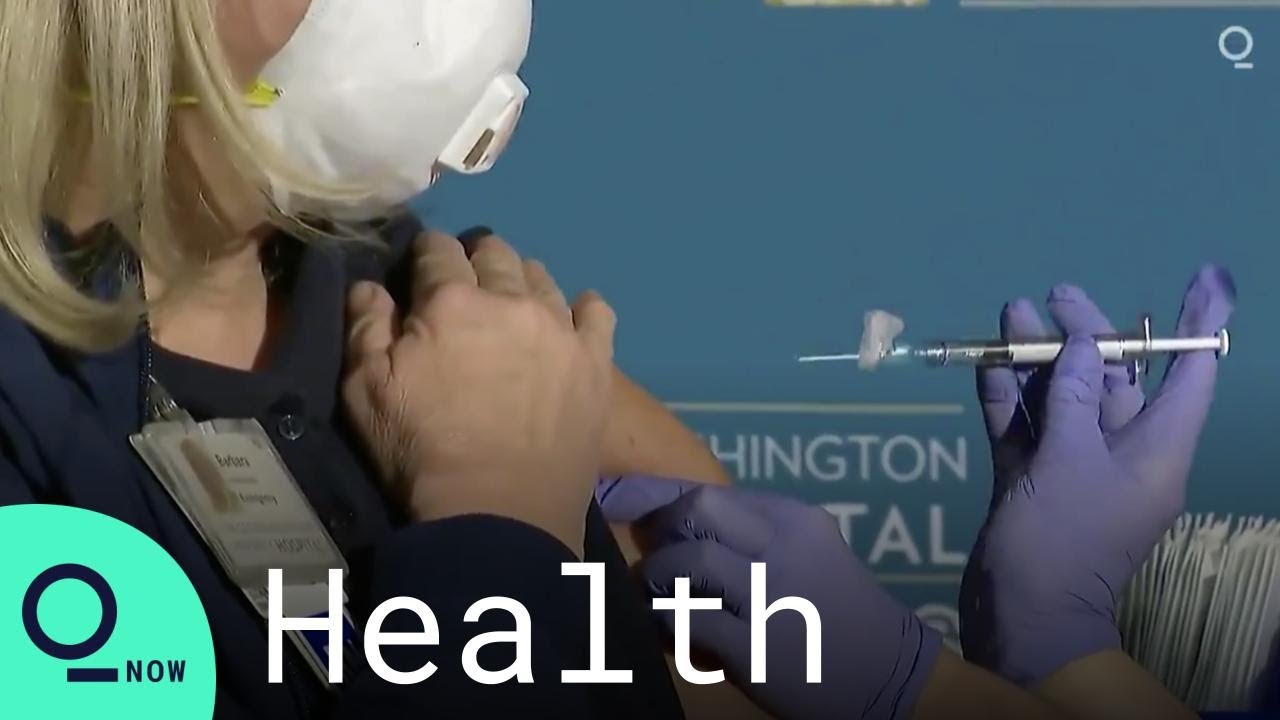
The first vaccines against Covid-19 aren’t just a landmark in the fight against the pandemic. They’re also the stepping stone for an unconventional technology that could one day defeat other ailments that have eluded doctors, from cancer to heart disease.
The shots from Moderna Inc. and a partnership of Pfizer Inc. and BioNTech SE use genetic material called messenger RNA to effectively transform the body’s own cells into vaccine factories. The approach had never been used outside of clinical experiments, and just how well it worked against the coronavirus stunned even some of its most enthusiastic backers.
Now, with one vaccine vaccine having gained U.S. clearance and the other close behind, the pandemic validation could wrench open a whole new field of medicine.
“We are now entering the age of mRNA therapeutics,” said Derrick Rossi, a former Harvard University stem-cell biologist who helped found Moderna in 2010. “The whole world has seen this. There is going to be increased investment and increased resources.”
In some ways, the global pandemic was the perfect proving ground for the new technology as deep-pocketed backers -- including Pfizer -- became more willing to take a risk. But the effort was only possible because BioNTech and Moderna Inc. had worked on messenger RNA for years.
The technology instructs cells to make any type of protein, transforming them into tiny production lines for drugs or vaccines. One major drawback is that messenger RNA is fragile, and must reach cells before the body breaks it down. In the coronavirus vaccine, that’s done by using a modified form of mRNA and coating it with fatty nanoparticles.
BioNTech’s chief executive officer, Ugur Sahin, began studying the technology in cancer some two decades ago with his wife, Ozlem Tureci, an immunologist who co-founded the company. Sahin says his teams were able to move quickly on the Covid project by harnessing what they had learned from cancer-vaccine development.
The resulting ability to assess multiple candidates in parallel was “really beautiful,” Sahin said in an interview.
The cancer field might see its first messenger RNA drug approvals in two or three years, according to Sahin. Rossi meanwhile predicts that virtually all infectious-disease vaccines will use the technology in a decade or two, in part because it’s much faster and cheaper. The scientist still owns Moderna shares, but he is no longer affiliated with the company.
There’s no guarantee they’re right. The risk of failure hangs over every scientific pursuit.
But besides cancer, mRNA companies like Moderna, BioNTech, Translate Bio Inc. and others are working to harness the technology for flu vaccines, a heart failure treatment, cystic fibrosis, a common pathogen called cytomegalovirus, and perhaps the biggest challenge of all: HIV, which has eluded vaccine researchers for four decades.
Stephane Bancel, Moderna’s chief executive officer, recalls warning his wife when he left an established diagnostics company almost a decade ago that his new employer had less than a 5% chance of success. But if they did, he told her, the upside would be massive.
“It is not going to be a one-drug company,” he recalled saying in a telephone interview. “Either we fail and it is zero, or we succeed and it is an industry.”
One relatively quick win for messenger RNA could be better vaccines for seasonal flu. Influenza kills as many as 650,000 people each year, and existing vaccines are often only partly effective because production needs to start about six months early, based on health officials’ educated guesses about which strains are most likely to circulate at that point.
The production could start later and involve less guesswork with mRNA. “If you got close to what the coronavirus vaccine is showing, that would be a major improvement,” said Matthias Kromayer, a partner at MIG AG, an early venture capital backer of BioNTech.
And if people need periodic booster shots against Covid, the flu vaccines could be combined with a coronavirus booster to wipe out all winter respiratory viral worries in one shot, according to Moderna’s Bancel.
Subscribe to our YouTube channel
Bloomberg Quicktake brings you live global news and original shows spanning business, technology, politics and culture. Make sense of the stories changing your business and your world.
To watch complete coverage on Bloomberg Quicktake 24/7, visit or watch on Apple TV, Roku, Samsung Smart TV, Fire TV and Android TV on the Bloomberg app.
Have a story to tell? Fill out this survey for a chance to have it featured on Bloomberg Quicktake
Connect with us on…
Breaking News on YouTube
Sentinel Indexing in Progress
Metadata and chapters are available. Claim extraction for this episode is pending.
All video content is delivered via YouTube embedded players in accordance with the YouTube Terms of Service. Sentinel provides research tools that promote discovery and accountability across political media.