Bloomberg News
@Bloomberg-News·2.8M subscribers·40.1K videos
Vaccine Disparities Raise Alarm as Covid Variants Multiply
Posted
January 18, 2021
Views
3,193
Likes
25
Comments
8
Engagement
1.03%
January 18, 2021
3,193
25
8
1.03%
Every word spoken in this episode is indexed. Type any phrase to jump straight to the moment it was said.
Type any word or phrase that may have been spoken. Click a result to seek the player to that exact moment.
Try a name, a topic, or a quoted line
 0:56Now Playing
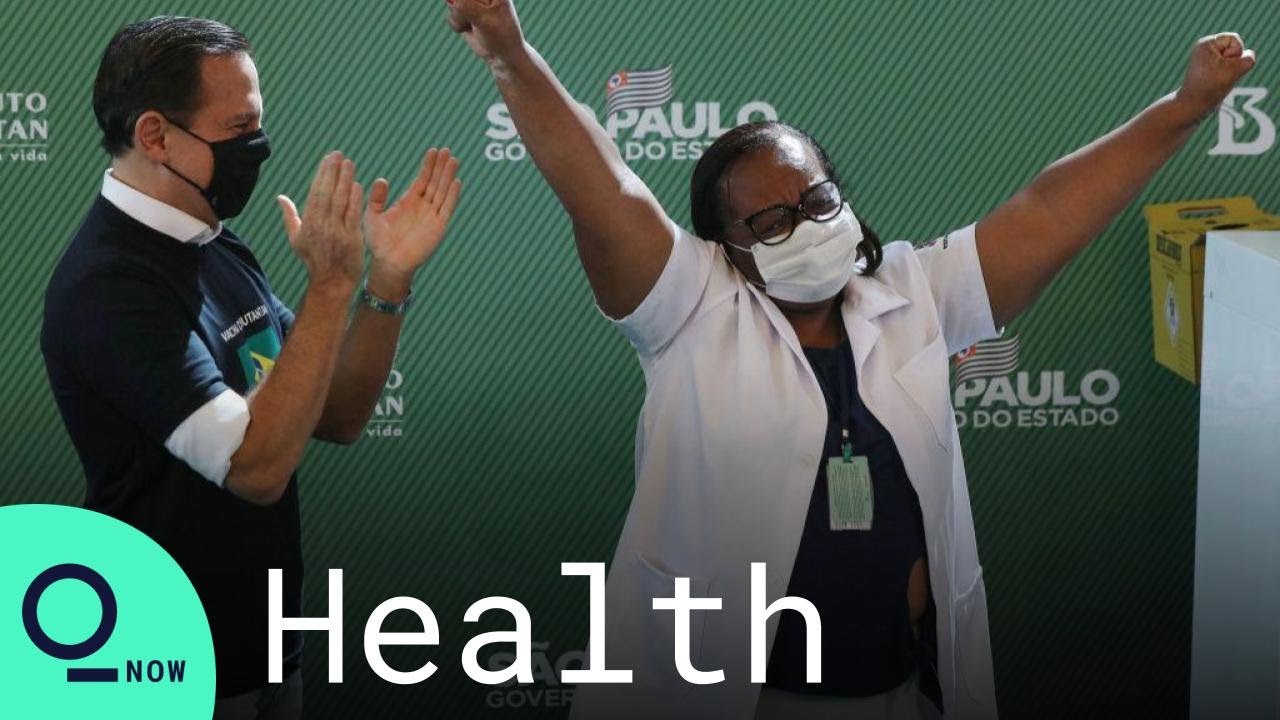
Global gaps in access to Covid-19 vaccines are raising concerns that the continued spread of the coronavirus will breed more dangerous versions of the pathogen, weakening medical weapons and further crippling economies.
In a race to catch up with emerging coronavirus variants, wealthy countries are already benefiting from potent vaccines. While the U.S., Britain and European Union have given citizens about 24 million doses so far -- more than half of the shots administered globally -- vast numbers of countries have yet to begin their campaigns.
Disparities in immunity pose a threat to both have and have-not states. Giving the coronavirus an opportunity to advance and generate new mutants would have significant economic and public-health consequences, adding to the pain as the death toll surpasses 2 million.
“We cannot leave parts of the world without access to vaccines because it’s just going to come back to us,” said Charlie Weller, head of vaccines at health research foundation Wellcome. “That puts everyone around the world at risk.”
Countries are relying on effective immunizations to save lives and revive businesses. The World Bank’s projection for 4% growth this year depends on widespread deployment of vaccines. Surging Covid cases and a delay to the delivery of inoculations, however, could limit expansion to just 1.6%.
High-income countries have secured 85% of Pfizer Inc.’s vaccine and all of Moderna Inc.’s, according to London-based research firm Airfinity Ltd. Much of the world will be counting on U.K. drugmaker AstraZeneca Plc, whose vaccine is cheaper and easier to distribute, along with other manufacturers such as China’s Sinovac Biotech Ltd.
Read More: Africa Left With Few Options for Vaccines, South Africa Says
At least 49 higher-income countries are rolling out Covid vaccines, compared with one lowest-income nation reporting the first 25 doses, according to World Health Organization Director-General Tedros Adhanom Ghebreyesus. “Not 25 million. Not 25,000. Just 25,” he said at a meeting Monday. A growing number of countries are stepping up their own supply deals, in addition to participating in a global collaboration known as Covax.
Future Mutants
Urgency is increasing as the pandemic extends into a second year. New variants that surfaced in the U.K., South Africa and Brazil appear to spread significantly faster than earlier versions. Just in the past month, a “new dimension of risk has opened up for the world,” said Rajeev Venkayya, president of Takeda Pharmaceutical Co.’s vaccines business.
Reducing deaths and illnesses has been seen as the main driver of delivering vaccines rapidly, said Venkayya, who worked in the George W. Bush administration to develop a U.S. pandemic flu plan and directed vaccine delivery for the Gates Foundation.
“We now understand it’s also very, very important to control transmission,” he said, “not just to protect those most vulnerable populations, but also to reduce the evolutionary risk associated with this virus.”
While there’s no evidence to suggest the current crop of vaccines are ineffective against those variants, future mutants may be less responsive, Wellcome’s Weller said.
Drugmakers say they could tweak their shots to counter new variants within weeks if needed. The likelihood that such adaptations will be necessary has increased, Venkayya said.
“The longer the virus is allowed to continue in different parts of the world where we don’t have a vaccine,” said Anna Marriott, health policy adviser at the anti-poverty group Oxfam, “the greater the danger of new variants that could be more aggressive, more virulent or transmissible.”
Covid shots have been tested for their ability to prevent symptoms, not transmission. Still, their performance in clinical trials gives an indication of how effective they might be against spread.
Subscribe to our YouTube channel
Bloomberg Quicktake brings you live global news and original shows spanning business, technology, politics and culture. Make sense of the stories changing your business and your world.
To watch complete coverage on Bloomberg Quicktake 24/7, visit or watch on Apple TV, Roku, Samsung Smart TV, Fire TV and Android TV on the Bloomberg app.
Have a story to tell? Fill out this survey for a chance to have it featured on Bloomberg Quicktake
Connect with us on…
Breaking News on YouTube
Sentinel Indexing in Progress
Metadata and chapters are available. Claim extraction for this episode is pending.
All video content is delivered via YouTube embedded players in accordance with the YouTube Terms of Service. Sentinel provides research tools that promote discovery and accountability across political media.