Bloomberg News
@Bloomberg-News·2.8M subscribers·40.1K videos
Derek Chauvin Trial: Prosecutors May Play Video of George Floyd's Arrest
Posted
March 29, 2021
Views
4,752
Likes
12
Comments
23
Engagement
March 29, 2021
4,752
12
23
0.74%
Every word spoken in this episode is indexed. Type any phrase to jump straight to the moment it was said.
Type any word or phrase that may have been spoken. Click a result to seek the player to that exact moment.
Try a name, a topic, or a quoted line
 0:18Now Playing
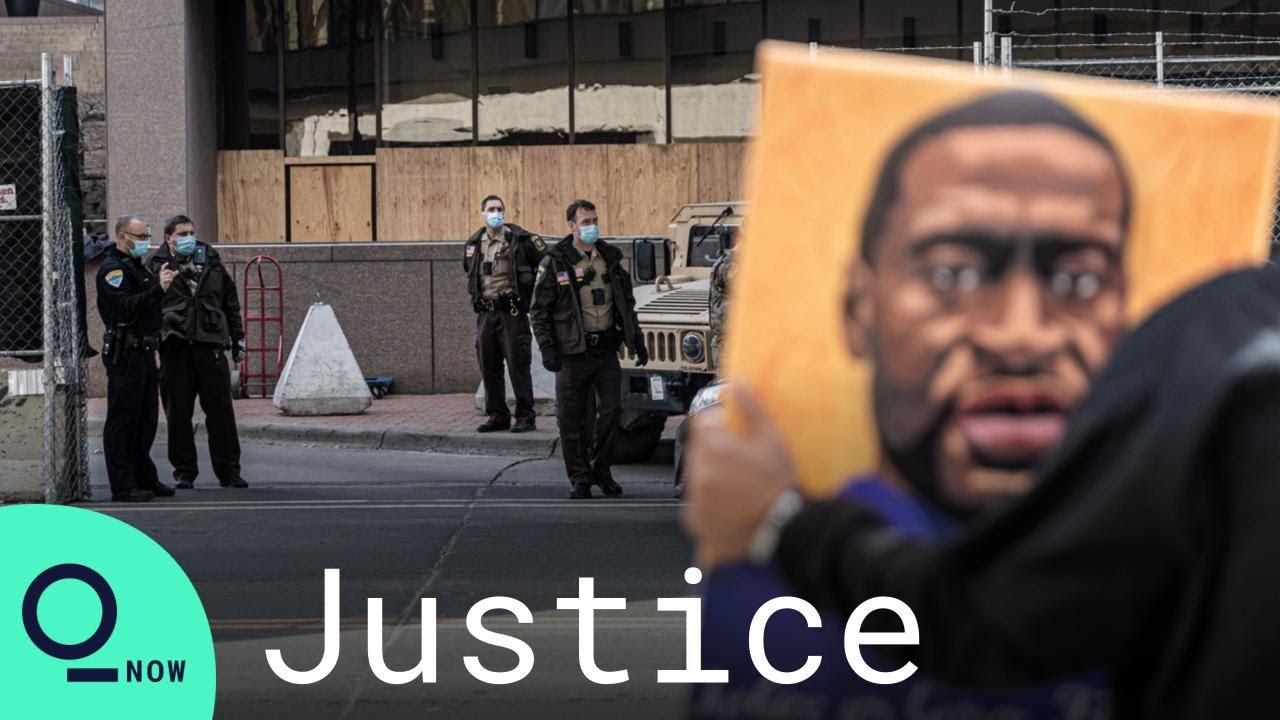
A former Minneapolis police officer goes on trial Monday in George Floyd’s death, and jurors may not wait long to see parts of the bystander video that caught Derek Chauvin’s knee on Floyd’s neck, sparking waves of outrage and activism across the U.S. and beyond.
Prosecutors have not said when they will play the video, but legal experts expect it to be early — maybe even in the prosecution's opening statement — as they seek to remind jurors of what is at the heart of their case.
“If you’re a prosecutor you want to start off strong. You want to frame the argument -- and nothing frames the argument in this case as much as that video,” said Jeffrey Cramer, a former federal prosecutor and managing director of Berkeley Research Group in Chicago.
Floyd, 46, was declared dead after Chauvin, who is white, pressed his knee against Floyd’s neck for about nine minutes. He held his position even as Floyd's “I can't breathe” cries faded and he went limp as he was handcuffed and lying on his stomach. Chauvin, 45, is charged with unintentional second-degree murder, third-degree murder and manslaughter.
Almost all of the jurors selected during more than two weeks of questioning said they had seen at least parts of the video, and several acknowledged it gave them at least a somewhat negative view of Chauvin. But they said they could set that aside.
Outside the courthouse Monday ahead of opening statements, Floyd family attorney Ben Crump said the trial would be a test of “whether America is going to live up to the Declaration of Independence.” And he blasted the idea that it would be a tough test for jurors.
“For all those people that continue to say that this is such a difficult trial, that this is a hard trial, we refute that," he said. "We know that if George Floyd was a white American citizen, and he suffered this painful, tortuous death with a police officer’s knee on his neck, nobody, nobody, would be saying this is a hard case.”
The trial is expected to last about four weeks at the courthouse in downtown Minneapolis, which has been fortified with concrete barriers, fencing, and barbed and razor wire. City and state leaders are determined to prevent a repeat of damaging riots that followed Floyd’s death, and National Guard troops have already been mobilized.
The key questions at trial will be whether Chauvin caused Floyd’s death and whether his actions were reasonable.
For the unintentional second-degree murder charge, prosecutors have to prove Chauvin’s conduct was a “substantial causal factor” in Floyd’s death, and that Chauvin was committing felony assault at the time. For third-degree murder, they must prove that Chauvin’s actions caused Floyd’s death, and were reckless and without regard for human life. The manslaughter charge requires proof that Chauvin caused Floyd’s death through negligence that created an unreasonable risk.
Unintentional second-degree murder is punishable by up to 40 years in prison in Minnesota, with up to 25 years for third-degree murder, but sentencing guidelines suggest that Chauvin would face 12 1/2 years in prison if convicted on either charge. Manslaughter has a maximum 10-year sentence.
After jury instructions, prosecutors will begin with their opening statement, providing a road map of their case and telling jurors what they can expect to see at trial, said Mike Brandt, a local defense attorney who is watching the case closely. They’ll outline what’s to come, highlighting key witnesses
Chauvin’s defense attorney, Eric Nelson, will likely use his opening statement to push back on what prosecutors say, and tell jurors that medical testimony and use of force experts will show a different view.
Nelson has made clear that the defense will make an issue of Floyd swallowing drugs before his arrest, seeking to convince the jury that he was at least partially responsible for his death.
Subscribe to our YouTube channel
Bloomberg Quicktake brings you live global news and original shows spanning business, technology, politics and culture. Make sense of the stories changing your business and your world.
To watch complete coverage on Bloomberg Quicktake 24/7, visit or watch on Apple TV, Roku, Samsung Smart TV, Fire TV and Android TV on the Bloomberg app.
Have a story to tell? Fill out this survey for a chance to have it featured on Bloomberg Quicktake
Connect with us on…
Breaking News on YouTube
Sentinel Indexing in Progress
Metadata and chapters are available. Claim extraction for this episode is pending.
All video content is delivered via YouTube embedded players in accordance with the YouTube Terms of Service. Sentinel provides research tools that promote discovery and accountability across political media.