Bloomberg News
@Bloomberg-News·2.8M subscribers·40.1K videos
Chauvin Trial: Judge Refuses to Sequester Jury in Wake of Daunte Wright Death
Posted
April 12, 2021
Views
93,945
Likes
298
Comments
814
Engagement
April 12, 2021
93,945
298
814
1.18%
Every word spoken in this episode is indexed. Type any phrase to jump straight to the moment it was said.
Type any word or phrase that may have been spoken. Click a result to seek the player to that exact moment.
Try a name, a topic, or a quoted line
 2:02Now Playing
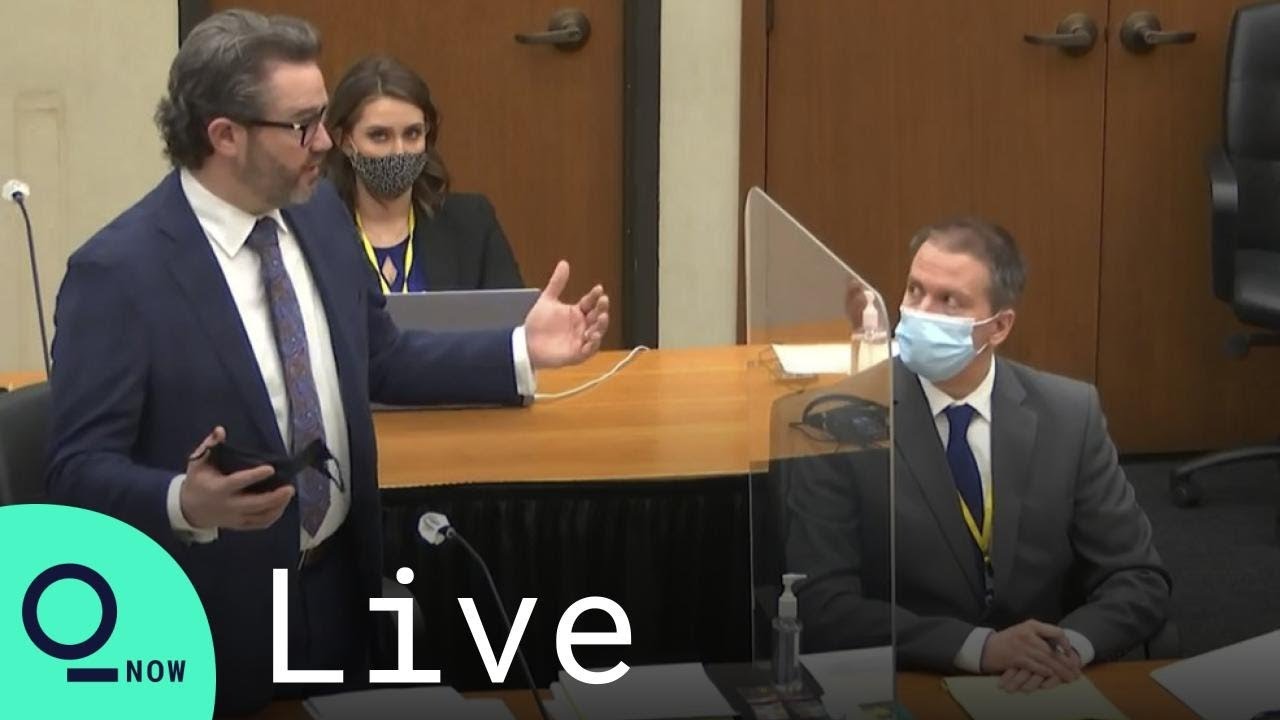
On Monday, the judge in the murder trial of former Minneapolis police officer Derek Chauvin refused a defense request to immediately sequester the jury, the morning after the killing of a Black man during a traffic stop triggered unrest in a suburb just outside Minneapolis.
Chauvin attorney Eric Nelson had argued that the jurors could be influenced by the prospect of what might happen as a result of their verdict.
“Ultimately, your honor, the question becomes: Will the jury be competent to make a decision regardless of the potential outcome of their decision?” he said.
But Judge Peter Cahill said he will not sequester the jury until next Monday, when he anticipates closing arguments will begin. He also denied a defense request to question jurors about what they might have seen about Sunday’s police shooting of 20-year-old Daunte Wright in Brooklyn Center.
In the wake of the shooting, hundreds of protesters broke into about 20 businesses, jumped on police cars and hurled rocks and other objects at officers in Brooklyn Center, about 10 miles from the heavily fortified Minneapolis courthouse.
The Brooklyn Center police chief later called the shooting accidental, saying the officer who fired apparently meant to draw a Taser, not a handgun.
Prosecutor Steve Schleicher argued against sequestering the Chauvin jury, saying: “I don’t think that would be an effective remedy.” He also opposed questioning the jurors: “We can’t have every single world event that might affect somebody’s attitude or emotional state or anything be the grounds to come back and re-voir dire all the jurors.”
The judge previously told the jury to avoid the news during the trial.
The ruling came as the trial entered its third week, with the prosecution close to wrapping up its case and giving way to the start of the defense. Prosecutors built their case on searing witness accounts, experts condemning Chauvin’s use of a neck restraint, and medical authorities attributing Floyd’s death to a lack of oxygen.
A use-of-force expert testified Monday that the officers who subdued Floyd should have known he was not trying to attack them when he struggled and frantically said he was claustrophobic as they tried to put him in a squad car.
Seth Stoughton, an associate professor at the University of South Carolina School of Law, also testified that there was no reason to pin Floyd to the pavement on his stomach because he was handcuffed, already had been searched and didn’t pose a threat of escape or harm to the officers.
“I don’t see him presenting a threat of anything,” Stoughton said. “There’s no specific, articulable facts that ... a reasonable officer in the defendant’s position could use to conclude that he had the intention of causing physical harm to the officers or others.”
Stoughton’s testimony — including that officers should have known that pressing a knee to someone’s neck could cause serious injury or death — is similar to that offered by previous witnesses. But it gave prosecutors a chance to again play several snippets of body-camera video of Floyd’s pleas for help.
Subscribe to our YouTube channel
Bloomberg Quicktake brings you live global news and original shows spanning business, technology, politics and culture. Make sense of the stories changing your business and your world.
To watch complete coverage on Bloomberg Quicktake 24/7, visit or watch on Apple TV, Roku, Samsung Smart TV, Fire TV and Android TV on the Bloomberg app.
Have a story to tell? Fill out this survey for a chance to have it featured on Bloomberg Quicktake
Connect with us on…
Breaking News on YouTube
Sentinel Indexing in Progress
Metadata and chapters are available. Claim extraction for this episode is pending.
All video content is delivered via YouTube embedded players in accordance with the YouTube Terms of Service. Sentinel provides research tools that promote discovery and accountability across political media.