Bloomberg News
@Bloomberg-News·2.8M subscribers·40.1K videos
Argentina’s Schools Turn Into Political Battleground After Curbs
Posted
April 17, 2021
Views
1,817
Likes
21
Comments
5
Engagement
April 17, 2021
1,817
21
5
1.43%
Every word spoken in this episode is indexed. Type any phrase to jump straight to the moment it was said.
Type any word or phrase that may have been spoken. Click a result to seek the player to that exact moment.
Try a name, a topic, or a quoted line
 1:16Now Playing
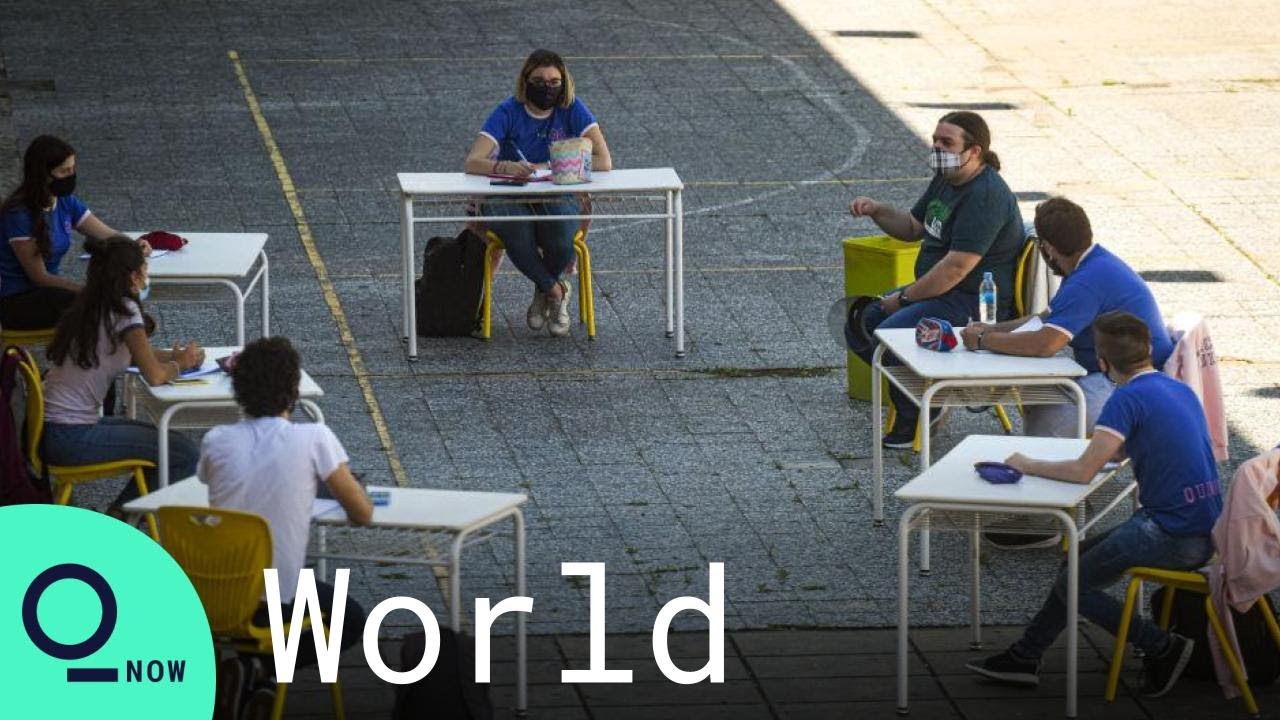
Argentina’s decision to shut down schools has become the latest point of political conflict between the federal government and the City of Buenos Aires, run by the opposition, as the country heads into a second wave of Covid-19.
Buenos Aires Mayor Horacio Rodriguez Larreta said that his administration will ask the Supreme Court for a protection measure to continue in-person school attendance in the country’s capital, a day after the government announced tighter restrictions in the greater Buenos Aires until the end of April.
After initially enjoying big popularity and an unusual sense of political unity at the start of the pandemic, mobility restrictions and lockdowns have become an increasingly divisive issue between the national government and the opposition. A new round of measures, which include limits to circulation starting at 8 p.m., a ban on social gatherings and activities in closed spaces, were met with criticism six months before key midterm elections.
The most divisive of the policies was a decision to end physical attendance at classrooms. Argentina banned in-person classes through all of 2020 as part of one of the world’s tightest lockdowns, and amid pressure from teacher unions with ties to the ruling Peronist alliance. Schools reopened almost two months ago in the capital city.
The new measures follow a decision last week to restrict circulation starting at midnight as cases spike in the city. The policies announced Wednesday by President Alberto Fernandez, however, were not discussed with the city ahead of the announcement, marking a change in approach from previous decisions, Larreta said.
“The national government decided to break the dialogue and consensus mechanism that we had for more than a year,” he said in a press conference on Thursday.
After meeting with the mayor Friday morning, Fernandez said his decision to stop classes stands and that he hopes to review it in 15 days.
“Even within the cabinet, we had ministers who argued we could wait longer to shut schools,” he said. “No, we can’t wait longer.”
While the restrictions are mandatory for the city and the greater Buenos Aires, Fernandez also encouraged other provinces to voluntarily follow them. Some provinces, such as Cordoba, Mendoza and Santa Cruz, have already said they won’t.
Argentina reported a record daily number of more than 27,000 new Covid-19 cases earlier this week, with total deaths since March 2020 approaching 60,000 people. The country has applied almost 6 million vaccine doses, equal to 11% of its population, according to Bloomberg’s Vaccine Tracker.
Subscribe to our YouTube channel
Bloomberg Quicktake brings you live global news and original shows spanning business, technology, politics and culture. Make sense of the stories changing your business and your world.
To watch complete coverage on Bloomberg Quicktake 24/7, visit or watch on Apple TV, Roku, Samsung Smart TV, Fire TV and Android TV on the Bloomberg app.
Have a story to tell? Fill out this survey for a chance to have it featured on Bloomberg Quicktake
Connect with us on…
Breaking News on YouTube
Sentinel Indexing in Progress
Metadata and chapters are available. Claim extraction for this episode is pending.
All video content is delivered via YouTube embedded players in accordance with the YouTube Terms of Service. Sentinel provides research tools that promote discovery and accountability across political media.