
Bloomberg News
@Bloomberg-News·2.8M subscribers·40.1K videos
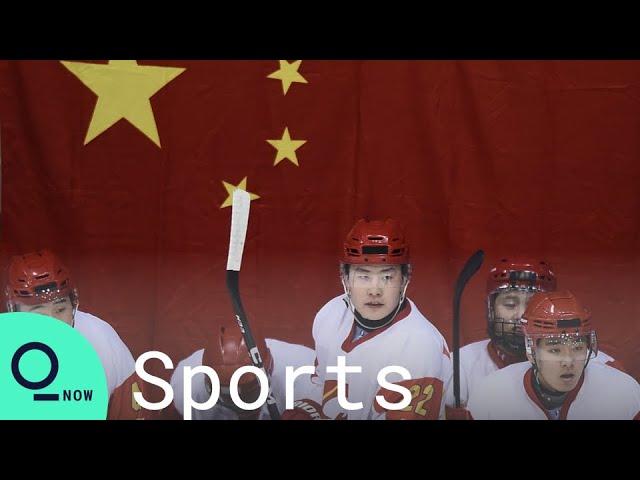
Beijing Olympics 2022: China's Weak Hockey Team Complicates Superpower Status
Posted
June 29, 2021
Views
5,773
Likes
28
Comments
37
Engagement
June 29, 2021
5,773
28
37
1.13%
Every word spoken in this episode is indexed. Type any phrase to jump straight to the moment it was said.
Type any word or phrase that may have been spoken. Click a result to seek the player to that exact moment.
Try a name, a topic, or a quoted line
See what was published immediately before and after this episode.
 2:45Now Playing
When Beijing first hosted the Olympics in 2008, China used the event to celebrate its new economic openness; it also made it a national priority to dominate the medal table, as befits a global superpower. Thirteen years later, China is facing calls for a boycott of the 2022 Winter Olympic Games in protest of human rights abuses, as well as all the concerns that come with hosting an international event before the pandemic has truly receded.
Team China is also expected to fare poorly, in hockey and almost everything else. Outside of figure and speed skating, the country has almost no winter sports tradition, and it’s not expected to do any better than it did in the last Winter Games in Pyeongchang, when the team earned nine medals overall. Its best hope for gold in 2022 is Eileen Gu, who was born and raised in the U.S. and joined the Chinese team after naturalizing in 2019.
Even so, as the host, China’s athletes and teams are automatically entitled to compete, including in the high-profile, ultra-competitive 12-team men’s hockey tournament. That will put China, ranked No. 32 in the world, just ahead of Australia and Israel, on a collision course with teams from the U.S. and Canada, possibly stacked with NHL players. It’s created an almost existential question for the country: Is it better to have played and lost -- badly, to one’s geopolitical rivals, on a global stage -- than never to have played at all?
The Olympics have often been a proxy for geopolitics, if a gauzy, highly produced one. What’s at stake is more than a medal, said Victor Cha, a professor at Georgetown University and author of “Beyond the Final Score: the Politics of Sport in Asia.” “The Olympics for China are always a way to demonstrate the success of the party and the success of the state,” he said. “When you host the Olympics you’re hosting the world. China is at the center of the universe for those two weeks.”
In general, the Olympics has made plenty of room for a scrappy team of misfits that gets out there and gives its all. No one cared that the 1988 Jamaican bobsled team wasn’t very good at bobsledding. In 2016, South Korea’s national hockey team played with a mix of local, foreign and heritage players, including North Koreans, lost all its games but won the hearts of fans at home and abroad.
It’s not clear whether that kind of global goodwill could extend to China’s athletes at a time when the country’s relations with Western democracies are at a nadir. Chinese fans will root for the team no matter what, according to Chen Lu, a former figure skating champion who won bronze at the Olympics in 1994 and 1998. Now, Chen, who is a member of the Beijing Winter Olympics athletes’ committee, runs a hockey and figure skating school in the Chinese capital.
“Chinese soccer isn’t great, but fans still give them lots of support,” she said, pointing to the men’s national team, ranked 77th in the world. “I think no matter what, the Chinese fans will cheer for them.”
Chinese sports officials haven’t indicated that the team would do anything other than play. If it can include heritage players is an open question. The International Ice Hockey Federation would have to waive its traditional eligibility rules, as it did for South Korea. Typically, foreign nationals would have to play domestically for a certain period of time in order to qualify for the Olympic team.
“I think the IIHF wants the heritage players to come so we can help them out and there won’t be lopsided games,” said Yip, who played on Boston University’s 2009 national championship team. Luke Lockhart and Paris O’Brien have said they also hope to play for China. The IIHF didn’t reply to emailed requests for comment.
Subscribe to our YouTube channel
Bloomberg Quicktake brings you live global news and original shows spanning business, technology, politics and culture. Make sense of the stories changing your business and your world.
To watch complete coverage on Bloomberg Quicktake 24/7, visit or watch on Apple TV, Roku, Samsung Smart TV, Fire TV and Android TV on the Bloomberg app.
Have a story to tell? Fill out this survey for a chance to have it featured on Bloomberg Quicktake
Connect with us on…
Breaking News on YouTube
Sentinel Indexing in Progress
Metadata and chapters are available. Claim extraction for this episode is pending.
All video content is delivered via YouTube embedded players in accordance with the YouTube Terms of Service. Sentinel provides research tools that promote discovery and accountability across political media.