
Canada Election: Justin Trudeau Wins 3rd Term But Falls Short of Majority
September 21, 2021
8,430
96
143
2.84%
Search the Record
IndexedEvery word spoken in this episode is indexed. Type any phrase to jump straight to the moment it was said.
Type any word or phrase that may have been spoken. Click a result to seek the player to that exact moment.
Try a name, a topic, or a quoted line
Bloomberg News Episodes Around September 21, 2021
See what was published immediately before and after this episode.



 5:49Now Playing
Canada Election: Justin Trudeau Wins 3rd Term But Falls Short of Majority



YouTube Description
as posted by the channelPrime Minister Justin Trudeau won a third term in Canada’s snap election but fell short of regaining the majority he was seeking, with a persistently divided electorate returning another fragmented parliament.
Trudeau’s Liberal Party was elected or leading in 156 of the 338 seats in the House of Commons as of 1:40 a.m. Tuesday in Ottawa, little changed from the last vote in 2019. The main opposition Conservatives, under Erin O’Toole, were ahead in 122 seats, one more than they won last time.
While Trudeau remains in power with a mandate to pursue his left-leaning agenda, which is backed by some of the smaller parties in parliament, he lacks the broad-based support needed to govern alone.
For a second straight election, his party lost the popular vote to the Conservatives and won only because of a strong showing in Toronto, Montreal and other cities.
With more than 90% of polls reporting, the Liberals had just 31.8% of the national vote. That would be the lowest share for any governing party in the nation’s history. The Conservatives stood at 34.1%.
The results reflect a nation that’s unsure about its immediate future amid a fourth wave of the Covid-19 pandemic. Canadians are dealing with growing debt levels and concerned about a future transition from an oil-producing nation to a low-carbon economy. Party leaders struggled to find a coherent message with which to unite the electorate, pollsters said.
Resource-rich western Canadians again voted heavily for Conservatives, a party more supportive of the energy sector. Quebeckers chose to send nationalists to legislature in large numbers, instead of siding with Trudeau’s federalist party.
To be sure, Trudeau will have a stable minority. He has multiple potential partners to pass legislation, giving the prime minister maximum leverage. The New Democratic Party was ahead in 27 seats, while the Bloc Quebecois had 31. Each has enough to push the Liberals beyond the 170 votes in parliament needed to pass legislation.
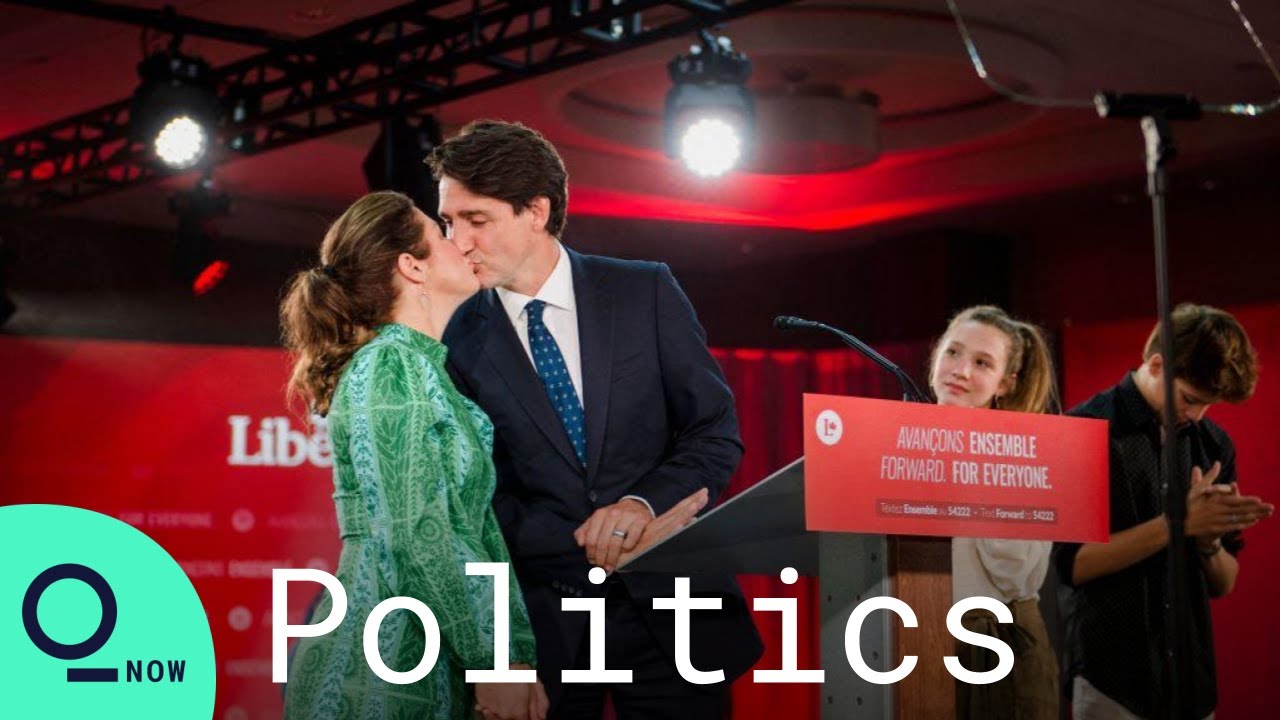
“I hear you when you say we can only move forward if no one is left behind,” the prime minister told supporters in Montreal after declaring victory.
Trudeau’s government will be able to continue with a big-spending agenda, and move ahead with other campaign pledges including higher taxes for financial institutions and businesses and stricter emission rules for the oil and gas sector.
The Liberal victory is a historic milestone for Trudeau, marking only the eighth time a Canadian leader has won three successive elections. Trudeau’s father, Pierre, also did it. It also represents a comeback of sorts for Trudeau, whose party was trailing in the polls midway through the five-week campaign.
Still, failure to secure a majority and losing the popular vote is a disappointing result. It’s the second time voters have denied this prime minister full control of the legislature, limiting his freedom to take big risks or govern unilaterally.
Minority governments have become familiar to Canadians. The past seven elections have now produced five minority governments. They’re popular because they require the participation of several parties to make laws.
But there’s a downside. Minority parliaments keep parties on constant campaign footing and give them less scope to consider long-term issues. In practice, that means politicians are wary of tackling big problems like Canada’s sagging competitiveness or slow transition toward a low-carbon economy.
Since the 2019 election, the Canadian currency has been the second-worst performer among G-10 currencies against the U.S. dollar. The country’s benchmark S&P/TSX Composite Index is up 23%, barely half the gain of the S&P 500.
Trudeau largely had control over the economic agenda last month before he called the election, with all three opposition parties at one point backing his emergency borrowing to pay for the Covid-19 response.
Subscribe to our YouTube channel
Subscribe to our newest channel Quicktake Explained
Bloomberg Quicktake brings you live global news and original shows spanning business, technology, politics and culture. Make sense of the stories changing your business and your world.
To watch complete coverage on Bloomberg Quicktake 24/7, visit or watch on Apple TV, Roku, Samsung Smart TV, Fire TV and Android TV on the Bloomberg app.
Have a story to tell? Fill out this survey for a chance to have it featured on Bloomberg Quicktake
Connect with us on…
Breaking News on YouTube
Guests & Subjects Covered
Sentinel Indexing in Progress
Metadata and chapters are available. Claim extraction for this episode is pending.
All video content is delivered via YouTube embedded players in accordance with the YouTube Terms of Service. Sentinel provides research tools that promote discovery and accountability across political media.