Bloomberg Podcasts
@bloombergpodcasts·503K subscribers·32.4K videos
The Immune System has a Backup Plan that Doesn’t Rely on Boosters | Prognosis: Covid UNCUT
Posted
November 1, 2021
Views
37
Likes
1
Engagement
2.70%
November 1, 2021
37
1
2.70%
Every word spoken in this episode is indexed. Type any phrase to jump straight to the moment it was said.
Type any word or phrase that may have been spoken. Click a result to seek the player to that exact moment.
Try a name, a topic, or a quoted line
 29:45Now Playing
Antibodies against the coronavirus wane over time, but the immune system has a backup plan that doesn’t rely on boosters, according to a study by scientists at the University of Pennsylvania, where technology for mRNA vaccines was developed.
Researchers at the university’s Perelman School of Medicine tracked 61 people for six months after immunization with mRNA vaccines. The team noted that antibodies gradually ebbed, but that the shots generated durable immune memory to SARS-CoV-2 in the form of B and T cells that increased over time to help ward off serious illness.
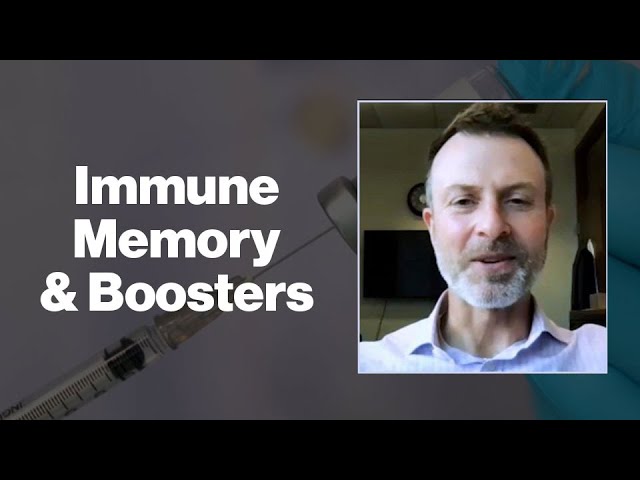
“That was maybe a little bit surprising,” said John Wherry, director of the institute for immunology, who works in the same faculty as mRNA pioneer Drew Weissman. The research was released Aug. 23 ahead of peer-review and publication.
Concern that Covid vaccines are providing a weaker shield against the more-transmissible delta strain in countries that began immunizations early has prompted health authorities to consider offering third doses to boost antibody levels. U.S. President Joe Biden said Friday his administration is considering whether to start offering extra jabs as soon as five months after receiving a second dose.
Although third doses promise to bolster antibodies and make them better at blocking SARS-CoV-2 for longer, the body has its own natural support to defend against Covid-19 even when circulating antibody levels decline, Wherry said.
“Should antibodies wane and you get a little bit of local infection, you have memory B cells there to sort of renew or respond very rapidly to make new neutralizing antibodies,” he said.
Antibodies on mucosal surfaces lining the nose and throat block the coronavirus at its portal of entry, preventing it from causing an infection. But, as protective antibodies there fade, an infection is more likely to take hold -- at least until new antibodies are triggered in response.
Wherry’s group found that memory B cells generated by the mRNA vaccines made by Moderna Inc. and Pfizer Inc. and its partner BioNTech SE appeared better at blocking virus variants including alpha, beta and delta, than those produced in response to a mild case of Covid-19.
Additionally, high levels of vaccine-induced T cells, a type of white blood cell capable of finding and killing virus-infected cells, were detected after six months, “maintaining an additional armor to protect us,” Wherry said.
The findings help to explain why immunization remains effective at protecting against severe Covid-19, hospitalization and death even as more break-through infections occur.
“We’re seeing a drop in efficacy when you only measure whether people get infected, but really, really steady immunity if you’re measuring severe-disease outcomes,” Wherry said. “That fits with the idea that circulating antibodies are going to protect you from infection, but memory B cells and memory T cells, while they may not eliminate the ability to have some virus in your nose, they’re actually going to prevent severe disease.”
The immune backups will also decrease the duration of Covid symptoms, prevent them from worsening, and reduce the likelihood of transmitting a SARS-CoV-2 infection to other people, he said.
“Vaccinated people are really not fueling this fire; it’s really unvaccinated people that are,” Wherry said. “So that’s more reason to get vaccinated.”
Subscribe to Bloomberg Podcasts
#Bloomberg #Podcasts
Follow Bloomberg Podcasts on Twitter
Visit our other YouTube channels:
Bloomberg Markets & Finance
Bloomberg Politics
Bloomberg Technology
Quicktake Originals
Quicktake Now
Quicktake Explained
For coverage on news, markets and more
Sentinel Indexing in Progress
Metadata and chapters are available. Claim extraction for this episode is pending.
All video content is delivered via YouTube embedded players in accordance with the YouTube Terms of Service. Sentinel provides research tools that promote discovery and accountability across political media.